A recent incident involving a Nigerian barber imposing a 7.5% Value Added Tax (VAT) on customers’ bills has ignited a nationwide conversation, highlighting the growing impact of VAT for small businesses Nigeria. This move, reportedly in compliance with new mandatory regulations by the Federal Inland Revenue Service (FIRS) set to take effect by 2026, underscores the evolving landscape of tax policies impacting everyday citizens and entrepreneurs. The barber’s public notice, detailing the VAT addition from January 1, 2026, quickly went viral, sparking a wave of reactions from internet users who questioned the application of such a tax to small enterprises traditionally not associated with VAT collection.
What is VAT in Nigeria? The answer is Value Added Tax (VAT) is a consumption tax levied on goods and services at each stage of the supply chain, ultimately borne by the final consumer. In Nigeria, the standard VAT rate is 7.5%, collected by businesses on behalf of the government through the Federal Inland Revenue Service (FIRS).
The Federal Inland Revenue Service (FIRS) plays a crucial role in the collection and administration of taxes across Nigeria, including the Value Added Tax. With FIRS latest news Nigeria often focusing on revenue generation and compliance drives, the directive for businesses, regardless of size, to adhere to tax regulations is a continuous effort. This incident brings to the forefront the challenges faced by micro and small businesses in understanding and implementing complex tax frameworks, which were traditionally seen as the purview of larger corporations.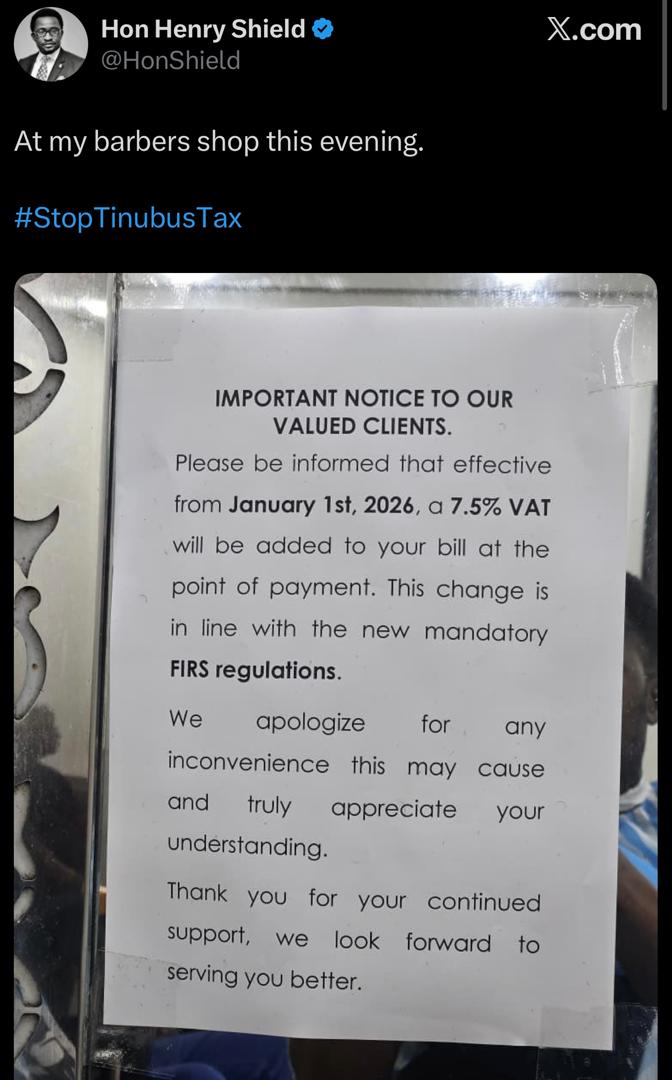
For many entrepreneurs, understanding how to register for VAT in Nigeria can be a daunting process. The requirements for VAT registration typically involve a business being incorporated or registered with the Corporate Affairs Commission (CAC) and then proceeding to register with the FIRS for tax purposes. While the FIRS aims to broaden the tax net, the administrative burden on small businesses, like the barber’s shop, often leads to confusion and resistance from both business owners and their customers.
The broader context of Nigeria tax reforms explained reveals an ongoing governmental drive to diversify revenue streams beyond oil and improve tax compliance across all sectors. These reforms are part of a long-term strategy to ensure sustainable national development and provide essential public services. However, the implementation often faces hurdles, particularly when it impacts the informal sector and small businesses that operate with limited resources and often without sophisticated accounting systems.
The public outcry following the barber’s VAT imposition reflects a wider sentiment captured in much of the Nigeria economic news today. Citizens are already grappling with rising living costs, and any additional charges, however small, are met with significant resistance. The debate often centers on whether small businesses should be exempt from certain taxes or if the threshold for VAT collection needs to be re-evaluated to prevent undue hardship on entrepreneurs striving to survive in a challenging economic climate. This situation highlights the delicate balance between government revenue needs and the economic realities of its populace.
Many small business owners are now looking ahead to Nigeria tax reforms 2026 with a mix of apprehension and hope. While the specific details of these future reforms are still emerging, the expectation is that they will further streamline tax collection and potentially introduce new compliance measures. Businesses, therefore, need to stay informed and adapt to these changes to avoid penalties and ensure sustainable operations in the long run. The incident with the barber serves as an early indicator of the compliance challenges that lie ahead.
Understanding the distinction between VAT vs income tax Nigeria is crucial for small business owners. Income tax is levied on the profits of a business or individual, while VAT is a consumption tax added to the price of goods and services. A small business might be subject to both, depending on its structure and turnover. The current discussion around the barber’s VAT charge is not about his personal income tax but about his role as a collector of consumption tax from his customers, a duty that typically applies once a business reaches a certain turnover threshold.
To navigate these complexities, a comprehensive VAT guide Nigeria 2026 will be essential for small businesses. Such a guide would ideally simplify the registration process, clarify turnover thresholds, explain remittance procedures, and outline the penalties for non-compliance. Equipping small business owners with clear, accessible information is vital to fostering a culture of compliance without stifling entrepreneurial spirit, which is a key driver of the Nigerian economy.
Ultimately, the conversation sparked by the barber’s decision to apply VAT for small businesses Nigeria goes beyond a single haircut. It is a microcosm of the larger economic and regulatory challenges facing the nation. As Nigeria moves towards 2026 and implements further tax reforms, the impact on everyday citizens and the vibrant small business sector will remain a critical point of discussion and policy consideration. Ensuring fairness, clarity, and ease of compliance will be paramount for the successful integration of these tax policies into the national economic fabric.