

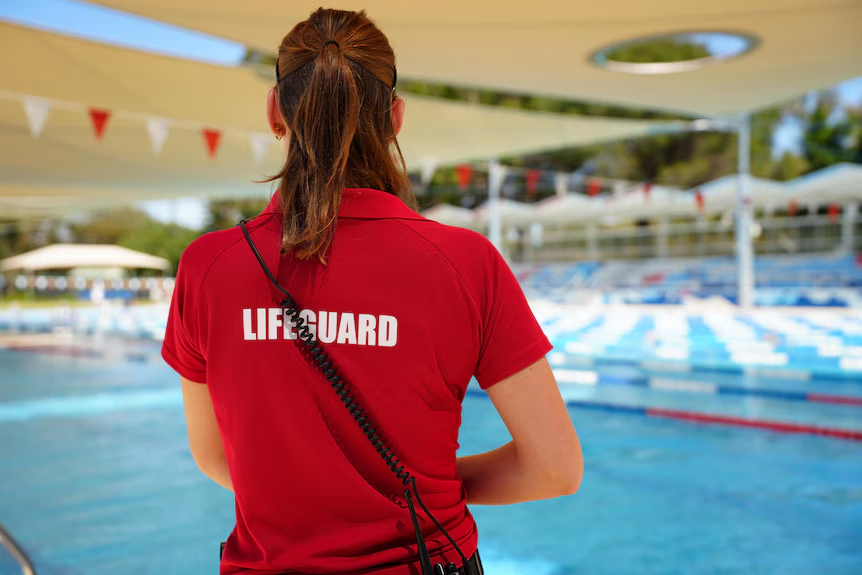
This summer, swimming pools across the country are integrating advanced AI technology to provide lifeguards with an unprecedented level of vigilance. Approximately 120 public pools are now deploying this innovative system, designed to detect drowning incidents and promptly alert supervising staff. The artificial intelligence analyzes swimmers’ movements in real-time, sending immediate notifications to lifeguards’ smartwatches when a person appears to be in distress. Duncan Hutton, City of Stirling’s recreational facilities operations coordinator, aptly describes the system as giving lifeguards “eyes in the back of their head,” significantly enhancing their ability to monitor pool safety.
The AI system leverages existing pool CCTV infrastructure to identify swimmers who remain underwater for extended periods, exhibit unusual stillness, or appear to be struggling. Hutton emphasizes that this technology serves as a powerful supplementary tool for lifeguards, not a replacement for human oversight. The critical need for human intervention remains, as “you still need the lifeguard to actually respond to the incident.”
What is AI drowning detection technology? It is a sophisticated system that uses artificial intelligence and existing CCTV cameras to monitor swimmers’ behavior in real-time. The AI analyzes movement patterns, identifying signs of distress such as prolonged submersion or lack of movement, and alerts lifeguards via smartwatches or other devices, thereby providing an extra layer of safety in swimming pools.
The effectiveness of this AI system has already been demonstrated in real-world scenarios, with documented instances of it saving lives. At the Stirling Leisure-Inglewood pool in Perth, the technology proved its worth a few months ago. A lifeguard received an alert, and although a bystander initially intervened, the AI system ensured the lifeguard was on the scene moments later, coordinating a swift and successful rescue.
Similarly, the Royal Life Saving Australia (RLSA) reported an incident at a Sydney pool where the AI system averted a potential tragedy. In this case, an individual was submerged beneath a pool boom. The AI alerted the lifeguard twice. Although the lifeguard initially found nothing, the system’s persistent alerts prompted a second, more thorough inspection, leading to the discovery and rescue of the submerged person. RJ Houston of RLSA highlighted how the technology overcomes human limitations like glare, refraction, and line-of-sight obstructions.
How does AI technology make pools safer? By providing a constant, objective surveillance of all swimmers, AI systems can detect subtle signs of distress that might be missed by human lifeguards, especially in busy or visually challenging environments. This proactive detection allows for faster response times, reducing the severity of drowning incidents and improving overall pool safety.
Looking ahead, RJ Houston anticipates that this technology will become standard practice in Australian pools. Research conducted in partnership with Lynxight, a leading AI drowning-prevention tool provider, indicates that lifeguards using the system experience reduced stress levels. The constant “chronic unease” associated with the high-stakes responsibility of preventing drownings is significantly alleviated by this additional support.
Lifeguards often face immense pressure, knowing that a lapse in attention could have devastating consequences. The AI system’s presence fosters greater confidence among lifeguards and pool managers, contributing to a more relaxed and secure working environment. It allows them to “sleep a little bit better at night the night before a shift.”
Why is AI in pools a positive development? Professor Paul Salmon from the University of the Sunshine Coast views this as one of the “more positive uses of AI,” acknowledging its potential to assist humans in critical roles. However, he also raises important considerations regarding potential over-reliance and skill degradation. Ensuring that lifeguards maintain their core competencies while benefiting from AI support is paramount.
Royal Life Saving Australia is committed to implementing appropriate protocols to prevent complacency and ensure the effective integration of this technology. A nationwide training program for lifeguards is being developed to address these concerns and maximize the benefits of AI in pool safety.
While the “AI lifeguard” system is a significant advancement, the human element remains indispensable. The technology acts as a powerful assistant, augmenting the capabilities of trained professionals and ultimately contributing to safer swimming experiences for everyone.
This AI technology is a crucial tool for enhancing swim safety this summer, providing an invaluable extra layer of protection for pool patrons and support for dedicated lifeguards.









