


Former US President Donald Trump and Ukrainian President Volodymyr Zelensky recently concluded high-stakes peace talks in Florida, with both leaders indicating significant diplomatic movement while acknowledging persistent, complex challenges regarding the ongoing conflict with Russia. The meeting, described as “terrific” by Mr. Trump, focused on Ukraine’s proposed 20-point peace plan, aiming to establish a framework for ending hostilities that have ravaged the nation.
Following their discussions at Mar-a-Lago, Mr. Trump asserted that “a lot of progress” had been achieved, hinting at the “makings of a deal” that was in its “final stages” of negotiation. President Zelensky echoed a similar sentiment, proclaiming “great achievements” and a “100 per cent” agreement on security guarantees between the United States and Ukraine. He further indicated that security assurances involving the US, Europe, and Ukraine were “almost” finalised.
However, Mr. Trump underscored the formidable obstacles that remain, particularly concerning territorial issues. He specifically cited contested regions such as Donbas and Zaporizhzhia as “thorny” points yet to be resolved. These statements highlight the deep chasm that persists between Kyiv’s demand for full territorial integrity and Moscow’s claims over occupied Ukrainian lands.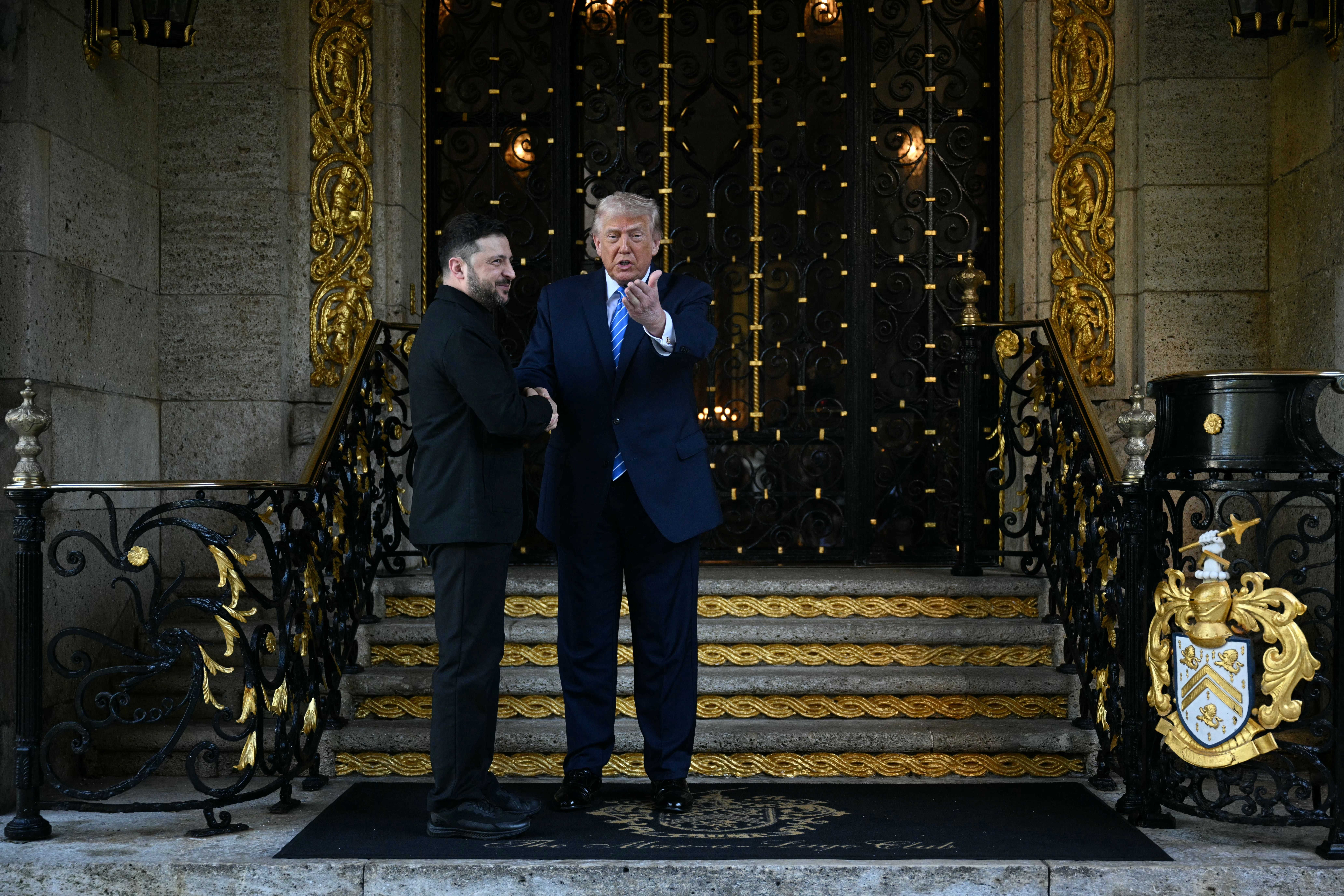
The high-level engagement extended beyond the direct bilateral meeting. European leaders, including UK Prime Minister Sir Keir Starmer and European Commission President Ursula von der Leyen, joined a one-hour call with Mr. Trump and Mr. Zelensky. Ms. von der Leyen characterised the call as “good,” reiterating Europe’s readiness to continue working collaboratively with Ukraine and its US partners towards a resolution.
Adding a critical layer to the diplomatic landscape, Mr. Trump held a “very productive” telephone call with Russian President Vladimir Putin shortly before his meeting with Mr. Zelensky. Moscow confirmed the call took place at the US leader’s request. Kremlin spokesperson Yury Ushakov later indicated that both leaders shared a “broadly similar view” that any temporary ceasefire would merely “prolong the conflict,” urging Ukraine to make an immediate decision regarding the Donbas region.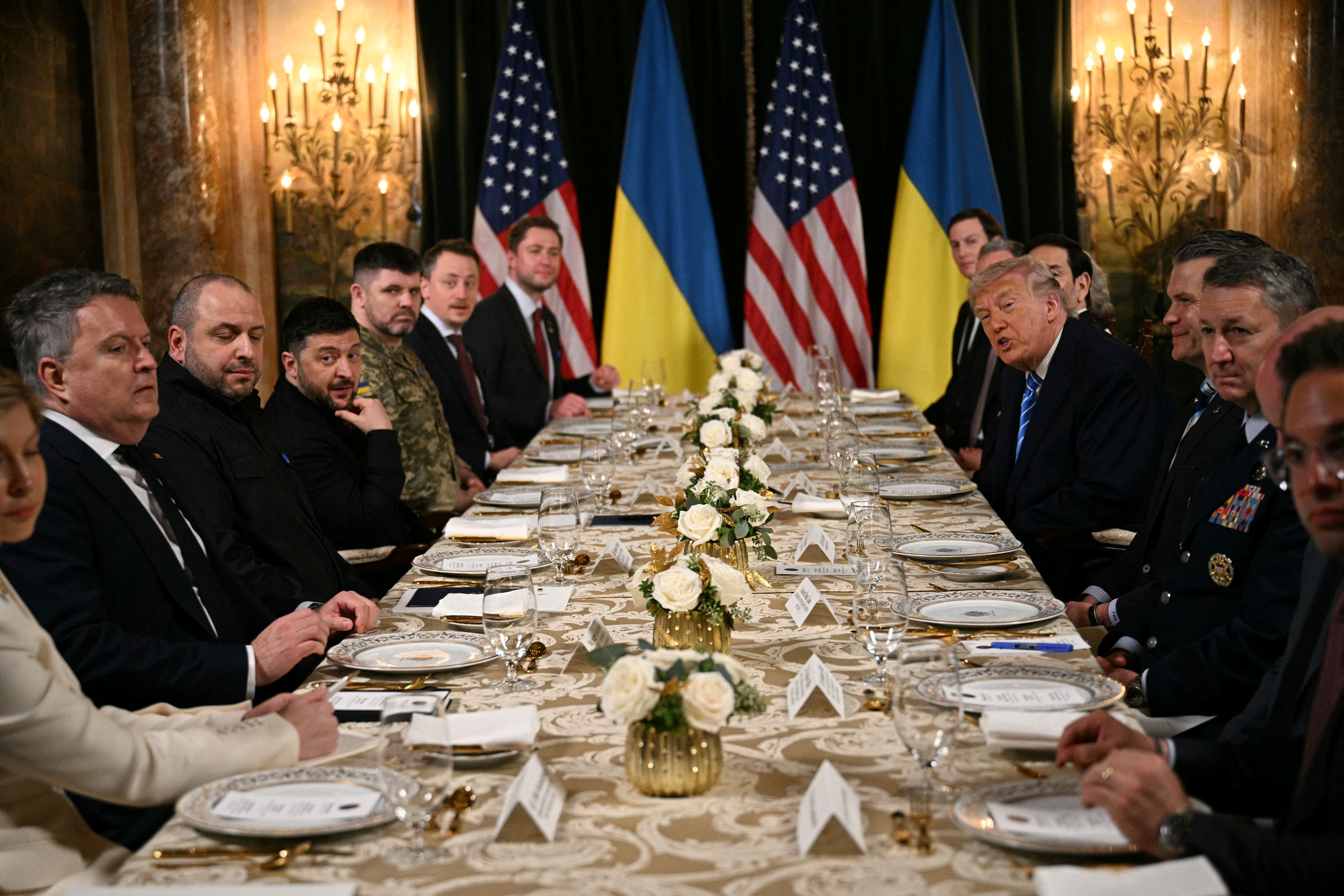
This pre-meeting interaction with the Russian leader underscored the pervasive influence of Moscow on the peace process, even in its physical absence from the direct talks. Mr. Trump described both Russia and Ukraine as “willing countries,” positioning himself as a central mediator in the complex negotiations between the warring nations.
Amidst these diplomatic overtures, Russia intensified its military pressure. Prior to the Florida meeting, Moscow launched a substantial barrage of almost 500 drones and 40 missiles on Kyiv, resulting in two fatalities, dozens of hospitalisations, and widespread power cuts across the capital during sub-zero winter temperatures. Russian Foreign Minister Sergei Lavrov also issued a stark warning, stating that any European troop contingents deployed to Ukraine would be considered legitimate targets by Russian armed forces.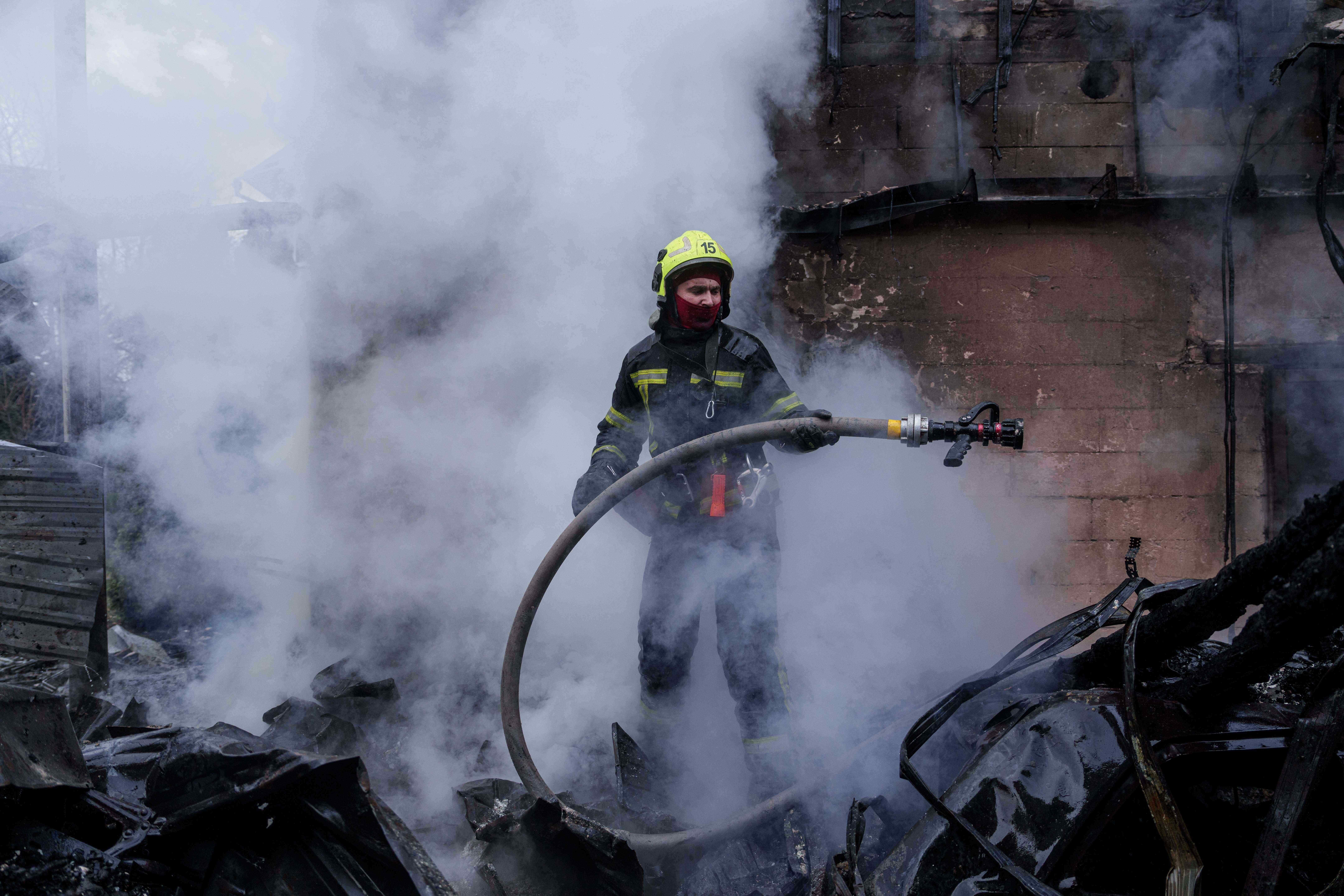
Concurrently, President Zelensky engaged in broader international diplomacy, meeting with Canadian Prime Minister Mark Carney in Halifax, Nova Scotia. Mr. Carney denounced the “barbarism” of Russia’s recent attacks and announced further economic assistance from Canada to support Ukraine’s rebuilding efforts. Mr. Zelensky reiterated that sustained “pressure on Russia and sufficient, strong support for Ukraine” remains crucial for achieving a just and lasting peace.
Mr. Trump’s overarching influence on the negotiations was previously highlighted in a statement to Politico, where he remarked that Mr. Zelensky “doesn’t have anything until I approve it.” He also asserted his intention to speak with Mr. Putin “as much as I want,” underscoring his self-perceived role as the ultimate arbiter in the peace discussions.
Despite the claims of progress and high-level engagement, the path to peace remains fraught with significant challenges. Ukraine continues to assert its readiness to “do whatever it takes to stop this war,” with President Zelensky emphasising the necessity of “strength at the negotiating table.” The enduring disagreements over territory, coupled with Russia’s ongoing military actions and diplomatic manoeuvres, suggest that a comprehensive resolution is still a distant prospect.









