

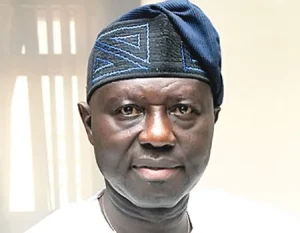
A former Nigerian minister, identified as Mr. Jalo, has publicly and vehemently denied any knowledge or involvement in the 2001 assassination of the then Attorney General of the Federation and Minister of Justice, Chief Bola Ige. Speaking with profound solemnity, Mr. Jalo invoked divine retribution upon himself and his family should he possess any information regarding the circumstances or perpetrators of the high-profile murder. His dramatic declaration underscores the enduring mystery and deep-seated public clamour for justice surrounding one of Nigeria’s most shocking political killings.
Mr. Jalo’s impassioned denial came amidst renewed public discourse concerning the unresolved murder, which continues to cast a long shadow over Nigeria’s political landscape two decades later. His statement, delivered in a manner suggesting deep personal conviction, aimed to unequivocally distance himself from any lingering suspicions or accusations. The former minister’s invocation of a curse upon his lineage highlights the gravity with which he views the allegations, seeking to clear his name definitively before the public and, as he indicated, before a higher power.
Chief Bola Ige, a prominent lawyer, politician, and orator, was tragically shot dead in his Ibadan home on December 23, 2001. His murder sent shockwaves across the nation, triggering widespread condemnation and calls for swift justice. Despite extensive investigations and multiple arrests over the years, the masterminds and actual killers have never been conclusively identified or prosecuted, leaving the case a painful open wound for his family and the Nigerian populace.
The assassination occurred during a period of intense political tension in Nigeria’s nascent Fourth Republic. Chief Ige had served as a minister under President Olusegun Obasanjo but had also been a vocal critic of certain government policies and political developments. His killing fueled speculations of political conspiracy, with various individuals and groups coming under scrutiny, though none ultimately led to a successful prosecution that brought closure.
Throughout the years, the Bola Ige murder investigation has seen several high-profile figures questioned, detained, and later released due to insufficient evidence. These included political associates and even some individuals within the security apparatus. The inability of successive administrations to resolve the case has consistently drawn criticism from human rights organisations, legal experts, and the Ige family, who continue to demand accountability.
Mr. Jalo’s recent public statement appears to be a direct response to persistent, albeit often unsubstantiated, whispers and rumours that have circulated in the public domain regarding the involvement of various political figures in the tragic event. While the specific accusations prompting his oath remain unclear, the former minister evidently felt compelled to address the lingering doubts head-on, seeking to put an end to any speculation linking him to the crime.
Observers suggest that such a dramatic denial, particularly one involving an appeal to divine judgment, is a powerful cultural and political gesture in Nigeria. It reflects the immense pressure and public scrutiny that individuals associated even tangentially with the Ige case continue to face. The statement is likely intended to resonate deeply within a society where spiritual oaths carry significant weight, aiming to sway public opinion and underscore his innocence.
The timing of Jalo’s declaration also coincides with renewed discussions about justice for high-profile political assassinations in Nigeria, particularly as the country approaches another election cycle. Such cases often resurface during periods of political introspection, with various factions seeking to leverage historical grievances or clear their names ahead of future political engagements. The Ige case remains a benchmark for judicial inefficiency and political impunity in the nation’s history.
Legal analysts note that while such public declarations may serve to clear an individual’s conscience or public image, they do not hold legal weight in the pursuit of justice. The Ige family and civil society groups have consistently called for a thorough and impartial re-investigation of the murder, urging law enforcement agencies to deploy modern forensic techniques and revisit old leads, rather than relying on public denials or unsubstantiated claims.
Chief Bola Ige’s legacy as a fiery intellectual, a staunch advocate for democracy, and a committed public servant continues to inspire many Nigerians. His untimely death deprived the nation of a voice of reason and principle, and the failure to bring his killers to justice remains a dark stain on Nigeria’s democratic journey. The demand for accountability in his case has become a symbol for broader calls for an end to impunity in the country.
As the nation grapples with issues of insecurity and judicial reform, the unresolved murder of Bola Ige serves as a stark reminder of the challenges in ensuring justice for all, irrespective of social standing or political influence. Mr. Jalo’s emphatic denial, while personal, inadvertently reignites the broader conversation about the need for renewed commitment from the authorities to finally unravel the truth behind this enduring national tragedy.
Keywords: Bola Ige assassination, Former Minister Jalo, Nigeria political killings, Unresolved murder cases, Chief Bola Ige justice, Attorney General murder, Nigerian justice system, Political impunity Nigeria






