


Attorneys representing Duane “Keffe D” Davis, the man accused of the 1996 murder of iconic rapper Tupac Shakur, are actively seeking to suppress crucial evidence in his ongoing trial. The legal team contends that the material was obtained through an “unlawful nighttime search,” arguing that the warrant authorizing the search was granted based on a misleading portrayal of their client.
Las Vegas criminal defense lawyers Robert Draskovich and William Brown filed the motion this week, asserting that the judge who approved the search warrant relied on an inaccurate depiction of Mr. Davis as a dangerous drug dealer. This characterization, they claim, was used to justify the execution of a search warrant at night, a procedure typically reserved for exceptional circumstances where there is an imminent risk of evidence being destroyed or disappearing before morning.
According to the defense, the reality of Mr. Davis’s life at the time of the warrant’s execution differed significantly from the image presented to the court. While he was once a former gang leader from Southern California involved in the narcotics trade, his attorneys state that he had left that life behind in 2008. By 2023, when the warrant was issued, Mr. Davis was a 60-year-old retired cancer survivor, living with his wife in Henderson, a city outside of Las Vegas, for nearly a decade and working in inspection for oil refineries.
His legal team argued vehemently in their motion that the court was not apprised of these pertinent details. They contend that this omission led to a “clearly erroneous factual determination,” enabling the authorization of a nighttime search that would otherwise have been deemed inappropriate given Mr. Davis’s actual circumstances. The defense maintains that had the judge been presented with a complete and accurate profile, the justification for an urgent nocturnal operation would have been absent.
The Las Vegas Metropolitan Police Department, which conducted the search and seized various items including Mr. Davis’s electronic devices, what they described as “purported marijuana,” and tubs of photographs, has declined to comment on the matter, citing pending litigation. At the time of the search, police officials indicated that executing the warrant under the cover of darkness was intended to allow officers to surround and secure the residence more safely. They also stated that if Mr. Davis were to barricade himself, the darkness would minimize exposure for surrounding residents during potential evacuation.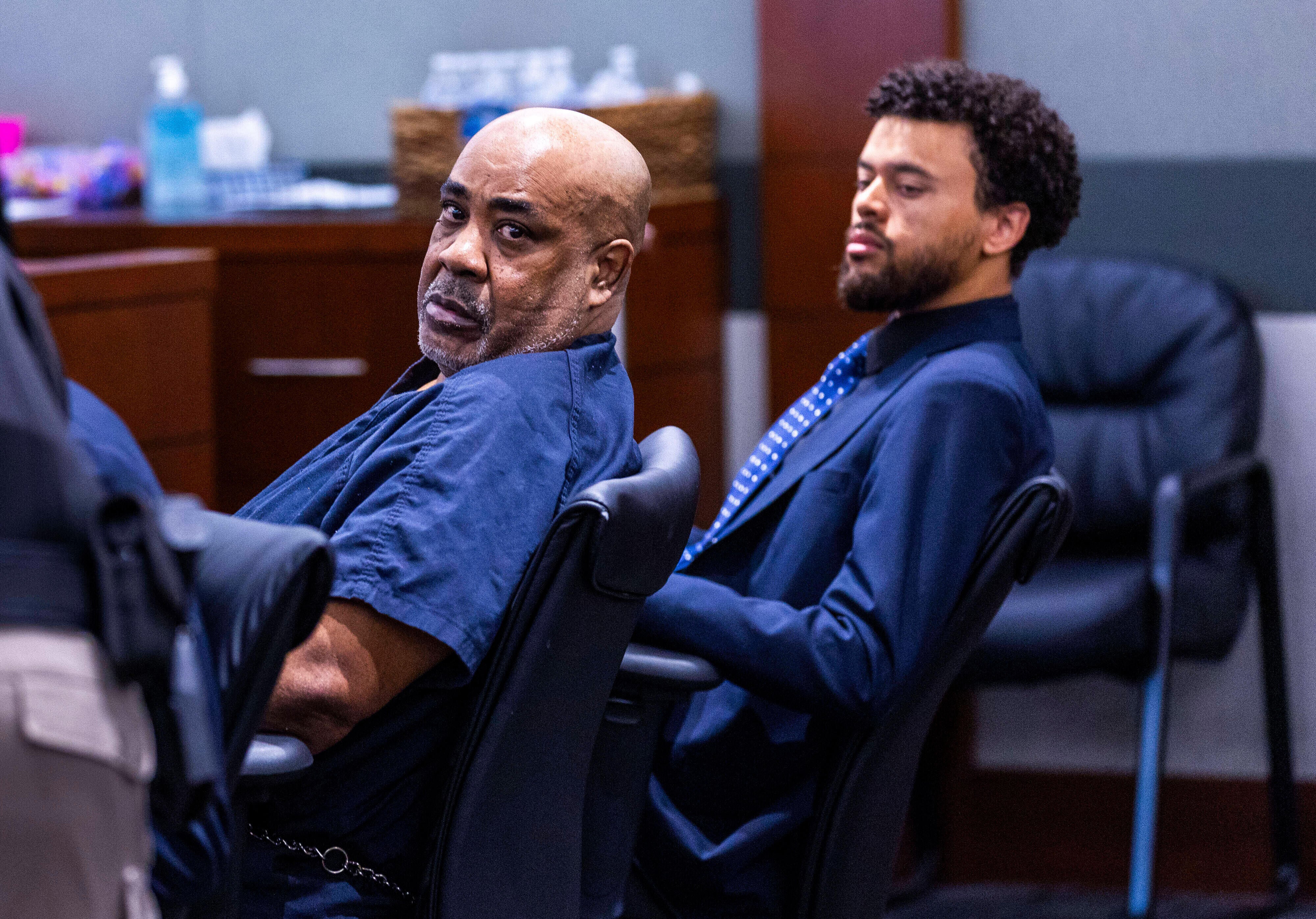
Mr. Davis was arrested in September 2023 and subsequently pleaded not guilty to a charge of first-degree murder. He has sought release from custody since shortly after his arrest, with his attorneys consistently challenging the basis of the prosecution’s case. The current motion to suppress evidence represents a critical phase in the legal proceedings, potentially impacting the admissibility of key items collected by investigators.
Central to the defense’s strategy is the assertion that Mr. Davis’s arrest largely stems from his own “false public statements.” His attorneys claim that Mr. Davis had publicly stated his presence in the white Cadillac from which Tupac Shakur was fatally shot, but that he never offered concrete details to corroborate this claim. They argue that he benefited significantly from these statements, using them to evade drug charges through a proffer agreement and monetizing the story through documentaries and his 2019 book.
The defense further posited that the allure of personal gain motivated Mr. Davis to falsely implicate himself in the high-profile murder. His attorneys drew a parallel between Shakur’s murder and the assassination of JFK, highlighting how such events become endlessly dissected, mythologized, and monetized. They suggest that someone in Mr. Davis’s position might be tempted to place himself at the center of such a narrative for financial and legal advantage, despite a lack of verifiable involvement.







