


Taiwanese authorities have issued a warning for potential aftershocks following a powerful magnitude 7 earthquake that struck off the island’s northeastern coast late Saturday. The seismic event, initially reported by the US Geological Survey as a magnitude 6.6, was felt intensely across Taiwan, particularly in the capital Taipei, prompting immediate alerts. Despite its significant strength, initial reports indicate no widespread damage or major casualties, largely attributed to its considerable depth and offshore epicentre.
The earthquake occurred at approximately 11:05 PM local time, with its epicentre located about 32 kilometres from the coastal town of Yilan. Taiwan’s Central Weather Administration (CWA) registered the quake at magnitude 7, making it the strongest recorded in the country since a devastating 1999 event. Officials noted that the depth of 70 kilometres, combined with its offshore origin, significantly mitigated the potential for severe surface destruction, even as buildings swayed violently.
Residents from Yilan to Taipei experienced prolonged shaking, leading President William Lai Ching-te to urge vigilance against subsequent tremors. While major infrastructure remained largely intact, the Taiwan Power Company reported brief power outages affecting over 3,000 homes in Yilan county. Taipei’s city government also documented isolated incidents, including minor structural damage, gas leaks, and water pipe issues, categorising the event as a level four earthquake, indicating potential for slight damage.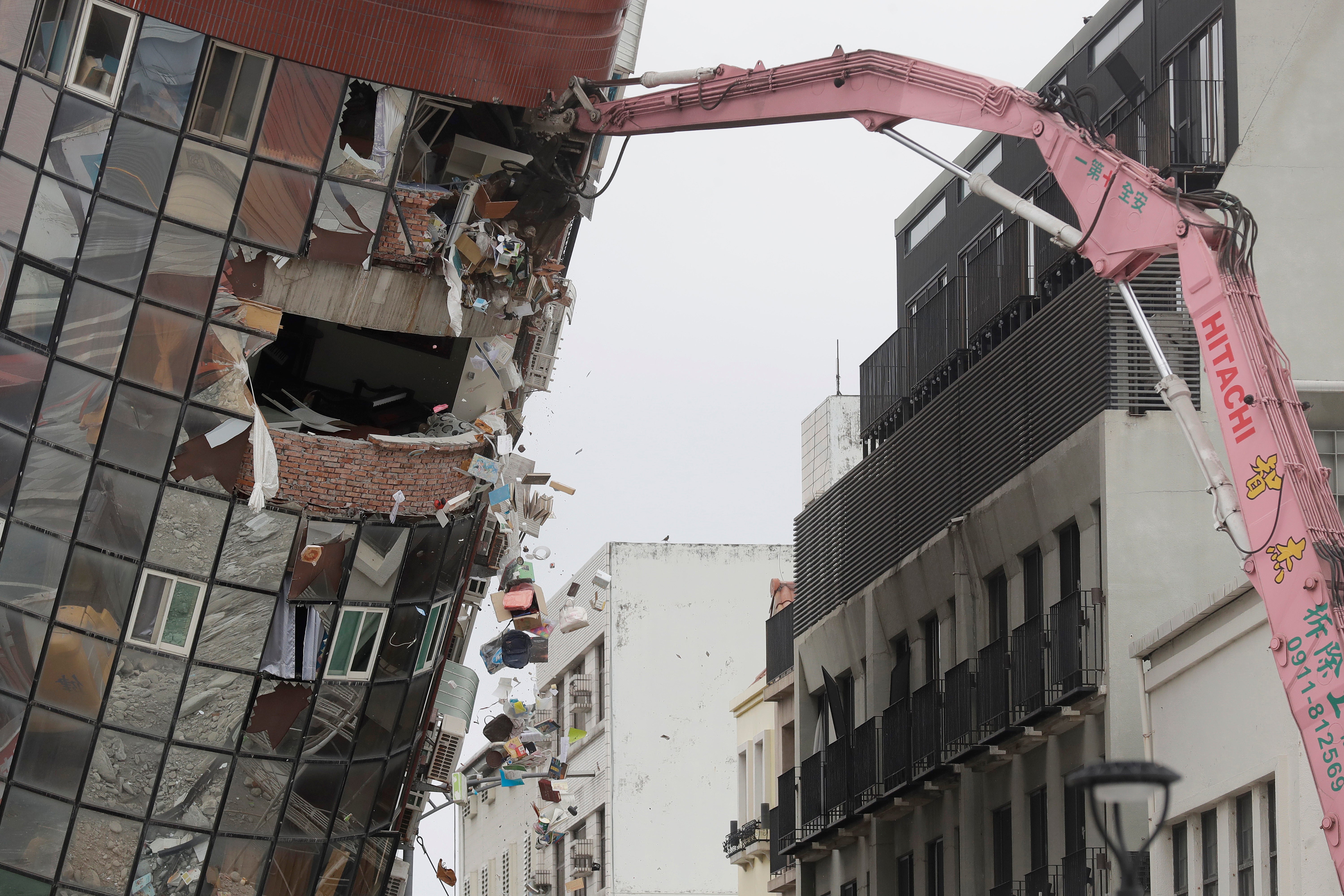
Eyewitness accounts described alarming scenes, with one Yilan resident detailing how a building first shook vertically before shifting horizontally, causing widespread alarm. Although many remained indoors, the experience prompted fear among those who ventured outside. Local news footage corroborated the impact, showing items dislodged from shelves in supermarkets and hanging televisions swaying inside office buildings, illustrating the force of the tremor despite the lack of major collapse.
The seismic activity also affected Taiwan’s crucial semiconductor industry. TSMC, the world’s largest contract chipmaker, confirmed that a small number of its facilities within the Hsinchu science park, where its headquarters are located, briefly met evacuation criteria. While the company did not report significant operational disruptions, the incident underscores the island’s vulnerability to natural phenomena and the potential risks to global supply chains.
The Central Weather Administration has specifically advised residents to remain alert for aftershocks, forecasting the possibility of tremors ranging between magnitude 5.5 and 6.0 in the immediate aftermath. These warnings are crucial for public safety, as subsequent quakes can further destabilise structures already weakened by the initial jolt and pose continued risks to communities across the island.
Regionally, the earthquake prompted “high wave” advisories in several Japanese prefectures, including Hokkaido, Tohoku, Hokuriku, and Okinawa. However, critically, no tsunami warnings or alerts were issued for any part of the region, preventing widespread panic. Taiwan’s geographical position, situated near the convergent boundary of two major tectonic plates, makes it inherently susceptible to frequent seismic activity, with magnitudes between 6.0 and 6.9 classified as “strong” quakes.
The recent tremor serves as a stark reminder of Taiwan’s seismic history. The island has experienced several devastating earthquakes over the past decades, including a magnitude 6.4 quake in southern Taiwan in 2016 that claimed more than 100 lives. Even more catastrophic was the 1999 Chichi earthquake, a magnitude 7.3 event that resulted in the deaths of over 2,000 people and caused widespread destruction, highlighting the ongoing necessity for stringent building codes and preparedness measures.



![[post_title]](https://samony.com.ng/wp-content/uploads/2025/12/Chelle-reshuffles-Eagles-midfield-defence-for-Tunisia-showdown-300x146.jpg?lm=6950DD47 "Super Eagles Reshuffle: Chelle Fortifies Midfield, Defence for Tunisia Clash")





