

Australia is witnessing a significant increase in the recreational use of magic mushrooms, a trend accompanied by growing concern over a little-understood neurological condition known as “wood-lover paralysis.” This syndrome, not yet formally documented in medical literature, manifests as profound muscle weakness, occasionally progressing to a complete inability to walk or stand. Researchers and medical professionals are working to raise awareness about the potential dangers, especially as instances of severe paralysis and even suspected fatalities linked to specific mushroom species emerge.
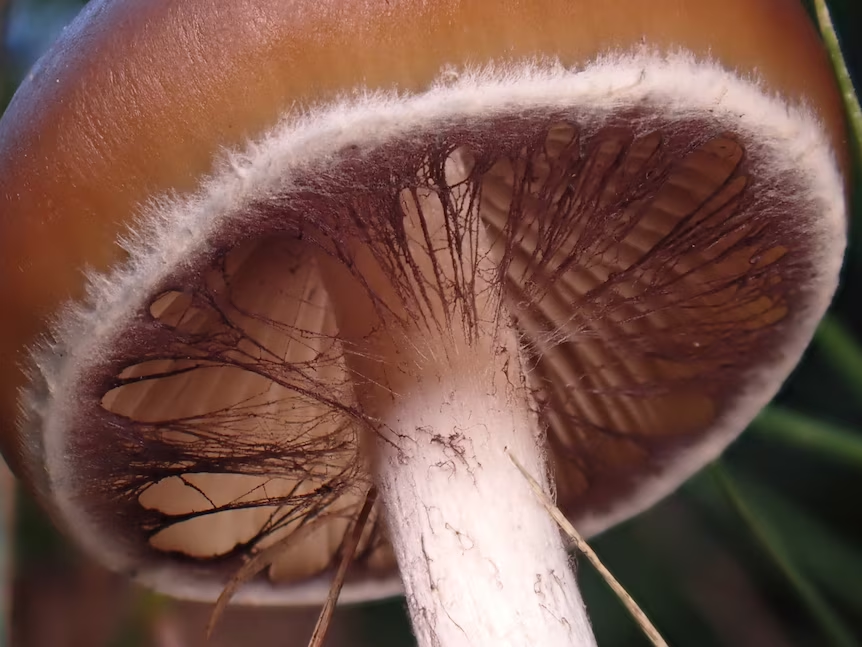
Dr. Simon Beck, a psychedelic harm reduction researcher, has observed cases where individuals cycled between periods of strength and extreme weakness after consuming certain hallucinogenic fungi. He noted the unusual clinical presentation of this weakness, which can persist for days. The condition is primarily associated with Psilocybe subaeruginosa, a native Australian “wood-loving” magic mushroom found across several states, whose correct identification is notoriously difficult due to the presence of poisonous look-alikes in similar habitats.
Dr. Beck’s research at the University of NSW involved surveying 392 magic mushroom users, revealing that 42 per cent reported experiencing weakness at least once after consumption. Crucially, 158 of the 165 individuals who reported weakness linked their symptoms to eating wood-growing mushrooms. In stark contrast, only one person attributed their weakness to Psilocybe cubensis, the more popular species that grows from dung. Symptoms typically appear within four hours of ingestion and can last from a few hours to up to three days.
The potential severity of wood-lover paralysis is underscored by recent incidents. A Victorian coroner’s inquest earlier this year could not definitively rule out wood-lover mushrooms as a factor in the 2024 death of 53-year-old Rachael Dixon, who had consumed a mushroom brew at an unregulated “wellness retreat” where others experienced consistent symptoms. Dr. Beck also shared details with the inquest about two unpublished, severe cases: one in New Zealand involving a user with breathing difficulties who later died, and another in Australia where a person required CPR and a breathing tube before recovering.
The broader context for these concerns is a documented rise in psychedelic drug use across Australia. The National Drug Strategy Household Survey for 2022–23 indicated an increase in psychedelic drug use from 1.6 per cent in 2019 to 2.4 per cent, translating to approximately 500,000 annual users. Psilocybin-containing mushrooms were the most commonly used hallucinogens. Concurrently, calls to New South Wales’ largest poison information line regarding psychedelic inquiries surged from 45 in 2014 to 105 in 2022, with nearly half related to psilocybin.
The precise cause of wood-lover paralysis remains unknown, prompting ongoing scientific investigation. Australian mycologist Alistair McTaggart, from Psymbiotika Lab, hypothesises that the syndrome may stem from an additional tryptamine, a hallucinogen, produced by mushrooms with duplicated genes. He suggests that when a gene is duplicated, the copy can sometimes develop a completely different function from the original, potentially leading to novel compounds with adverse effects.
Experts warn that the high cost and limited accessibility of legitimate, experimental psychedelic treatments, introduced in Australia in 2023, compel some individuals to self-source drugs from illicit markets. Ethnopharmacologist and clinical psychologist Stephen Bright of Edith Cowan University highlights that this practice significantly elevates the risk of wood-lover paralysis and other harms, including sexual assault and mental health deterioration due to inadequate after-support. He stresses the importance of accessing these treatments via approved, legitimate pathways.
The ethical landscape for psychologists is becoming increasingly complex as clients express interest in illicit psilocybin use. Registered psychologist Carissa Dutton, a James Cook University PhD student, notes a significant lack of guidance for professionals on providing harm reduction support in these “grey areas.” Current understanding permits psychologists to offer preparation and education prior to a client’s experience and integration support afterwards, but strictly prohibits their presence during the actual drug consumption.
Ms. Dutton recently co-authored a study examining harm reduction methods employed by illicit psychedelic drug users. Her research indicated that individuals using psilocybin for self-exploration or mental health treatment were more likely to implement strategies aimed at reducing risks. However, she underscored the critical need for further research to scientifically validate which harm reduction strategies are truly effective in mitigating adverse outcomes.
As the use of magic mushrooms continues to grow, and the enigmatic wood-lover paralysis poses an increasing, albeit rare, threat, a concerted effort is essential. This involves enhanced public awareness campaigns, robust scientific research into the toxidrome’s mechanisms, and clearer ethical guidelines for healthcare professionals navigating the intersection of illicit drug use and harm reduction. Ensuring safe and informed choices remains paramount in this evolving landscape.






