

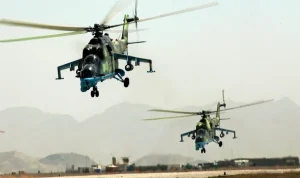
The United States has formally reinstated intelligence-gathering flights over Nigerian airspace, a decisive response following a series of brutal attacks attributed to the Islamic State West Africa Province (ISWAP) in the northwestern state of Sokoto. This strategic resumption signals Washington’s heightened concern over the escalating insecurity across Nigeria’s northern regions and reinforces its commitment to bolstering Abuja’s capacity to counter an increasingly sophisticated and adaptive extremist threat. These aerial surveillance missions are designed to furnish Nigerian security forces with critical, real-time intelligence, thereby enhancing their operational effectiveness in tracking and disrupting militant networks.
Recent dispatches from Sokoto State have painted a stark picture of the deteriorating security landscape, detailing multiple coordinated assaults by ISWAP elements. These attacks, which have particularly targeted vulnerable rural communities and even security formations, have resulted in a significant loss of life, widespread displacement, and profound humanitarian distress. The militants’ ability to execute such operations far from their traditional strongholds in the Lake Chad basin demonstrates a worrying expansion of their operational reach and a persistent ambition to destabilize new territories within Nigeria, exploiting existing fragilities and ungoverned spaces.
Washington’s decision to reactivate these crucial flights follows a period of reassessment in its security cooperation with Nigeria, reflecting a strategic imperative to address the complex and evolving nature of the insurgency. US officials have underscored that this intelligence support forms an integral part of a broader, enduring security partnership. This framework is meticulously crafted to enhance Nigeria’s institutional capabilities, streamline vital information sharing protocols, and provide decisive tactical advantages against the agile and elusive extremist organizations operating across the vast Nigerian terrain. This robust collaboration is deemed indispensable for fostering regional stability, given Nigeria’s profound geopolitical and economic significance in West Africa.
The intelligence missions primarily employ unarmed surveillance aircraft, meticulously outfitted with state-of-the-art sensor technology, capable of collecting extensive data on militant movements, logistical supply lines, and intricate operational patterns. The meticulously gathered intelligence is then expeditiously disseminated to Nigerian military and intelligence agencies, facilitating more precise targeting strategies and proactive preventive measures. This non-kinetic form of support remains a cornerstone of the US counter-terrorism paradigm, which prioritizes empowering partner nations through advanced reconnaissance and data analysis rather than direct combat intervention.
Nigerian authorities have expressed their appreciation for the renewed aerial support from the United States, openly acknowledging the formidable and multi-faceted challenges presented by a confluence of insurgent groups, including ISWAP, remnants of Boko Haram, and numerous bandit militias operating extensively across the northern states. The Nigerian armed forces are grappling with an immense operational mandate across vast and often geographically challenging territories. In this context, external intelligence assistance is perceived as an invaluable force multiplier, offering a crucial edge in an asymmetric conflict that has tragically claimed tens of thousands of lives and forcibly displaced millions of citizens over the past decade.
The concerning expansion of ISWAP’s operational theatre into Northwestern Nigeria, a region already grappling with endemic banditry and inter-communal violence, significantly complicates an already precarious security environment. Security analysts and regional experts are increasingly voicing concerns that a potential convergence or tactical alliance between these distinct groups could catastrophically exacerbate instability, potentially forging a wider, contiguous arc of insecurity across the entire Sahelian belt and extending into the broader West African sub-region. This dire prospect necessitates even more robust and coordinated international responses to preempt such a scenario.
However, the reintroduction of foreign intelligence operations invariably prompts a nuanced discussion regarding national sovereignty and the long-term effectiveness of external military assistance in the absence of profound internal governance reforms. While the immediate provision of intelligence offers tangible benefits, some critics argue that sustainable peace and security in Nigeria demand a holistic approach. This approach must critically address the fundamental socio-economic root causes of insurgency, including pervasive poverty, deep-seated governance deficits, and persistent human rights concerns, which regrettably often serve as fertile ground for extremist recruitment and radicalization.
The renewed US engagement thus marks a pivotal juncture in the broader international campaign to combat the persistent scourge of terrorism on the African continent. It unequivocally underscores a steadfast commitment to assisting Nigeria in safeguarding its territorial integrity and protecting its diverse populace from the relentless threat of extremist violence. Concurrently, this collaboration serves to protect wider regional and global security interests that are inextricably linked to stability in this critical part of the world. The ultimate success of this intensified partnership will undoubtedly hinge upon seamless coordination, mutual trust, and a shared, comprehensive understanding of the multifaceted and evolving challenges that lie ahead.
Keywords: US intelligence Nigeria, ISIS West Africa Province, Sokoto security crisis, Counter-terrorism efforts Africa, Nigerian military support, Sahel instability, Aerial surveillance Nigeria, Regional security partnership






