

Australian cricket faces a substantial financial setback, estimated at up to £5 million, following the premature conclusion of a high-profile Ashes Test match at the Melbourne Cricket Ground. The Boxing Day fixture, which saw England secure a decisive victory in just two days on an unusually bowler-friendly surface, resulted in the loss of three full days of anticipated play and significant revenue. This unexpected outcome has ignited concerns within the sport regarding pitch preparation and its commercial ramifications.
The financial hit stems primarily from the cancellation of play for the remaining three days, particularly the eagerly awaited third day which had already sold out, anticipating a crowd exceeding 90,000 spectators. Among these were an estimated 20,000 travelling English supporters, all now eligible for ticket refunds. Beyond gate receipts, the early finish has also led to substantial losses in merchandising, food, and beverage sales, impacting the overall profitability of the marquee event.
Cricket Australia’s chief executive, Todd Greenberg, had prior to the match voiced apprehension about such a scenario, emphasizing the critical link between match duration and commercial viability. Speaking on SEN Radio, Greenberg bluntly stated, “short Tests are bad for business,” highlighting the organisation’s historical hands-off approach to wicket preparation but conceding the necessity for greater involvement when the sport’s commercial health is at stake. He underscored the profound impact on the game’s financial ecosystem.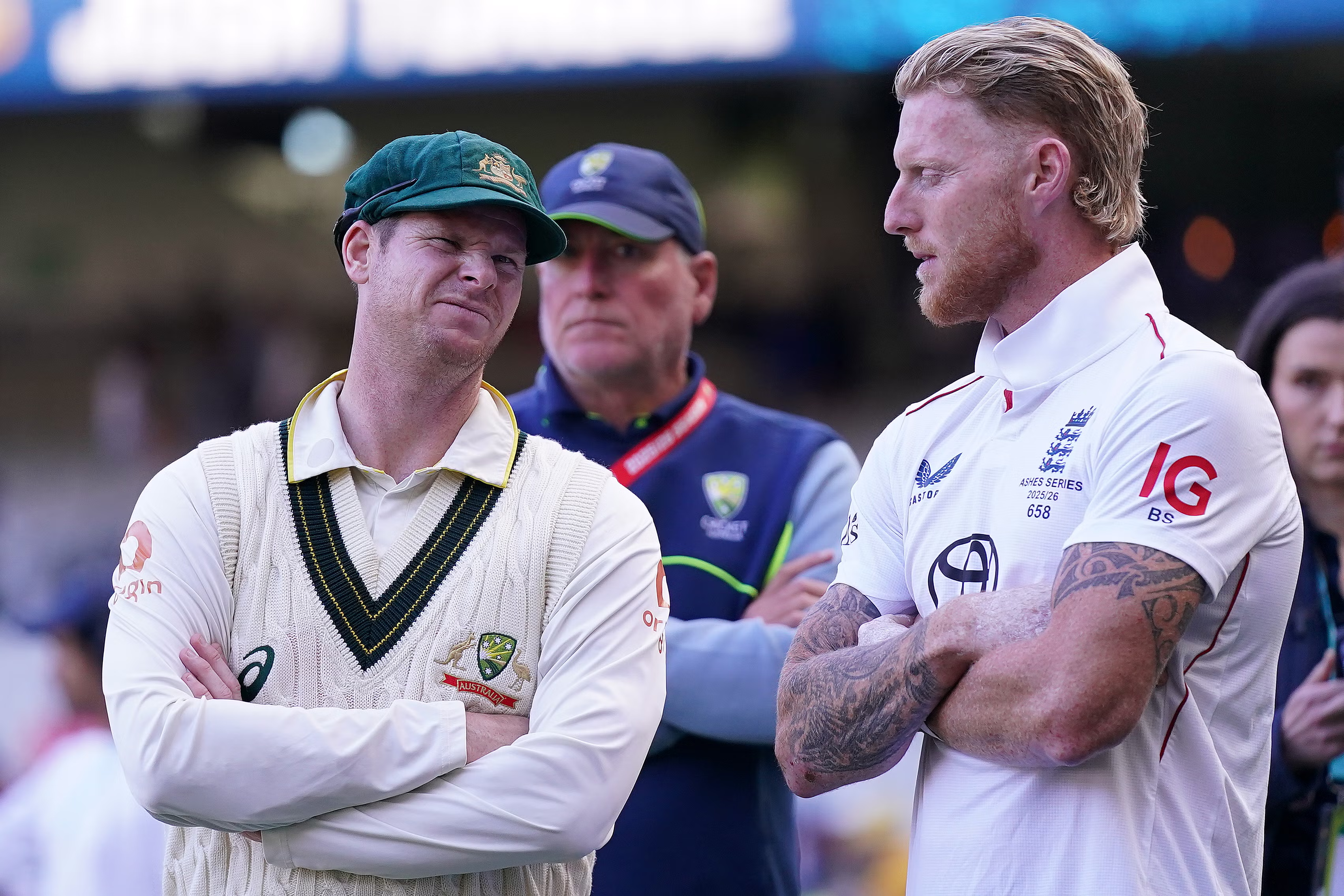
The spotlight has since fallen on ground curator Matthew Page, whose preparation of the MCG pitch has drawn widespread criticism. The surface featured a lavish 10mm of live grass, creating conditions that made batting a perilous undertaking and heavily favoured bowlers. This excessive assistance for pace and seam contributed directly to the rapid fall of wickets and the swift conclusion of the Test, disappointing fans and stakeholders alike.
England captain Ben Stokes, despite delighting in his team’s much-needed victory which averted a potential series whitewash, expressed strong dissatisfaction with the pitch quality. When questioned about his feedback to the match referee, Stokes candidly remarked, “It won’t be the best.” He further elaborated that a Boxing Day Test should not conclude in under two days, suggesting that such a quick finish in other parts of the world would provoke significant uproar and scrutiny.
Australian captain Steve Smith, while initially less concerned by a rapid win in the previous Test, adopted a more critical stance after his side’s defeat. He acknowledged the adverse financial implications, noting the planned sell-out for the subsequent day. Smith observed that 36 wickets falling in just two days indicated a “pretty tricky wicket” that “probably offered a little bit too much,” lamenting the inability to entertain fans for a longer duration.
Further condemnation came from former England captain Nasser Hussain, who described the match as a “farce” due to the nature of the playing surface. Speaking on Sky Sports, Hussain criticised the lack of spin and the extensive movement in the pitch, deeming it unacceptable for a Test match. While admitting the “farcical” elements could be thrilling, he stressed the importance of upholding traditional Test cricket values and conditions.
This incident at the MCG mirrors a similar situation earlier in the series when Australia secured a two-day victory in Perth. That match also resulted in significant financial losses, estimated at approximately £1.5 million, due to the premature conclusion. These recurring events underscore a growing concern within cricket about pitch conditions, their impact on match duration, and the subsequent commercial fallout for host nations.
The financial repercussions extend beyond immediate refunds and lost sales, potentially affecting future broadcast rights, sponsorship deals, and fan engagement. Shortened matches diminish the value proposition of Test cricket, which traditionally thrives on extended narratives and strategic battles over five days. Ensuring competitive, balanced pitches thus becomes paramount not only for the integrity of the game but also for its long-term economic sustainability and appeal to a global audience.






