The United States military reportedly conducted airstrikes targeting Islamic State (ISIS) militants in Nigeria’s northwestern Sokoto State, an operation confirmed by U.S. Africa Command (AFRICOM). These strikes, carried out in collaboration with the Nigerian government, mark a significant escalation in international efforts to counter extremist threats in the region, focusing on an area previously considered less affected than the volatile northeast. The decision to target Sokoto was reportedly a strategic one, aimed at disrupting a burgeoning hub for terrorist activities.
AFRICOM confirmed that the operation resulted in the deaths of “multiple ISIS terrorists” and was executed at the explicit request and with the full cooperation of the Nigerian government. This collaboration involved extensive intelligence sharing and strategic planning, underscoring a deepening security partnership between Washington and Abuja. Nigerian officials corroborated the details, emphasizing the ongoing nature of their joint security efforts to combat terrorism.
The strategic rationale behind choosing Sokoto as a primary target has been highlighted by analysts. The state’s geographical position, near Nigeria’s border with Niger, places it along critical international corridors frequently utilized by extremist networks. These routes are particularly vital for groups linked to the Islamic State Sahel Province (ISSP), which seeks to expand its influence across the broader Sahel region.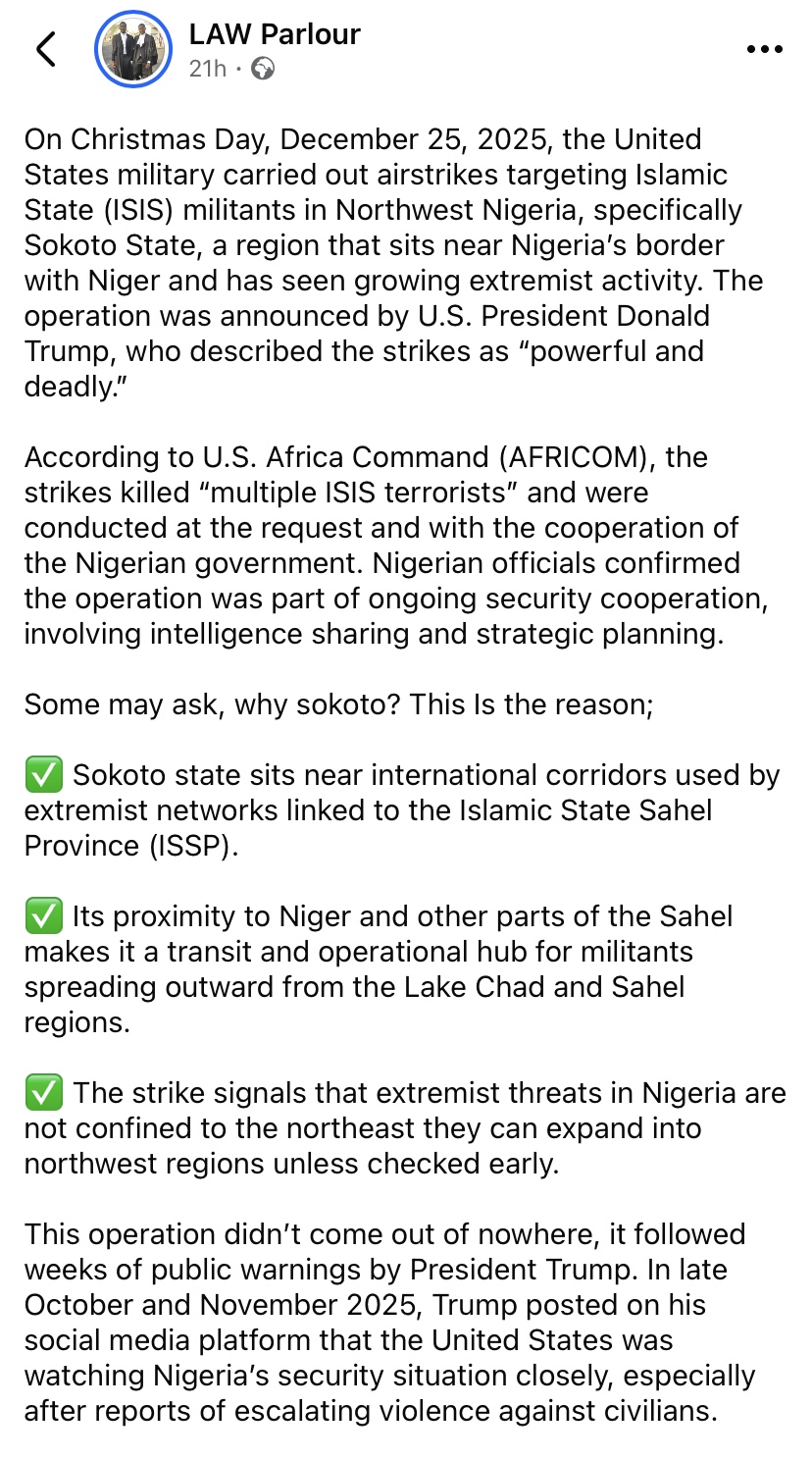
Sokoto’s proximity to Niger and other parts of the Sahel has reportedly transformed it into a crucial transit and operational base for militants. These extremist elements are believed to be extending their reach outwards from established strongholds in the Lake Chad basin and other Sahelian territories. The airstrikes send a clear signal that the threat of extremist expansion in Nigeria is not confined to its traditional northeastern strongholds and requires proactive intervention in emerging areas.
The operation follows a series of public warnings issued by then-U.S. President Donald Trump in the weeks preceding the strikes. In late October and November, President Trump utilized his social media platforms to express concerns about Nigeria’s escalating security situation. He indicated that the United States was closely monitoring the violence, particularly focusing on reports of increased attacks against civilians.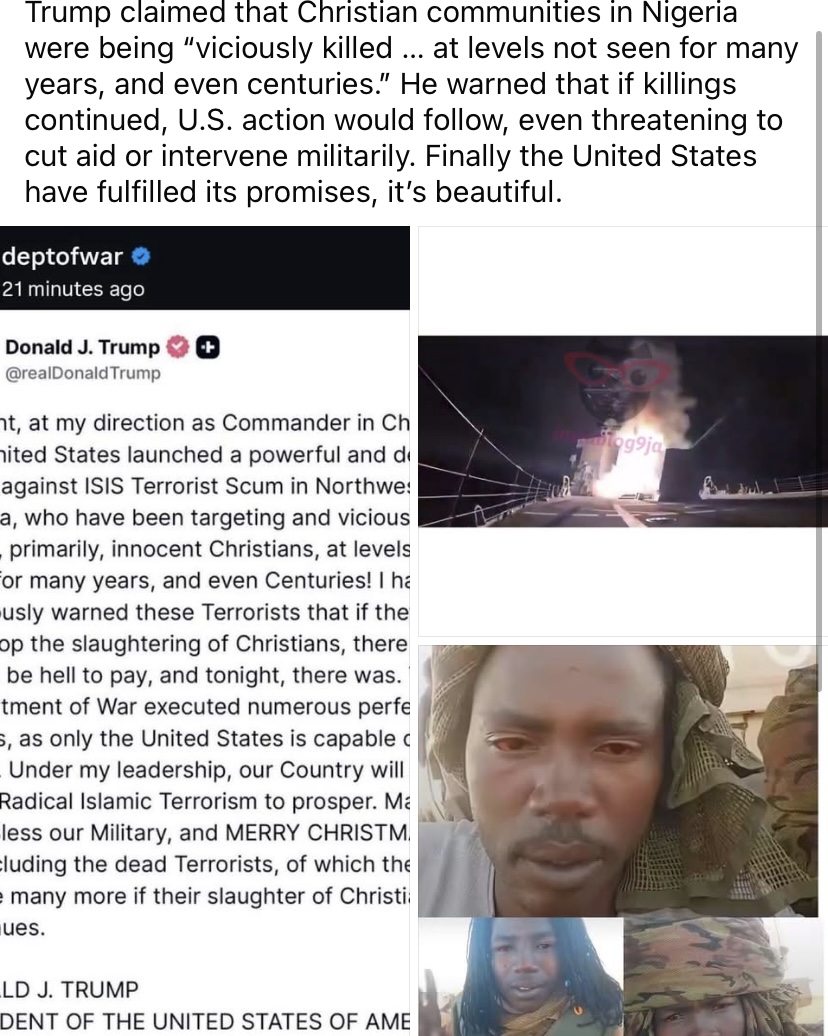
President Trump specifically highlighted the plight of Christian communities in Nigeria, asserting that they were being “viciously killed… at levels not seen for many years, and even centuries.” He had previously warned that if these killings persisted, the U.S. would consider taking decisive action, including potential cuts in aid or direct military intervention to address the deteriorating security landscape.
The airstrikes thus represent a fulfillment of these earlier pronouncements, demonstrating a resolve to act on stated intentions regarding international security threats. This targeted intervention underscores the U.S. commitment to supporting regional efforts against global terrorism, particularly in West Africa where extremist groups continue to pose significant challenges to stability and human security.
Security analysts suggest that such operations are vital for disrupting the logistical and operational capabilities of groups like ISIS and ISSP, which thrive on ungoverned spaces and porous borders. The coordinated efforts between the U.S. and Nigerian forces aim to degrade these networks, preventing them from establishing deeper roots and expanding their violent campaigns across the continent.
While the immediate impact of these strikes is clear, the long-term effectiveness will depend on sustained intelligence sharing, continued military cooperation, and comprehensive strategies to address the root causes of extremism. The focus on Sokoto signals a broader understanding of the evolving geographical spread of terrorist activities beyond traditional conflict zones.