A contentious exhibition tennis match, dubbed the “Battle of the Sexes,” is set to feature women’s world number one Aryna Sabalenka and controversial Australian player Nick Kyrgios. Scheduled for Sunday in Dubai, the event has drawn significant criticism for its perceived lack of purpose and potential to undermine advancements in women’s sport. Critics argue the spectacle, promoted by the agency Evolve, which represents both players, falls far short of the historical significance of its 1973 namesake.
The match format includes a three-set contest with a 10-point deciding tiebreak, notable for its single-serve rule per point. Adding to the controversy, Sabalenka’s side of the court will be nine per cent smaller than Kyrgios’s, a modification justified by organisers who claim women move, on average, nine per cent slower than men. This adjustment has been widely dismissed as a gimmick, offering Kyrgios a pre-emptive excuse should he face defeat.
This contemporary event starkly contrasts with the iconic 1973 “Battle of the Sexes,” where Billie Jean King, a trailblazer for women’s rights and sport, defeated self-proclaimed “male chauvinist pig” Bobby Riggs. That seminal match carried profound societal weight, aiming to validate women’s tennis and champion equal pay and treatment during a pivotal era for the women’s rights movement. King herself stated that losing would have set women’s tennis back 50 years, underscoring the high stakes involved.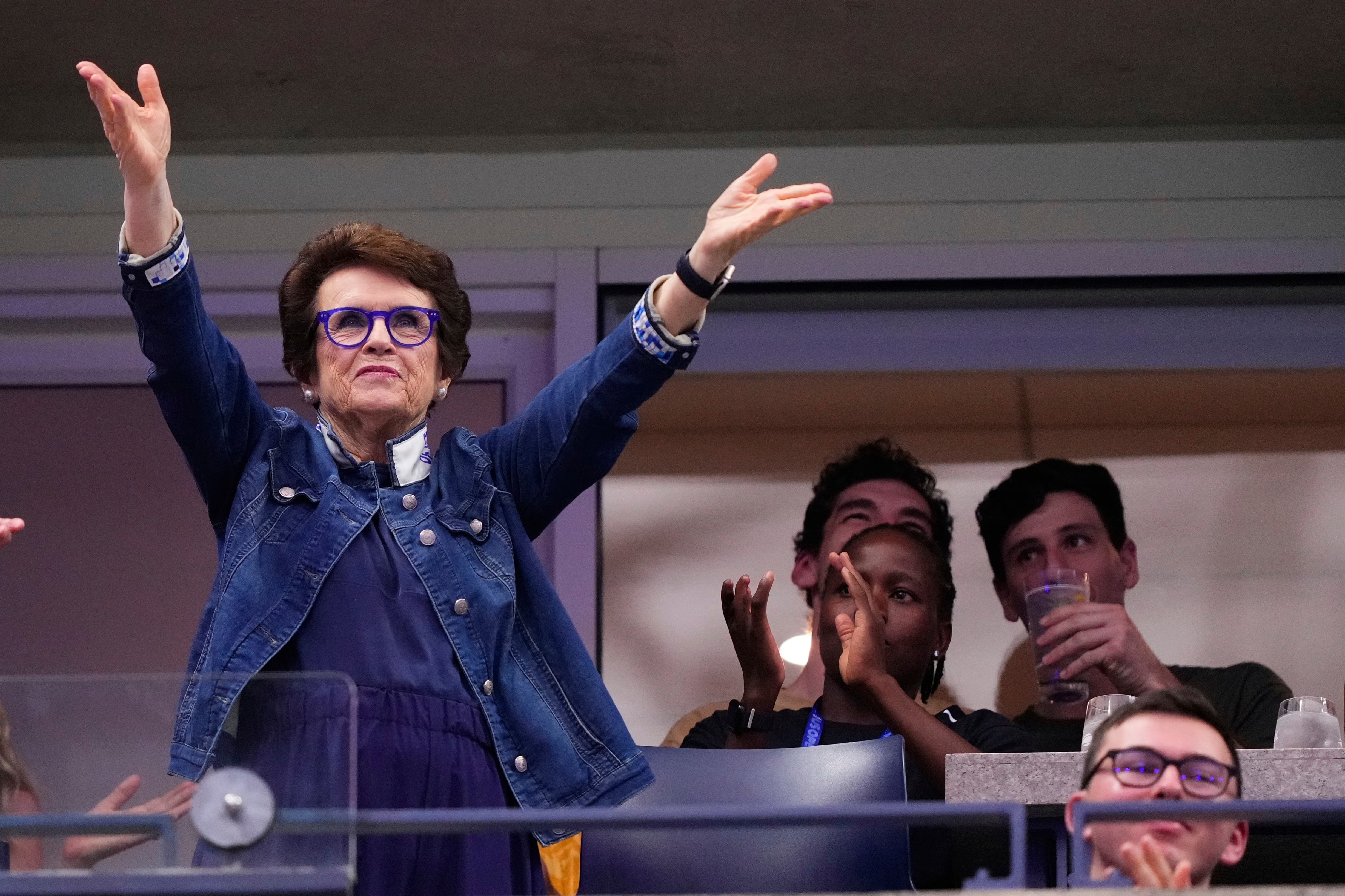
The upcoming Sabalenka-Kyrgios encounter, however, appears devoid of such gravitas or a higher purpose. It is not billed as a celebration of tennis or an effort to foster societal change, but rather as a lucrative exhibition primarily driven by profit and the pursuit of media attention. This perceived commercialisation, coupled with the unusual court handicaps, reinforces concerns that the event serves to gamify and trivialise serious issues surrounding gender in sport.
The choice of participants further fuels the debate. Aryna Sabalenka, while a top-ranked player, has faced scrutiny for past comments suggesting men’s tennis is “more interesting,” detracting from her potential role as an ambassador. Nick Kyrgios, currently ranked 673rd and inactive since March, is known more for on-court antics and off-court controversies. His past includes admitting to assaulting an ex-girlfriend and endorsing a far-right influencer, raising questions about his suitability for an event influencing perceptions of gender equality.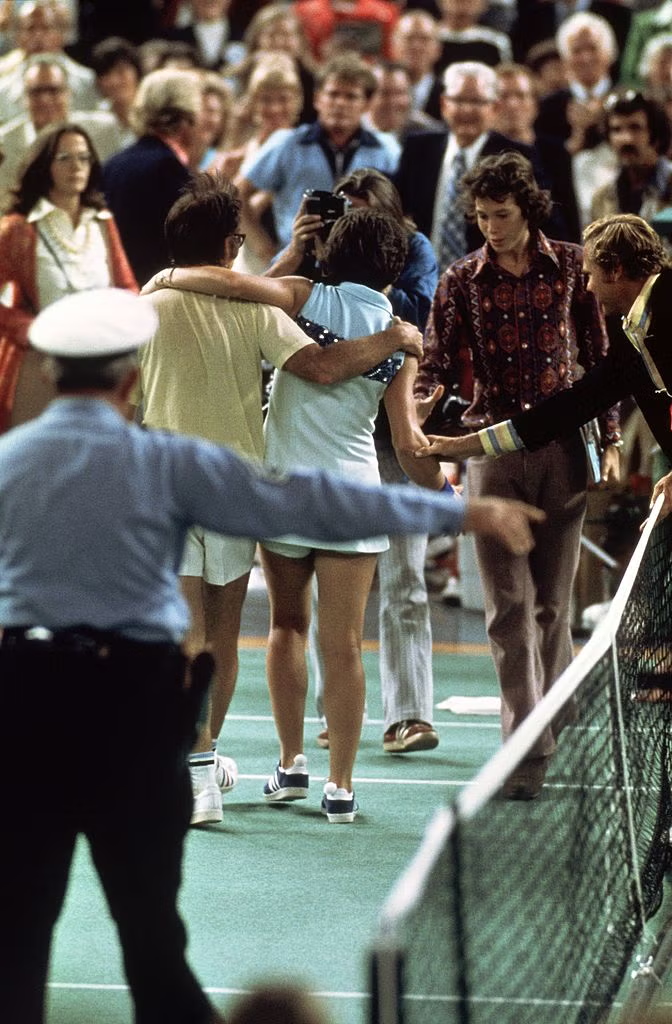
Regardless of the match’s outcome, critics fear it risks perpetuating harmful narratives. A victory for Kyrgios could inflate his ego and provide ammunition for online trolls and misogynists to argue the inferiority of women’s tennis. Conversely, a loss would likely be dismissed by him as inconsequential, yet still grant him the media spotlight he often seeks. This scenario echoes the aftermath of King’s victory, where suggestions of Riggs deliberately throwing the match emerged, highlighting the enduring challenge of validating women’s sporting achievements.
The broadcasting of this event by major outlets, including the BBC, has also drawn ire, with some commentators suggesting it represents a misstep into the “cesspit of modern-day gender politics” rather than a genuine sporting spectacle. Organisers’ encouragement for viewers to “pick a side” further simplifies and distorts the complex historical context of the original Battle of the Sexes, reducing it to a mere clash of personalities rather than a meaningful contest for social progress.
Historically, various “Battle of the Sexes” matches have taken place, often featuring handicaps for men or being exploited to diminish women’s sport, as seen with Ilie Nastase playing in a dress against Evonne Goolagong. While some matches have been more balanced, the King-Riggs encounter remains iconic due to its exceptionally high stakes and profound cultural impact. This modern iteration, devoid of such fundamental purpose, is widely expected to fade into obscurity, but not without potentially leaving a damaging legacy for the discourse around gender equality in sports.