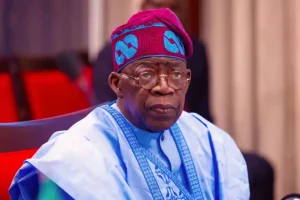
Barrister Oluwaseyi Tinubu, son of Nigeria’s President Bola Ahmed Tinubu, has been conferred with the esteemed chieftaincy title of Okanlòmo of Eyọ Ọba Alakẹtẹ Pupa, Laba Ẹkun. The installation ceremony, held on Friday, December 26, 2025, in Lagos, precedes the highly anticipated Eyo Festival by just one day. This significant cultural honour places Mr. Tinubu in a symbolic leadership position within one of Lagos’ most revered indigenous institutions, underscoring his recognised contributions to cultural preservation.
The title “Okanlòmo,” deeply rooted in the Yoruba language, translates to “beloved child,” signifying an individual held in high regard by the community for their dedication to societal development and cultural heritage. This conferment specifically links Mr. Tinubu to the Eyọ Ọba Alakẹtẹ Pupa group, one of the five distinguished Eyo lineages identifiable by their distinctive red hats, known as Laba Ẹkun. His wife, Layal Tinubu, also received a complementary chieftaincy title during the same ceremony, further highlighting their integration into Lagos’ traditional circles.
Lagos State Governor Babajide Sanwo-Olu was among the first to extend his congratulations, conveying his well wishes through a verified social media account shortly after the ceremony. “I warmly congratulate Barrister Oluwaseyi Tinubu on his installation as the Okanlòmo of Eyọ Ọba Alakẹtẹ Pupa, Laba Ẹkun,” the governor stated. He further emphasised that the honour reflects Mr. Tinubu’s “service, character, and commitment to our culture and people,” wishing him strength in upholding the profound responsibilities associated with the prestigious title.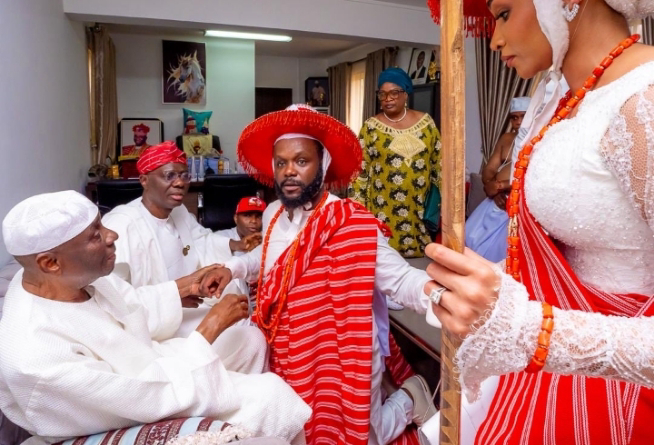
Chieftaincy titles in Yoruba culture represent more than mere ceremonial honours; they are integral to the social and political fabric of communities, often carrying significant communal responsibilities and expectations. Recipients are typically individuals recognised for their leadership, philanthropy, or efforts in promoting cultural values. Such installations reinforce traditional governance structures and celebrate those deemed worthy of guiding and representing their people.
This recent recognition in Lagos follows closely on the heels of another significant traditional honour for the couple. Just days prior, on December 21, 2025, the Alaafin of Oyo, Oba Abimbola Akeem Owoade, installed Seyi Tinubu as the Okanlomo of Yorubaland and Layal Tinubu as the Yeye Okanlomo of Yorubaland. That grand event in Oyo town drew numerous high-profile dignitaries, solidifying the couple’s growing influence within pan-Yoruba traditional leadership structures.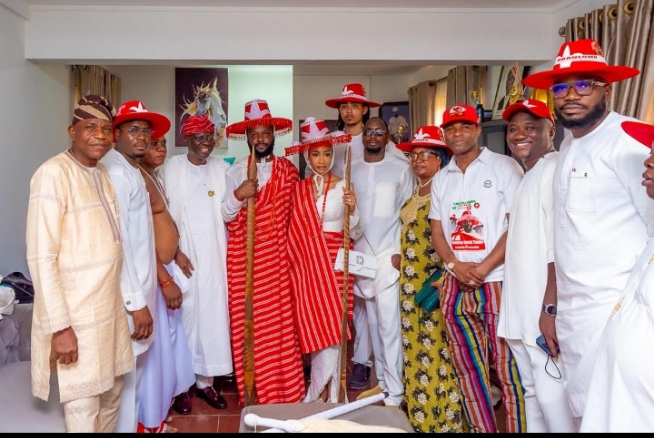
The timing of the Lagos installation is particularly noteworthy as it coincides with the long-awaited resurgence of the Eyo Festival, also known as the Adamu Orisha Play. This iconic cultural spectacle returns to the streets of Lagos after an eight-year hiatus, with its last iteration having taken place in 2017. The festival, deeply ingrained in the history and identity of Lagos Island, promises to be a vibrant display of Yoruba heritage and communal spirit, drawing thousands.
The Eyo Festival is a unique and cherished tradition, featuring iconic white-clad masquerades, known as Eyos, who parade through the city’s historic streets. Accompanied by rhythmic chants, pulsating drums, and intricate dances, the festival serves a dual purpose. It traditionally honours departed community leaders and marks significant transitions or milestones within the indigenous society, standing as a powerful expression of Yoruba identity, unity, and ancestral reverence among participants and spectators alike.
This year’s edition, scheduled to be centered at the historic Tafawa Balewa Square, carries added emotional weight as it pays tribute to several notable Lagos figures. Among those being honoured are the late Alhaja Abibatu Mogaji, mother of President Bola Ahmed Tinubu, along with former governors Lateef Jakande and Michael Otedola, and General Mobolaji Johnson. These tributes underscore the festival’s role in preserving the memory and contributions of Lagos’ past leaders.
The grand event is expected to attract thousands of local residents, diaspora members, and international tourists, further boosting cultural tourism in the region. Beyond its ceremonial aspects, the Eyo Festival serves as a significant economic driver, supporting local artisans, vendors, and hospitality services. It reinforces Lagos’ crucial role as a custodian of Yoruba culture and a vibrant hub for traditional festivals on the African continent.
The various Eyo groups themselves, distinguished by their unique hat colours—Adimu (black), Laba (red), Oniko (yellow), Ologede (green), and Agere (purple)—each originate from the historic Iga (palaces) of Lagos’ ancient ruling families. Their collective procession symbolises communal harmony, continuity, and the enduring strength of indigenous traditions, showcasing the rich tapestry of Lagos’ cultural heritage to the world.