The United States has conducted a series of airstrikes targeting Islamic State (IS) militants across Nigeria, an operation confirmed by President Donald Trump on his Truth Social platform. These strikes, which have prompted widespread inquiry within Nigeria, reportedly hit locations in Sokoto State, northwestern Nigeria, and Kwara State in the north-central region, aiming to disrupt terrorist activities.
Details released by the US Department of Defense indicated that the precision strikes involved missiles launched from an unmanned aerial vehicle. This drone was reportedly deployed from a US warship stationed at a military base in Ghana, with intelligence suggesting that IS operatives were active and unchallenged in parts of Sokoto State, prompting the swift military response.
In Sokoto State, eyewitness accounts and local government officials confirmed strikes in the Tangaza and Tambuwal local government areas. Isa Saleh Bashir, the chairman of Tangaza Local Government, informed the BBC that attacks indeed occurred within forested areas, specifically targeting “terrorist camps.” He mentioned Tandami village as one of the affected sites, adding that Nigerien security forces patrolling the border reportedly observed insurgents fleeing the area.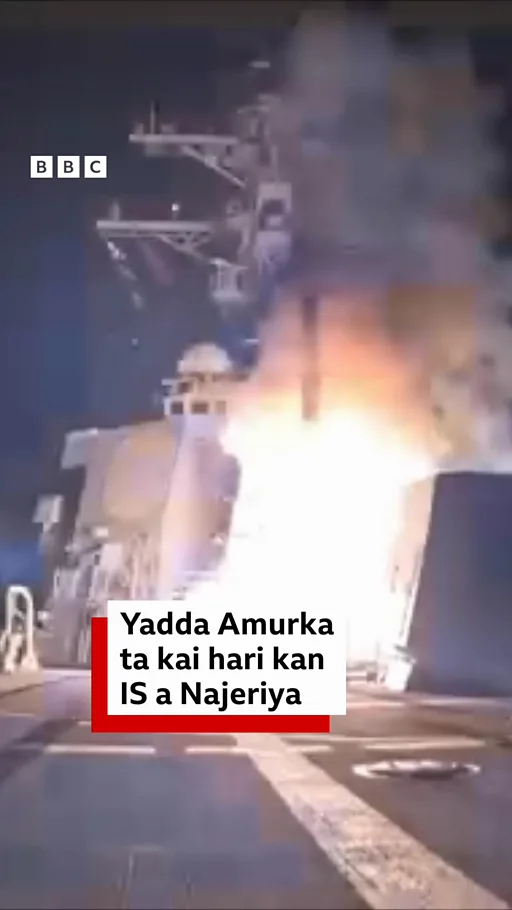
However, the impact of the strike in Jabo, Tambuwal Local Government, presented a contrasting narrative. While the missile landed in an open field approximately 500 meters behind a local hospital, residents asserted that it caused no direct casualties. One local resident described hearing a loud sound and seeing an object fall, confirming it landed in an onion farm without harming anyone, though another youth, Hassan Garba, claimed some individuals sustained injuries from sparks.
Following the US operation, the Nigerian military rapidly deployed additional security personnel to several local government areas surrounding the strike zones, including Gudu, Tangaza, and Binji. This deployment aimed to prevent the regrouping of terrorists reportedly dispersed by the Thursday airstrikes. Despite these official actions, some local residents in the affected areas claimed they had not observed increased security presence and were unaware of any terrorist elements operating in their communities prior to the strikes.
The operation also extended to Offa in Kwara State, where both local government sources and state officials confirmed a strike within the town. This area has recently experienced heightened insecurity, including a church attack by gunmen that resulted in two fatalities and several abductions. Images obtained from residents depicted missile impacts near residential structures, with some walls sustaining damage.
Kwara State government officials corroborated reports of multiple impact sites within Offa, including areas close to an Eid prayer ground and two prominent hotels, Offa Central Hotel and Solid Worth Hotel. The proximity of these strikes to civilian infrastructure and public spaces underscores the significant implications for local communities, even as the operations target insurgent groups.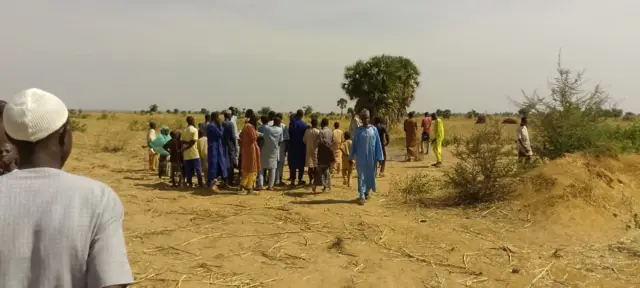
Looking ahead, US Defense Secretary Pete Hegseth hinted at the possibility of further military action, stating “More to come…” on his X platform without specifying additional locations or timelines. This suggests an ongoing US commitment to counter-terrorism efforts in the region, potentially indicating a broader strategy against extremist groups in West Africa.
These recent US interventions in Nigeria align with previous concerns articulated by President Trump regarding the security situation in Northern Nigeria. He had previously highlighted what he referred to as a “genocide of Christians,” framing the region as a critical area for international counter-terrorism engagement. The airstrikes underscore a continued focus on disrupting groups like IS in a strategically vital part of the African continent.