

Riyadh, Saudi Arabia – The boxing world eagerly anticipates a high-stakes event on December 27, featuring two of the sport’s most highly-regarded practitioners, Naoya Inoue and Junto Nakatani. This card in the Saudi capital is poised to offer a compelling contrast to recent crossover spectacles, promising a return to elite-level pugilism with significant implications for the careers of both Japanese stars and a potential future mega-fight between them.
Undisputed super-bantamweight champion Naoya Inoue, widely considered among the best pound-for-pound fighters globally, will defend his unified titles against the unbeaten Alan Picasso. In the preceding bout, three-weight champion Junto Nakatani makes his debut in the super-bantamweight division, challenging the undefeated Sebastian Hernandez Reyes. Both contests feature top-ranked fighters, with Inoue listed as the second-best boxer alive and Nakatani at number eight in independent rankings.
The event distinguishes itself from recent high-profile boxing exhibitions, such as the widely criticized bout between Anthony Joshua and YouTuber-turned-boxer Jake Paul. Unlike the perceived theatricality of influencer boxing, Picasso and Reyes are expected to engage in traditional, competitive encounters. Despite their underdog status against the highly decorated Inoue and Nakatani, both challengers are committed to fighting aggressively, aiming for victory rather than merely avoiding damage.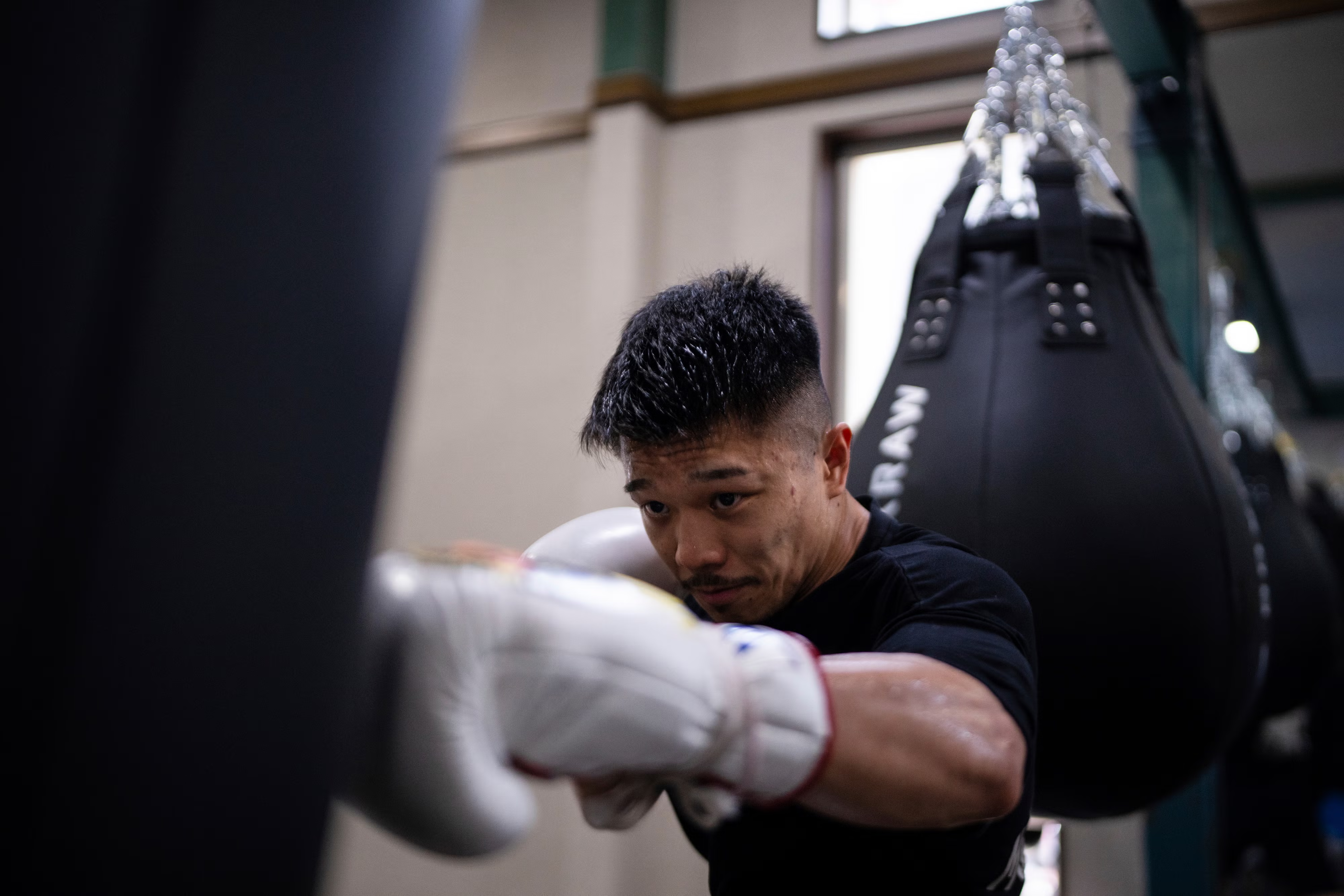
Much of the long-term intrigue surrounding this card centers on a prospective showdown between Inoue and Nakatani, a highly anticipated clash potentially slated for 2026. Inoue, a two-weight undisputed king and four-weight champion, has often faced criticism regarding a perceived lack of marquee opponents in his lower weight classes. However, the emergence of Nakatani, a formidable three-weight champion, presents a compelling and marketable challenge that could solidify Inoue’s legacy.
However, the sport’s inherent unpredictability casts a shadow over such future aspirations. Boxing history is replete with examples where eagerly anticipated matchups, contingent on preliminary wins, have crumbled due to unexpected upsets on the same fight card. A notable instance occurred two years ago in Riyadh, where an anticipated Anthony Joshua versus Deontay Wilder clash was derailed after Wilder suffered a decisive loss to Joseph Parker, despite Joshua’s victory over Otto Wallin.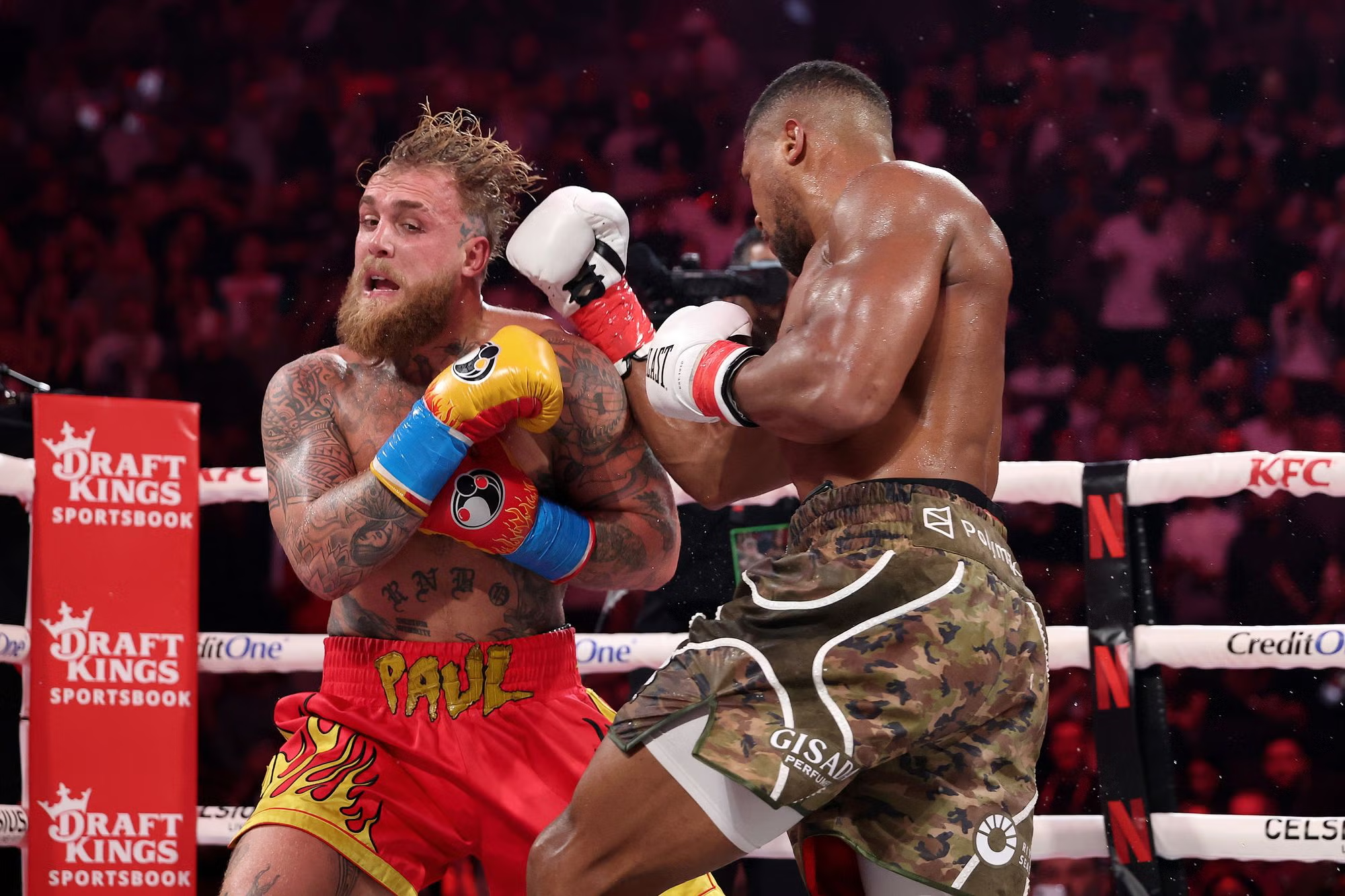
Similarly, a planned rematch between Devin Haney and Ryan Garcia fell apart earlier this year after Garcia suffered an upset loss to Rolly Romero, while Haney secured a less-than-convincing win. These precedents serve as a stark reminder that viewing any fight as a mere stepping stone carries substantial risk. The chaos of boxing frequently intervenes, upending carefully laid plans and highly anticipated future contests.
Concerns for the immediate future of the proposed Inoue-Nakatani super-fight also exist. Inoue, despite his formidable reputation as “The Monster,” has shown moments of vulnerability, having been dropped in two of his last five fights. This suggests that even against a less-heralded opponent like Picasso, an upset, or at least a challenging encounter, remains a possibility. Nakatani, moving up three divisions from his initial world title weight, faces the inherent challenges of adapting to a new weight class, where his opponent Reyes boasts an impressive 90 percent knockout rate.
Nakatani’s adaptation to the super-bantamweight division will be a critical factor. While Inoue has established himself in this weight class over the past two and a half years, having previously conquered divisions shared with Nakatani, their respective physical evolutions differ. Inoue began his career at light-flyweight, a smaller division than Nakatani has ever competed in. This raises questions about how seamlessly Nakatani will fill out and perform at the higher weight, potentially influencing his long-term prospects, including a future clash with Inoue.
Beyond the sporting dynamics, the event carries significant political implications due to its host, Saudi Arabia. The Gulf state has increasingly invested in high-profile sporting events over the past two years, leading to widespread accusations of “sportswashing.” Critics argue that these events are strategically used to distract from the country’s controversial human rights record and project a more favourable international image. This ethical dilemma remains a contentious point for fans and stakeholders alike.
Ultimately, while the Riyadh card promises a captivating display of world-class boxing, it is not without its complexities. For traditionalists, it represents a refreshing counterpoint to the commercial spectacles that have recently garnered attention, showcasing genuine skill and competitive spirit. Yet, the underlying political controversies and the inherent unpredictability of the sport ensure that many questions will remain unanswered, even as the boxing world tunes in for what is hoped to be an evening of pure pugilism.






