


A wave of intense online speculation has recently emerged in Nigeria, linking President Bola Ahmed Tinubu’s Christmas message to an alleged military strike against terrorist groups in the northern state of Sokoto. The extraordinary claims suggest that a seemingly innocuous social media post by the Nigerian leader, which tagged former United States President Donald Trump, was in fact a deliberate ‘signal’ preceding the reported operation. This theory, widely circulated across Nigerian social media platforms, has ignited considerable debate and scrutiny regarding unofficial communications between heads of state and international counter-terrorism efforts.
Reports, largely unconfirmed by official sources, indicated that an operation targeting extremist elements in Sokoto had taken place in recent weeks. These reports described a deadly strike against groups accused of perpetrating violence and specifically targeting Christian communities in the region. While details of the alleged operation remain scarce and official confirmation from either Nigerian or US authorities is absent, the timing of these claims has fueled the surrounding social media narrative.
Central to the unfolding online narrative is the assertion that former US President Donald Trump had previously issued a stern warning to terrorist groups operating in Nigeria. According to various unverified reports circulating online, Trump allegedly cautioned these groups of severe consequences if their attacks on Christian populations continued. This purported warning is cited by proponents of the ‘signal’ theory as a precursor to the subsequent alleged strike in Sokoto, creating a perceived connection between Trump’s rhetoric and the military action.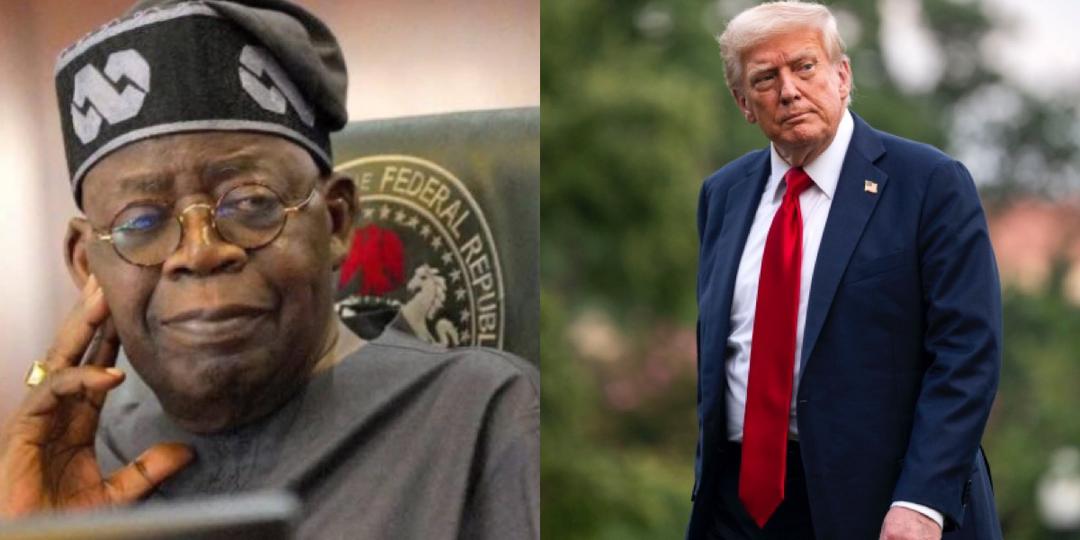
The catalyst for the ‘signal’ theory originated from President Tinubu’s official Christmas message to the Christian community. In a post shared across his social media platforms, President Tinubu included tags for numerous individuals, among whom was Donald Trump. A Facebook user, identified as Innocent Tito, quickly seized upon this specific tag, interpreting it not merely as a festive greeting but as a coded message—a ‘go-ahead sign’ for an alleged US-backed intervention. Tito’s post, which stated, “Wow. I see why Tinubu tagged Trump this morning with the Merry Christmas wishes of Christians. It was a sign to go ahead,” rapidly gained traction.
The extraordinary claim and its associated interpretations swiftly sparked widespread discussion and engagement across Nigerian digital spaces. Many social media users found the proposition intriguing, sharing and debating the potential implications of such an informal communication channel between two prominent leaders. Conversely, a significant portion of the online community dismissed the entire premise as baseless speculation, highlighting the lack of credible evidence and the inherent implausibility of diplomatic and military actions being orchestrated through social media tags.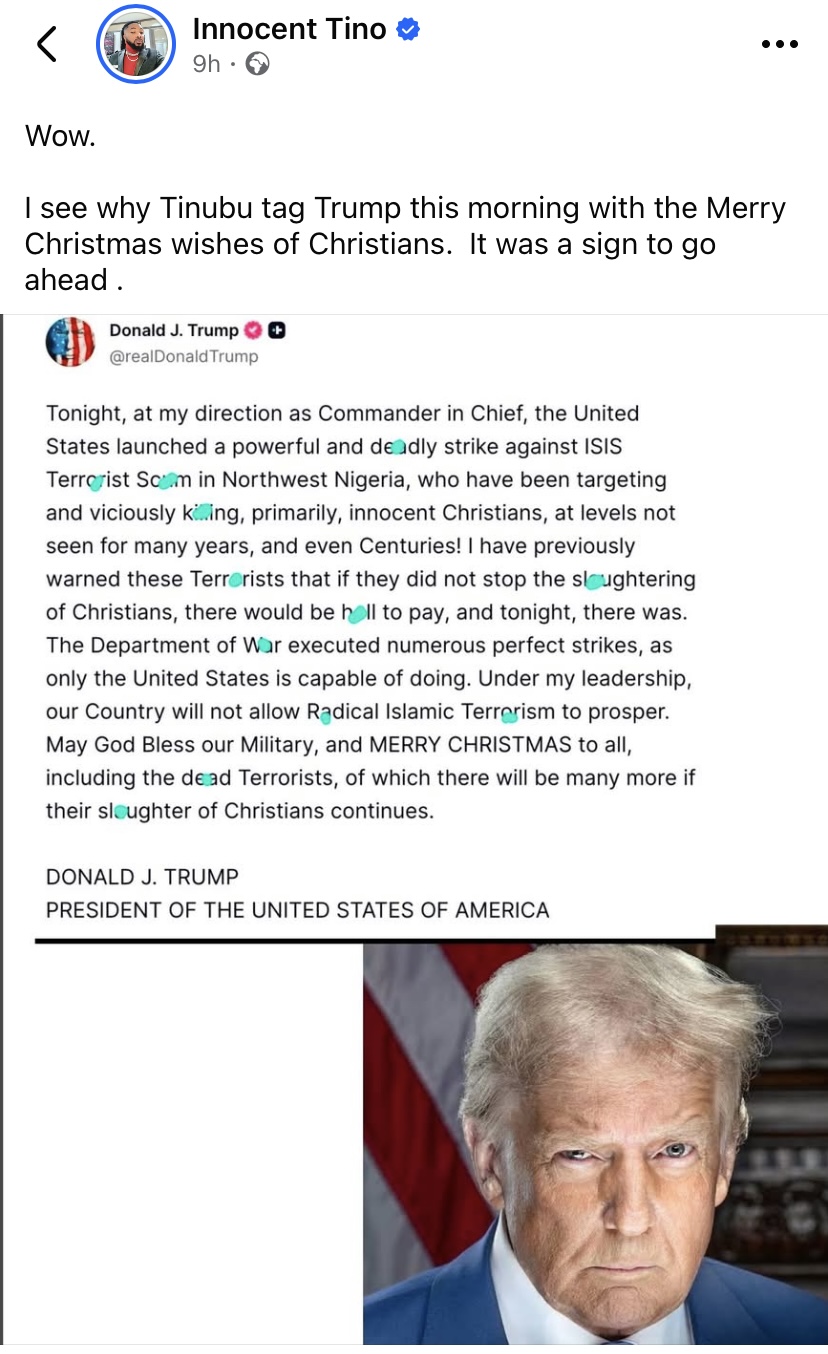
Crucially, neither the Nigerian Presidency nor the United States government has issued any official statement or comment regarding these claims. The silence from both nations’ official channels underscores the speculative nature of the allegations. Standard international protocols for military cooperation and intelligence sharing involve formal channels, diplomatic negotiations, and rigorous verification processes, making the suggestion of a ‘go-ahead sign’ via a social media tag highly unconventional and fundamentally improbable within established geopolitical frameworks.
This episode highlights a growing trend in the digital age where unverified claims and conspiracy theories can rapidly proliferate, often blurring the lines between fact and fiction. The ease with which such narratives gain currency underscores the challenges faced by the public in discerning credible information amidst a deluge of online content. While the internet facilitates rapid communication, it also provides fertile ground for the spread of misinformation, particularly concerning sensitive geopolitical or security matters.
As the online discourse continues, the narrative remains firmly rooted in the realm of conjecture, devoid of any official corroboration. The purported link between President Tinubu’s festive greeting and an alleged counter-terrorism strike, reportedly influenced by a former US President’s warning, serves as a stark reminder of the power of social media to generate and amplify unproven assertions, even those with significant international implications. Observers continue to await any definitive statements from the involved governments, though none appear forthcoming.






