


The United States military has conducted an airstrike in northwest Nigeria, targeting Islamic State (ISIS) militants following a period of escalating violence and specific attacks against Christian communities in the region. This significant direct intervention, announced by former President Donald Trump on Christmas Day via his Truth Social platform, underscores ongoing international concerns about the expanding influence of extremist groups across West Africa. The operation aims to degrade the capabilities of militants responsible for severe human rights abuses.
In his public statement, Mr. Trump asserted that the strike was executed under his explicit direction as Commander-in-Chief. He reiterated his administration’s firm commitment to combating what he termed “radical Islamic terrorism,” emphasizing claims that militants have systematically targeted and killed Christians in Nigeria for years, reaching unprecedented levels of brutality and persecution. This framing highlights a focus on religious motivations behind the conflict.
The former president’s post specifically detailed the operation: “Tonight, at my direction as Commander in Chief, the United States launched a powerful and deadly strike against ISIS Terrorist Scum in Northwest Nigeria, who have been targeting and viciously killing, primarily, innocent Christians, at levels not seen for many years, and even Centuries.” He added a stark warning, stating he had previously cautioned these groups of “hell to pay” if the “slaughtering of Christians” did not cease, implying a direct fulfillment of that threat.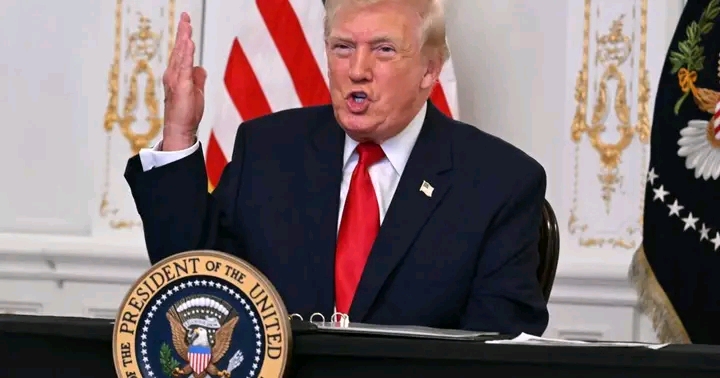
This intervention arises amidst a deeply complex and deteriorating security landscape across Nigeria, particularly in its northern and central regions. The Islamic State West Africa Province (ISWAP), a formidable splinter faction of Boko Haram that pledged allegiance to ISIS, has emerged as a dominant insurgent force. ISWAP is responsible for numerous abductions, bombings, and assaults on both military installations and civilian targets, frequently singling out Christian populations and aid workers for persecution.
Northwestern Nigeria, traditionally less impacted by the long-running insurgency compared to the northeast, has recently witnessed a severe escalation in violence from various armed groups, including elements of ISWAP, remnants of Boko Haram, and organized bandit gangs. These groups exploit ungoverned spaces, local grievances, and ethnic tensions, creating a profound humanitarian crisis marked by mass displacement, widespread food insecurity, and a collapse of essential government services, further exacerbating inter-communal strife.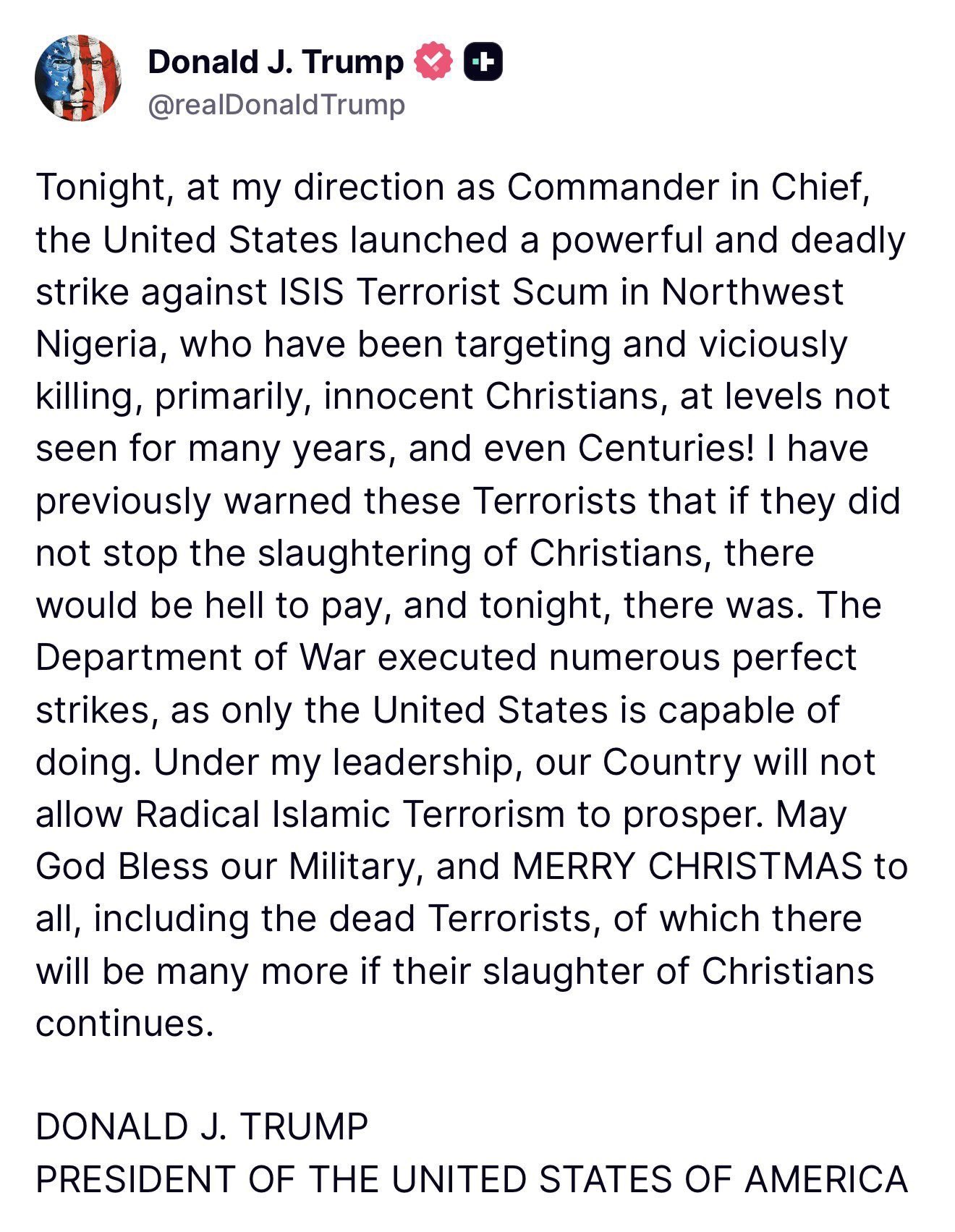
The United States has maintained a long-standing commitment to counter-terrorism efforts across the African continent, typically through robust programs involving training and equipping local security forces, sharing critical intelligence, and executing targeted special operations. While direct military action of this nature is less frequent, this strike underscores Washington’s profound concern over the persistent expansion of jihadist groups and the severe human rights atrocities they perpetrate against religious minorities and vulnerable communities.
Many critics and security analysts frequently highlight the inherent limitations of military-first approaches to counter-terrorism, arguing that such interventions often fail to adequately address the deeper underlying socio-economic and political factors that fuel extremism. Experts suggest that achieving sustainable peace and stability in regions like the Sahel requires comprehensive, multi-faceted strategies that integrate governance reforms, robust economic development initiatives, and community engagement alongside necessary security operations.
The specific timing of the announcement on Christmas Day and its dissemination exclusively through a personal social media platform, rather than via established official governmental channels, garnered considerable attention. Historically, significant military actions are communicated through formal statements from the Department of Defense or the White House press office, making the choice of Truth Social a notable departure from traditional protocols, characteristic of the former administration’s communication style.
Furthermore, while Mr. Trump’s statement referred to the “Department of War” executing the strikes, the US military operates under the Department of Defense, a title adopted in 1947 to reflect a broader national security mandate encompassing defense rather than solely offensive operations. This specific linguistic choice, though perhaps rhetorical, subtly highlights a particular framing of the military’s role within the former president’s public discourse and policy outlook.
The long-term strategic impact of such a targeted strike on the operational capabilities and recruitment efforts of ISIS militants in Nigeria remains subject to ongoing assessment. However, it unequivocally signals a continued willingness by the United States to employ direct military force against groups deemed a significant threat to regional stability, international security, and fundamental human rights, even as the broader international strategy for combating extremism across the Sahel region continues to adapt and evolve.





