Professional snooker is experiencing an unprecedented shift this season, marked by a remarkable dispersion of titles across the circuit. The 2025-26 campaign has witnessed 13 different champions emerge from just 14 tournaments, a stark departure from the sport’s traditional landscape of dominant figures. This surprising level of parity has sparked considerable debate among players and pundits regarding its causes and long-term implications for the sport.
The depth of competition is further underscored by the fact that this list of winners notably excludes current world number one Judd Trump, seven-time world champion Ronnie O’Sullivan, four-time world champion John Higgins, and Chinese icon Ding Junhui. Mark Selby stands as the sole player to claim multiple victories, securing the Champion of Champions trophy in November and following up with the UK Championship three weeks later, marking his first Triple Crown title since 2021.
Beyond the diverse winners, the season has also seen an extraordinary array of finalists. A staggering 23 different players have reached a showpiece event out of the 28 available spots this term. Judd Trump, despite his world number one ranking, is the only player to have reached three finals, though he has yet to secure a title this season. Selby, Shaun Murphy, and Neil Robertson have each featured in two finals, highlighting the wide-open nature of competition.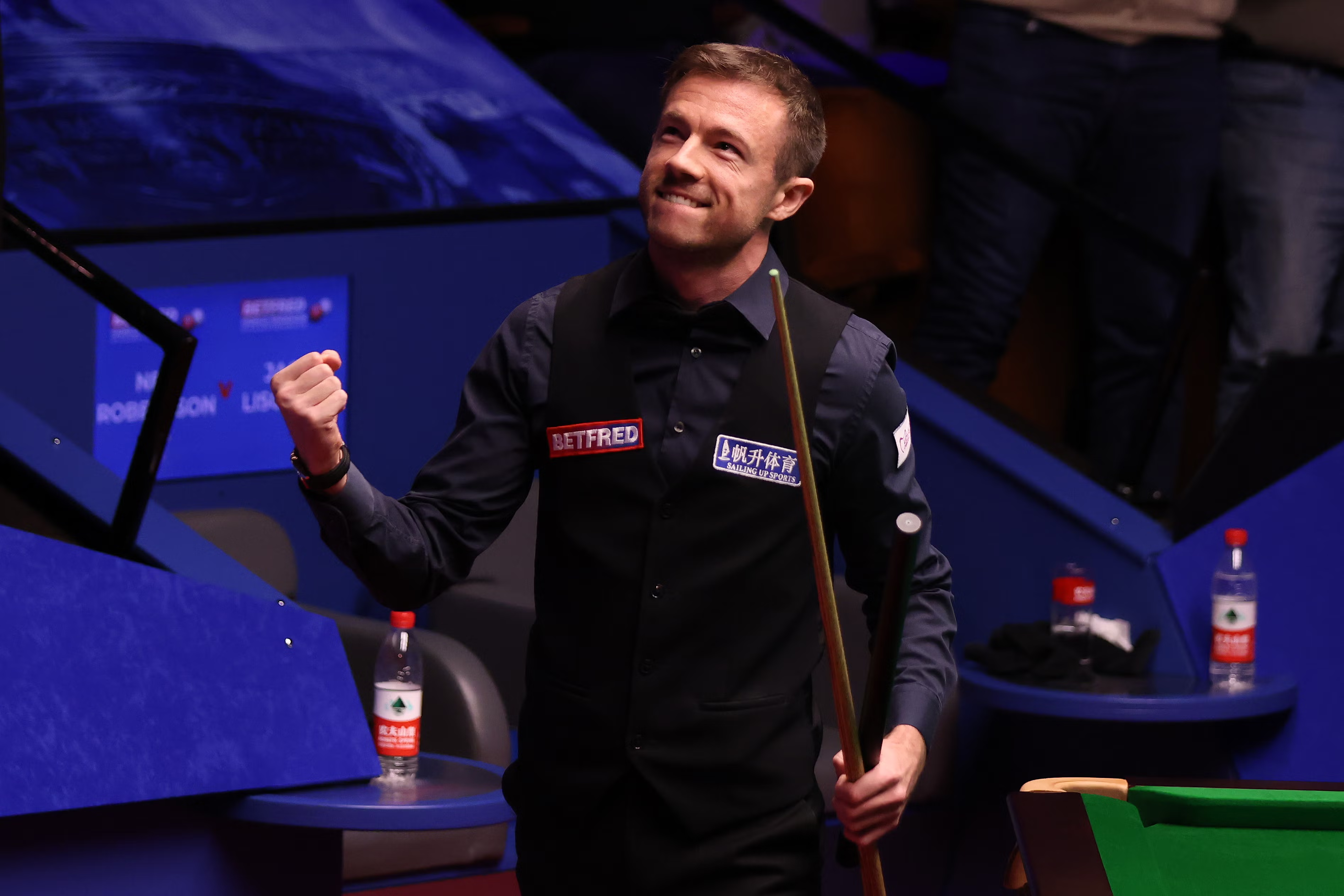
This current scenario represents a significant deviation from snooker’s historical patterns, where eras were often defined by a single dominant player or a small, elite group. The 1980s belonged to Steve Davis, the 1990s to Stephen Hendry, before the ‘class of 92’ — O’Sullivan, Higgins, and Mark Williams — ascended into the 21st century. More recently, Mark Selby and Neil Robertson dominated the 2010s, with Judd Trump following suit.
The stark contrast is evident when comparing current statistics to recent seasons; the 2023-24 campaign, for instance, saw only eight different winners across its first 18 events, a far cry from the 13 champions in just 14 tournaments this season. This raises a fundamental question: why are snooker’s top players suddenly finding themselves in such a tightly packed field?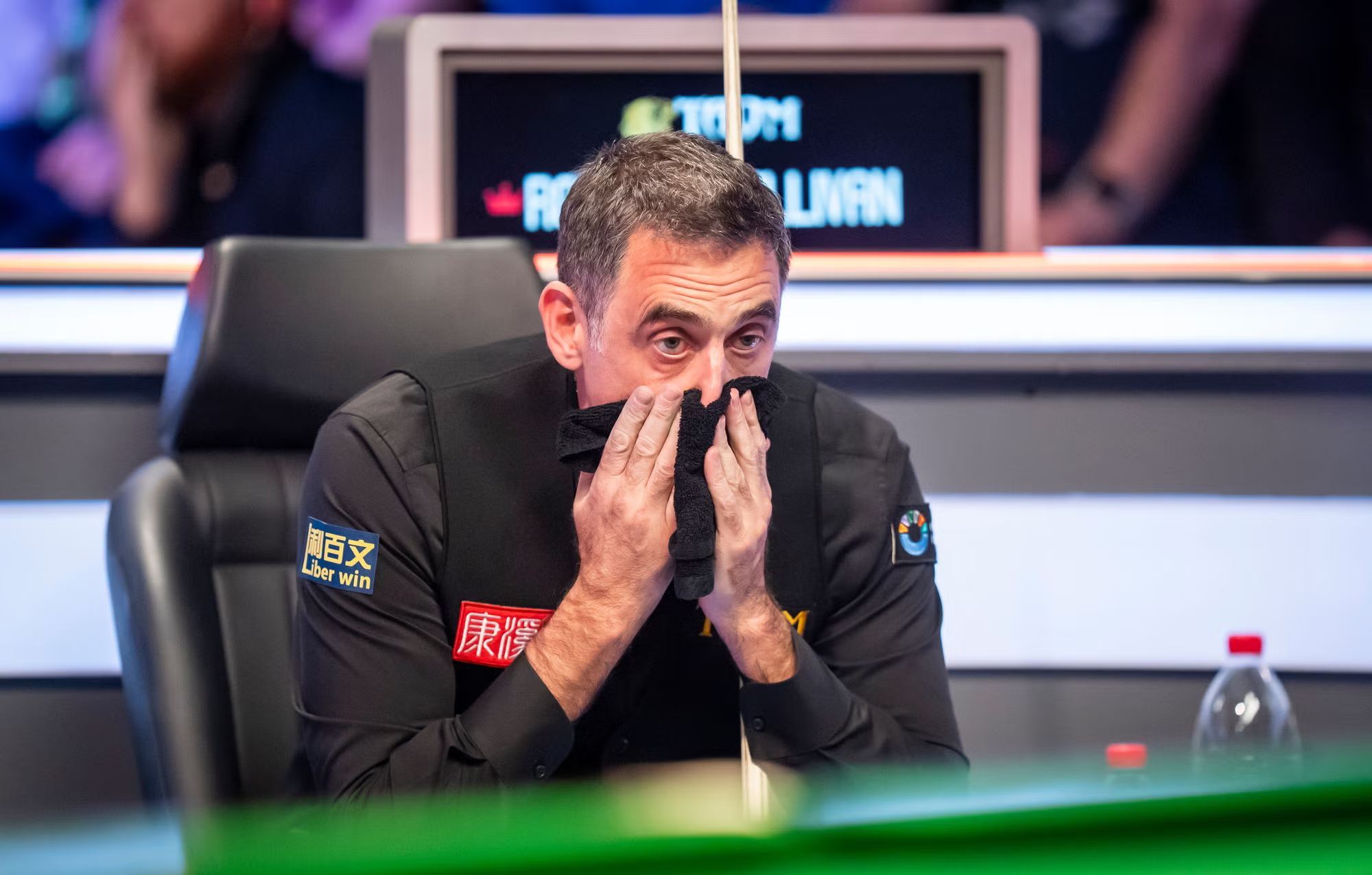
Seven-time world champion Stephen Hendry attributes this shift to a significant increase in the overall depth of talent throughout the rankings. He argues that the standard has risen considerably, particularly among players ranked from ten to forty, making it more challenging for even the best to avoid early tournament exits. This enhanced competitive landscape means top seeds face formidable opponents much earlier than in previous decades.
Conversely, Ronnie O’Sullivan has offered a more critical assessment, suggesting that the quality of players at the very top is, in fact, declining. He famously stated last year that it is “easier to win tournaments now than it ever has been,” citing his own five victories in 2023 achieved while “playing absolute rubbish stuff.” O’Sullivan has also voiced strong criticism regarding the perceived lack of emerging talent among younger players, noting that the ‘class of 92’ can still win major titles well into their fifties.
Another contributing factor to the increased number of winners is the significant expansion of the professional snooker calendar over the years. With approximately 20 ranking events per season, players find it difficult to maintain peak performance across every tournament, often opting to skip some. In contrast, the 2005-06 campaign featured only six ranking events, and the 2015-16 season just ten, illustrating a dramatic increase in opportunities for varied champions.
The immediate benefit of this widespread success is the emergence of compelling new narratives within the sport. This season has celebrated first-time ranking event triumphs for talents like 22-year-old Wu Yize, six-time losing finalist Jack Lisowski, and 49-year-old journeyman Alfie Burden. Such diverse victories inject fresh excitement and wider appeal, crucial for a sport continuously striving for broader audience engagement in a competitive global marketplace.
However, the long-term desirability of such extreme parity remains a subject of intense debate. The situation mirrors a quandary faced by professional tennis: is it more advantageous to have dominant, transcendent superstars who capture global attention, like Carlos Alcaraz and Jannik Sinner in the men’s game, even if it makes early tournament stages predictable? Or is the women’s game model, with numerous potential grand slam winners creating constant jeopardy but lacking a singular, cross-sport icon akin to Serena Williams, preferable?
The era of a single player claiming over 50 per cent of ranking events in a season, as Steve Davis and Stephen Hendry once did, is definitively over. It appears even the more recent trend of a handful of top players largely dividing victories among themselves may also be drawing to a close.
Unless a new dominant force or a select group of exceptional talents emerges to claim the mantle from past greats, snooker is set for a fundamental and lasting transformation. This shift promises an “ocean of possible winners” in any given week, making the 2025-26 season and beyond a fascinating and unpredictable period for the sport.