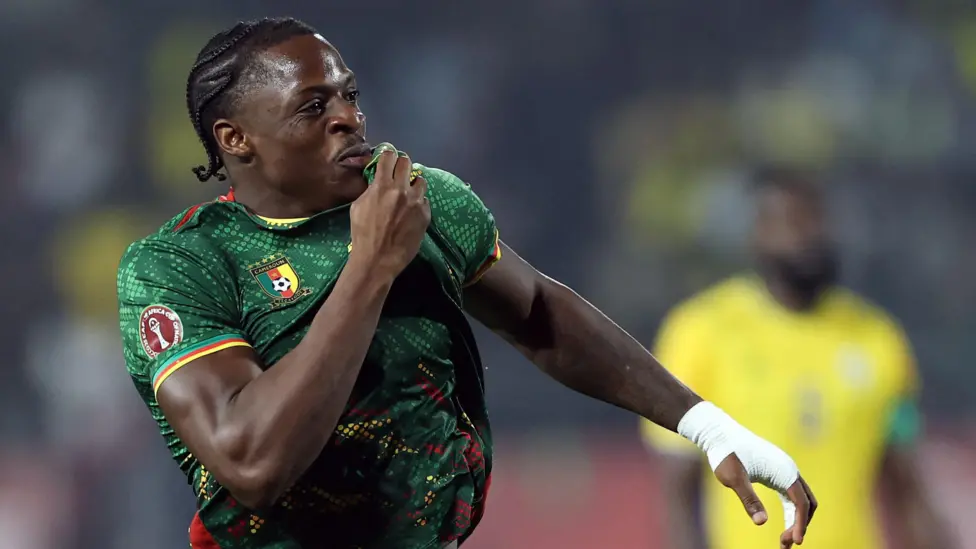
Nigeria’s Super Eagles secured a crucial 2-1 victory over Tanzania in their 2025 Africa Cup of Nations (AFCON) qualifier, a result that significantly bolsters their qualification aspirations. However, the win was somewhat overshadowed by a moment of visible frustration from star striker Victor Osimhen, who reacted strongly to his late substitution by head coach Eric Chelle. The incident, which occurred just moments before the final whistle, sparked immediate discussion regarding team dynamics and player temperament within the squad.
The decisive Group F encounter, played on Tuesday, saw Nigeria clinch victory through goals from defender Semi Ajayi and forward Ademola Lookman. The Super Eagles displayed a determined performance, securing three vital points that propel them further in their qualification campaign. The match had progressed largely without major incident until the 88th minute when Chelle opted to replace Osimhen with Paul Onuachu, a tactical decision common in the dying stages of a tightly contested game.
Osimhen, a player renowned for his intense passion and relentless work rate, did not conceal his displeasure at being taken off. As he departed the pitch, the Galatasaray striker exchanged words with Coach Chelle, his body language clearly conveying frustration. This public display of emotion continued as he took his seat on the bench, fueling immediate speculation among observers and media about potential discord or dissatisfaction within the Super Eagles camp.
Super Eagles captain Wilfred Ndidi, however, moved swiftly to address and downplay the incident in his post-match press conference. Ndidi, a seasoned midfielder and respected leader, dismissed any notions of disagreement or tension. He clarified that Osimhen’s reaction stemmed from his inherent drive and profound desire to contribute maximally to the team’s success, characterizing it as a natural human response rather than an act of defiance.
“I didn’t see that, but it is what it is,” Ndidi stated, acknowledging the visible reaction. “Osimhen is a big player; he wants to do the best for the team, maybe a bit frustrated. It is normal; we are human beings. Maybe he felt the game didn’t go his way because he was trying for the team. That’s the kind of player he is; we needed him.”
The Leicester City midfielder further elaborated on his perception of Osimhen’s mindset, suggesting that the prolific striker might be placing undue burden on himself. “I think Osimhen is putting too much pressure on himself,” Ndidi observed, indicating a deeper understanding of his teammate’s psychological state. He then revealed his intention to personally engage with Osimhen, stating, “I’m going to speak to him — he wants to win.” This commitment underscores the captain’s role in fostering team cohesion and managing individual pressures.
Osimhen’s reputation precedes him as one of Africa’s most formidable forwards, known for his explosive pace, aerial prowess, and unyielding commitment on the field. His intensity, while a significant asset to any team, occasionally manifests in emotional displays, particularly when he feels his performance or the team’s outcome is not meeting his high expectations. Such incidents, while sometimes perceived negatively, are often indicative of a player’s deep-seated competitive spirit.
Coaches frequently make substitutions based on various tactical considerations, including preserving key players, introducing fresh legs, or shoring up defensive lines in the final moments of a match. Chelle’s decision to bring on Paul Onuachu, a physically imposing striker, could have been aimed at holding up play or adding aerial presence against a late Tanzanian push. Navigating the emotions of star players post-substitution is a common challenge for national team managers.
Ndidi’s prompt intervention and empathetic explanation serve to reinforce the Super Eagles’ internal unity and focus. His leadership is pivotal in ensuring that individual frustrations do not escalate into broader team issues, particularly as Nigeria navigates the demanding AFCON qualification path. The team’s immediate objective remains clear: to secure their spot in the prestigious continental tournament and build momentum towards a strong showing.
The victory against Tanzania, irrespective of the late drama, represents a significant step forward for the Super Eagles. With their qualification hopes strengthened, the focus will now shift to maintaining consistency and cohesion as they prepare for subsequent matches. The incident involving Osimhen, diffused swiftly by his captain, is likely to be viewed internally as a minor blip in a campaign driven by the collective ambition to succeed on the African stage.