A viral video has contradicted widespread reports of a fire incident at the newly unveiled mansion of Nigerian social media influencer GehGeh. The footage, shared by a passerby, shows the luxury property in Uwherue, Delta State, appearing completely undamaged, directly challenging earlier online speculation that had gained significant traction. This development quickly shifted the narrative surrounding the influencer’s recent acquisition, bringing clarity to a rapidly evolving online story.
Reports of a blaze at GehGeh’s residence had circulated intensely across various social media platforms just 24 hours after the influencer publicly showcased the lavish property. The initial announcement of the mansion’s completion had drawn considerable attention and an outpouring of congratulatory messages from fans and peers alike, making the subsequent fire claims particularly shocking and a subject of widespread discussion. The rapid spread of these unverified reports highlighted the challenges of information dissemination in the digital age, where rumours can quickly overshadow facts.
The video, posted by a user identified as @abigalinice360 on TikTok, quickly went viral, attracting millions of views and sparking immediate reactions. In the footage, the individual behind the camera can be heard audibly dismissing the fire rumours, providing a visual confirmation that the structure remained intact. This direct, on-the-ground evidence served as a crucial counter-narrative to the circulating misinformation, offering clarity to a confused online audience and challenging the veracity of earlier claims.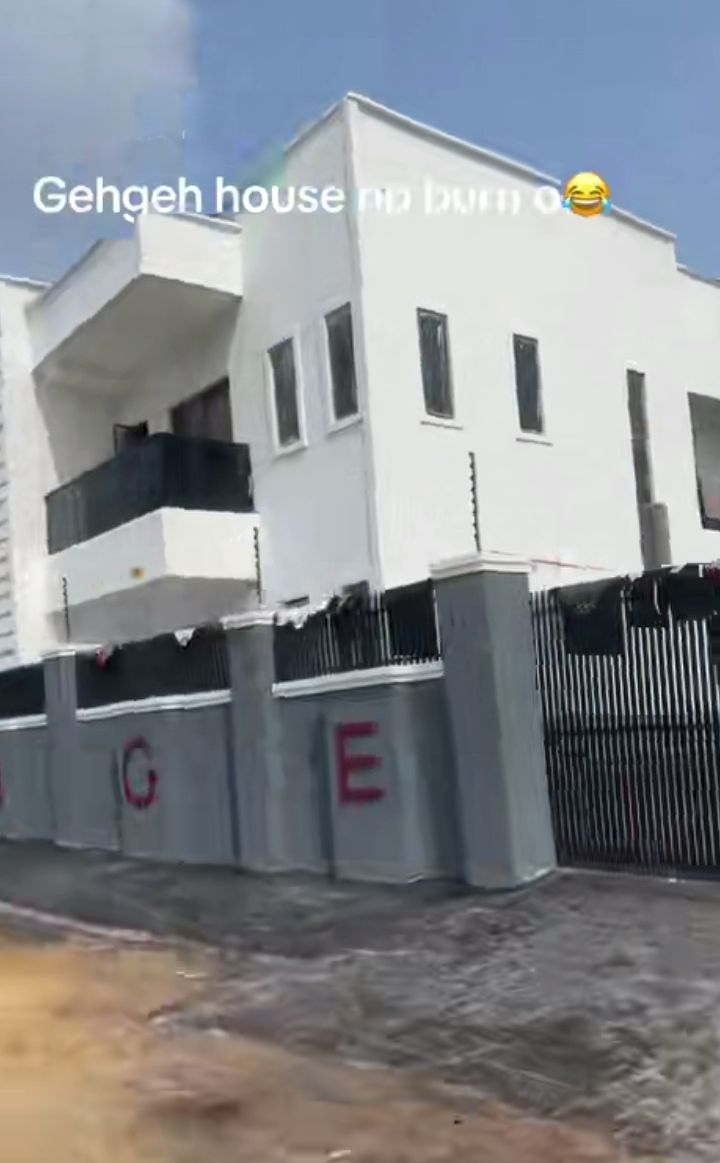
GehGeh, a prominent figure in Nigeria’s vibrant social media landscape, has cultivated a substantial following through various online activities, often sharing aspects of his lifestyle and achievements. The unveiling of his mansion was widely seen as a significant milestone, emblematic of success within the competitive influencer economy. Such public displays of wealth often become focal points for public discussion, reflecting aspirations and sometimes igniting debates about the sources and uses of newfound prosperity among young digital entrepreneurs.
The video further clarified the mansion’s exact geographical context, revealing its location in Uwherue, a community within Delta State. This detail, previously less defined in initial reports, added another layer of specificity to the unfolding story. The immediate public response to the debunking video was a mix of relief, amusement at the rapid spread of false news, and a renewed scrutiny of the online information ecosystem, where facts can often be overshadowed by sensational claims, demanding greater diligence from users.
The comment sections beneath the viral video quickly became a forum for diverse opinions, reflecting broader societal discussions. One notable comment, attributed to @Eriga Ukane, questioned the financial prudence of “building a house of almost N100m on a land that doesn’t worth up to N10m,” sparking a debate about investment strategies and perceived value in real estate acquisitions, particularly in rural or developing areas. This highlights the intense public scrutiny often directed at the financial choices of public figures and the readiness of online commentators to offer unsolicited financial advice.
Another strand of public reaction involved comparisons between GehGeh and other social media personalities. A user named @Lastmoni explicitly stated, “Now can we all agree that Gehgeh defeat Saidaboj? Gehgeh bought benz and built a mansion whilst saidaboj couldn’t even pay Portable for a feature.” Such comments underscore the competitive nature of the influencer industry, where perceived success and material acquisitions are often used as metrics to gauge an individual’s standing relative to rivals. This constant public comparison fuels much of the online content and engagement, shaping narratives around success and failure.
The incident also prompted reflections on the reliability of information shared on social platforms. User @{BĩĽĽŶ} succinctly captured this sentiment, remarking, “Nah once I realized say, social media are not to be trusted.” This widespread skepticism is a recurring theme in the digital age, where the ease of content creation and dissemination often outpaces the mechanisms for verification, leading to frequent instances of misinformation and public confusion. The GehGeh mansion saga serves as a stark reminder of this ongoing challenge for digital citizens.
The rapid debunking of the fire rumour surrounding GehGeh’s mansion underscores the critical importance of verifying information, particularly when it originates from unconfirmed online sources. While social media provides unprecedented connectivity and immediate access to news, it also presents fertile ground for the propagation of false narratives. This episode reinforces the need for media literacy and critical thinking among consumers of digital content, urging individuals to question sources and seek corroboration before accepting information as fact, thereby fostering a more informed online environment.