

![[post_title]](https://samony.com.ng/wp-content/uploads/2025/12/1766096834_Trump-judicial-nominee-admits-he-delivered-sermon-saying-disabled-people.png?lm=69447FC2)
President Donald Trump’s judicial nominee, Justin R. Olson, faced intense scrutiny from the Senate Judiciary Committee on Wednesday, admitting he delivered a 2015 sermon suggesting marriage was not intended for disabled individuals. The revelation emerged during a contentious hearing where Olson, nominated to the U.S. District Court for the Southern District of Indiana, was pressed on a series of controversial past remarks. The challenging line of questioning, notably from Republican Senator John Kennedy, underscored the significant hurdles his confirmation faces.
Senator Kennedy, a Republican from Louisiana, directly quoted Olson from the 2015 sermon, which he gave as an ordained elder in the Reformed Presbyterian Church of North America. Kennedy stated Olson had preached that “marriage was not intended for all people, including, and I’m gonna quote your words, ‘our handicapped friends or our persons with physical disabilities that might prevent the robust marriage that we’re called to.’” When asked if he had indeed made these statements, Olson candidly replied, “I think I did, senator, yes.”
Pressed further by Senator Kennedy on whether he believed individuals with disabilities should be unable to marry, Olson firmly responded “no.” He clarified that his sermon intended to explain why some individuals might not marry, rather than asserting a reason why they should not be permitted to do so. Olson sought to frame his original comments as an observation on societal realities, distinct from a judgment on legal rights or personal eligibility for marriage.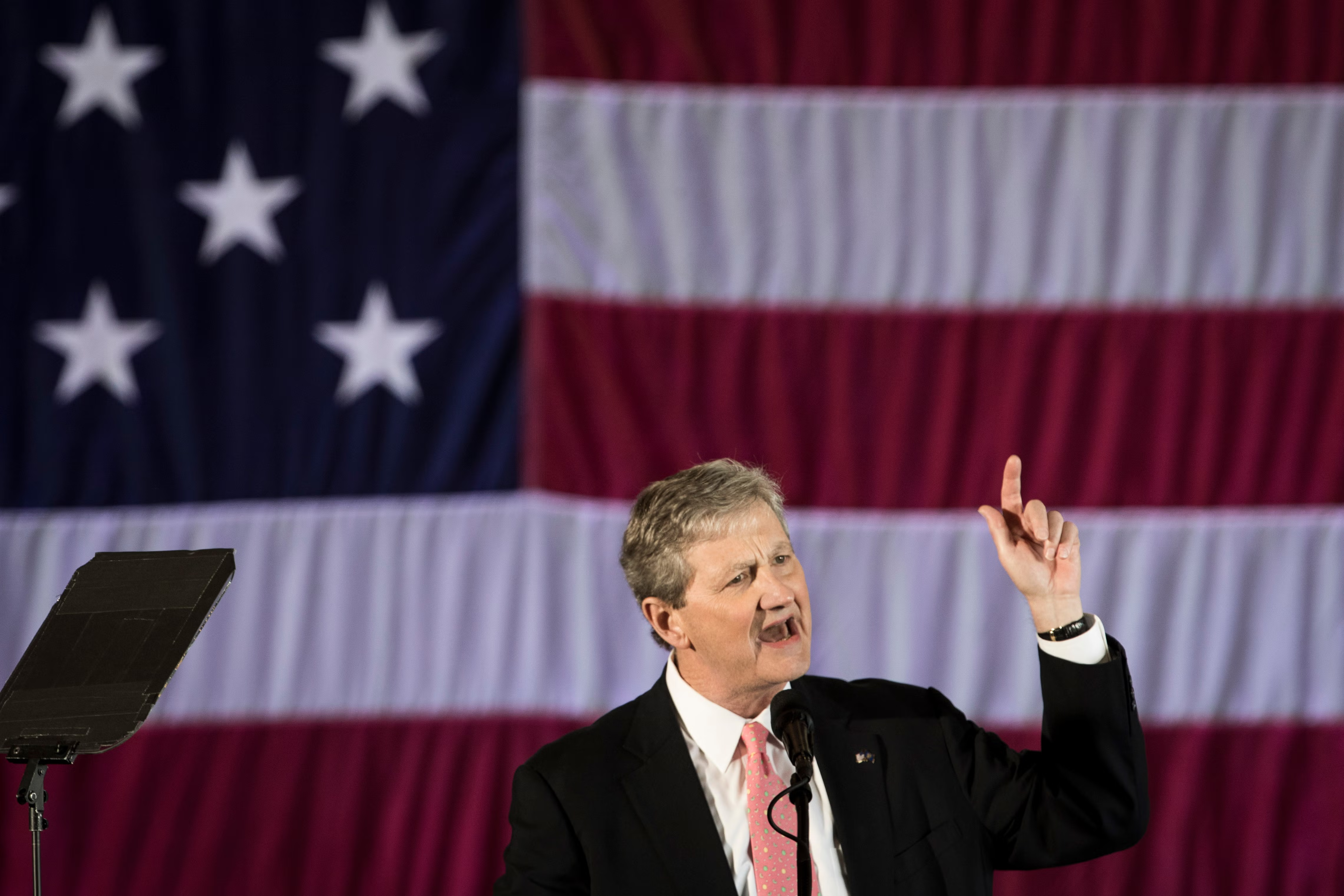
The hearing also delved into a 2022 talk Olson delivered at a church, where he reportedly characterized “transgenderism, homosexuality, fornication, and all sorts of sexual perversions” as forms of hypocrisy stemming from “shame on the inside.” While Olson stated he did “not recall the precise wording” of this particular address, he acknowledged that the description sounded “familiar.” He assured the committee that, if confirmed, he would conscientiously set aside his personal theological beliefs to uphold judicial impartiality.
Further scrutiny from Senator Kennedy targeted another 2015 church talk by Olson, in which he discussed the roles within Christian marriage. During that address, Olson reportedly declared that God “has called wives to be subject to their husband” and to “serve good of your husband and support his calling.” This line of questioning aimed to ascertain Olson’s personal stance on gender dynamics and subservience within marital relationships.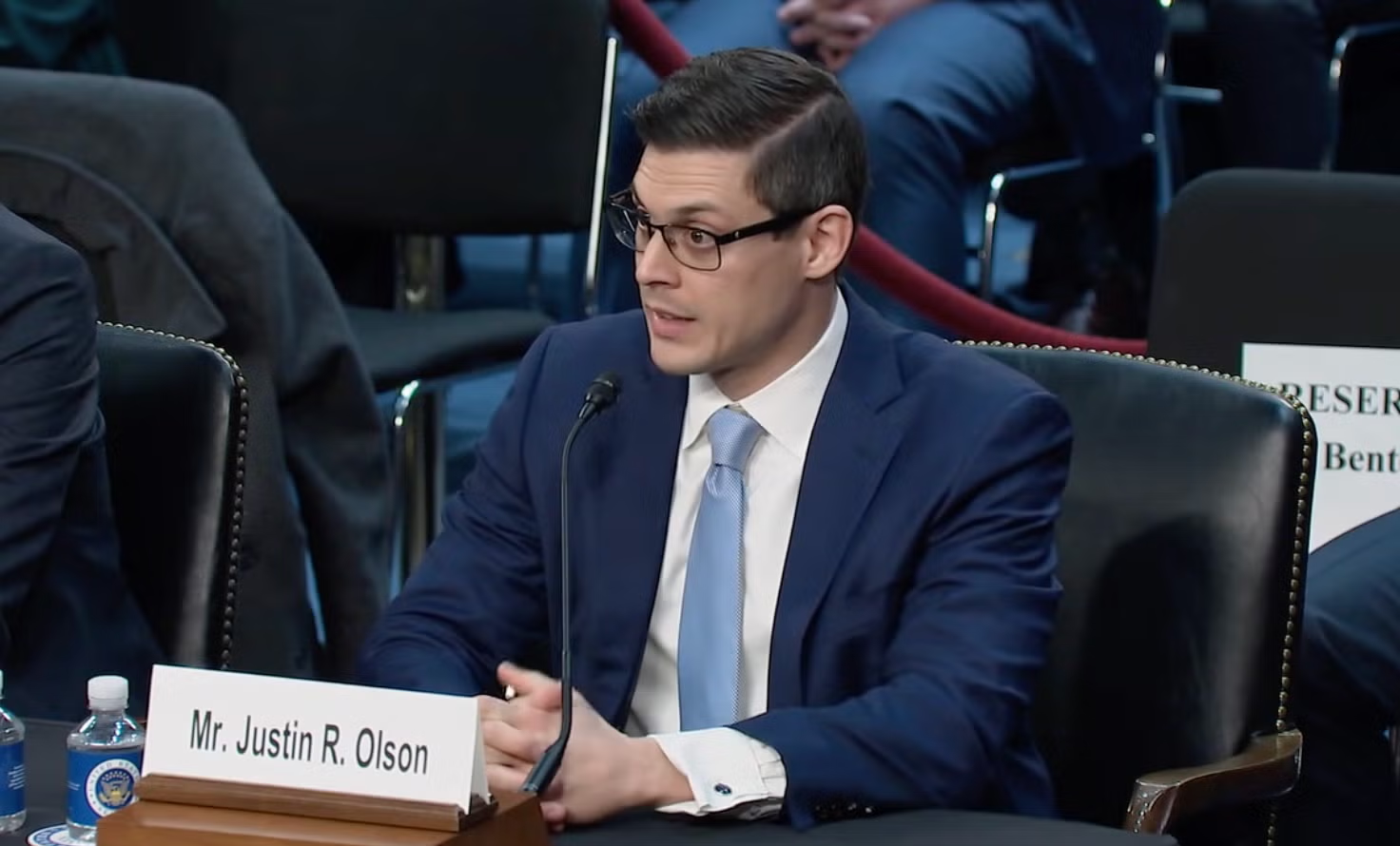
Responding to the query about wives being subservient, Olson explained that he was “describing our church’s understanding of what Christian marriage ought to look like.” He emphasized that his remarks were directly quoting the Bible, affirming his belief in “every word of the Bible.” This defense positioned his statements as an interpretation of religious doctrine rather than a personal decree on marital roles.
President Trump announced Olson’s nomination last month, highlighting Olson’s legal work in controversial areas. In his official statement, the former president specifically praised Olson for “fighting tirelessly to keep men out of women’s sports,” signaling the administration’s alignment with Olson’s views on gender and athletics. This endorsement provided a clear indication of the ideological motivations behind Olson’s selection for the federal bench.
Olson, a lawyer at Kroger Gardis & Regas, has actively represented former University of Kentucky swimmer Riley Gaines and other college athletes. Their lawsuit challenges now-rescinded National Collegiate Athletic Association (NCAA) policies, which previously allowed transgender women to compete in women’s sports under specific testosterone limit conditions. This legal battle places Olson at the forefront of a highly publicized national debate regarding fairness and inclusion in sports.
The extensive questioning during the Senate Judiciary Committee hearing underscores the rigorous vetting process for federal judicial nominees, particularly those whose past public statements or professional work touch upon sensitive social issues. Senators on both sides of the aisle often use these hearings to probe nominees’ personal philosophies, judicial temperament, and their ability to apply the law impartially, irrespective of personal convictions. The proceedings aim to ensure that prospective judges can uphold the Constitution and federal statutes without bias.
Olson’s responses, varying from direct admissions to acknowledgements of familiarity and commitments to impartiality, now form a critical part of the record for his confirmation vote. The committee’s evaluation will weigh his past expressions against his pledges to serve objectively, a balance often at the heart of such high-profile appointments. The outcome of his nomination will likely resonate within legal and political circles, impacting future judicial selections.

![[post_title]](https://samony.com.ng/wp-content/uploads/2025/12/How-to-Protect-Your-Business-from-Theft-300x200.png?lm=69447EFA "Businesses Face Rising Theft Risks: Comprehensive Protection Essential")
![[post_title]](https://samony.com.ng/wp-content/uploads/2025/12/1766096076_Where-Does-Your-Credit-Score-Stand-Compared-to-the-National-300x200.jpg?lm=69447CCE "US Credit Scores Near National Average")



![[post_title]](https://samony.com.ng/wp-content/uploads/2025/12/I-Am-Still-Going-to-Drink-Tonight-Because-of-the.jpeg?lm=69447DDE "Nigeria’s Petroleum Regulator Shake-Up: Ahmed Removed Amid Dispute")

![[post_title]](https://samony.com.ng/wp-content/uploads/2025/12/How-to-Protect-Your-Business-from-Theft-1024x683.png?lm=69447EFB "Businesses Face Rising Theft Risks: Comprehensive Protection Essential")
