

![[post_title]](https://samony.com.ng/wp-content/uploads/2025/12/1766081682_New-photos-from-Epstein-estate-published-by-Democrats-ahead-of.JPG?lm=69444492)
House Democrats have published a new cache of photographs and documents from the estate of convicted sex offender Jeffrey Epstein, intensifying scrutiny just days before a federal deadline for the Department of Justice to publicly release all investigative files in its possession. This latest disclosure includes disturbing imagery, text messages, and passports, offering further insights into Epstein’s alleged extensive sex trafficking network and his connections to prominent figures. The release comes amid a sustained pressure campaign urging the government to make all “Epstein files” public.
Among the newly revealed items are several photographs that appear to show handwriting directly on a woman’s body. These inscriptions seemingly quote passages from Vladimir Nabokov’s controversial novel, “Lolita,” a copy of which is visible in one of the accompanying images. Specific phrases found written on a person’s foot include “she was Lo, plain Lo, in the morning, standing four feet ten in one sock,” alongside other references like “she was Lola in slacks” and “she was Polly at school,” echoing the novel’s themes.
The tranche also contains a screenshot of a text message thread that explicitly discusses the procurement of young women. One message reportedly states, “I have a friend scout she sent me some girls today” and “she asks 1000$ per girl.” The sender then allegedly wrote, “I will send u girls now,” adding, “Maybe someone will be good for J?” A subsequent redacted message appears to detail the height, measurements, and other personal information of an 18-year-old girl from Russia, further suggesting a pattern of exploitation.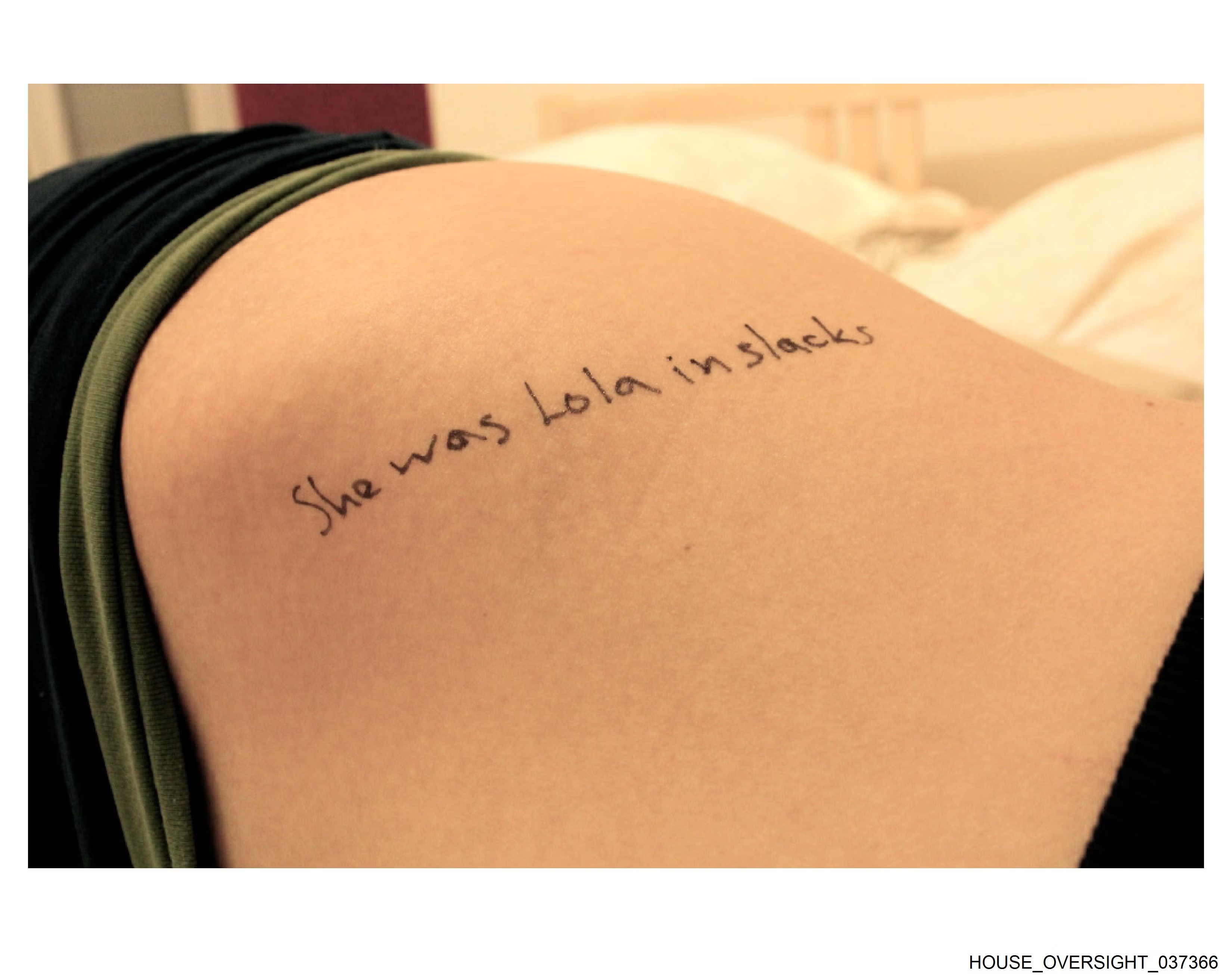
In addition to these alarming communications, the documents feature photographs of passports and other identification for women from several countries, including Russia, the Czech Republic, South Africa, Lithuania, and Ukraine. These documents underscore the international dimension of Epstein’s alleged illicit activities and the recruitment of individuals from various global locations into his network.
Other images depict Epstein in various settings, often accompanied by young women whose faces have been strategically obscured. One photograph shows a seated Epstein with a woman wrapping her arms around his shoulders, while two other women sit closely beside him, reinforcing the pervasive presence of young females around the financier. These visuals provide a stark glimpse into the environment Epstein cultivated.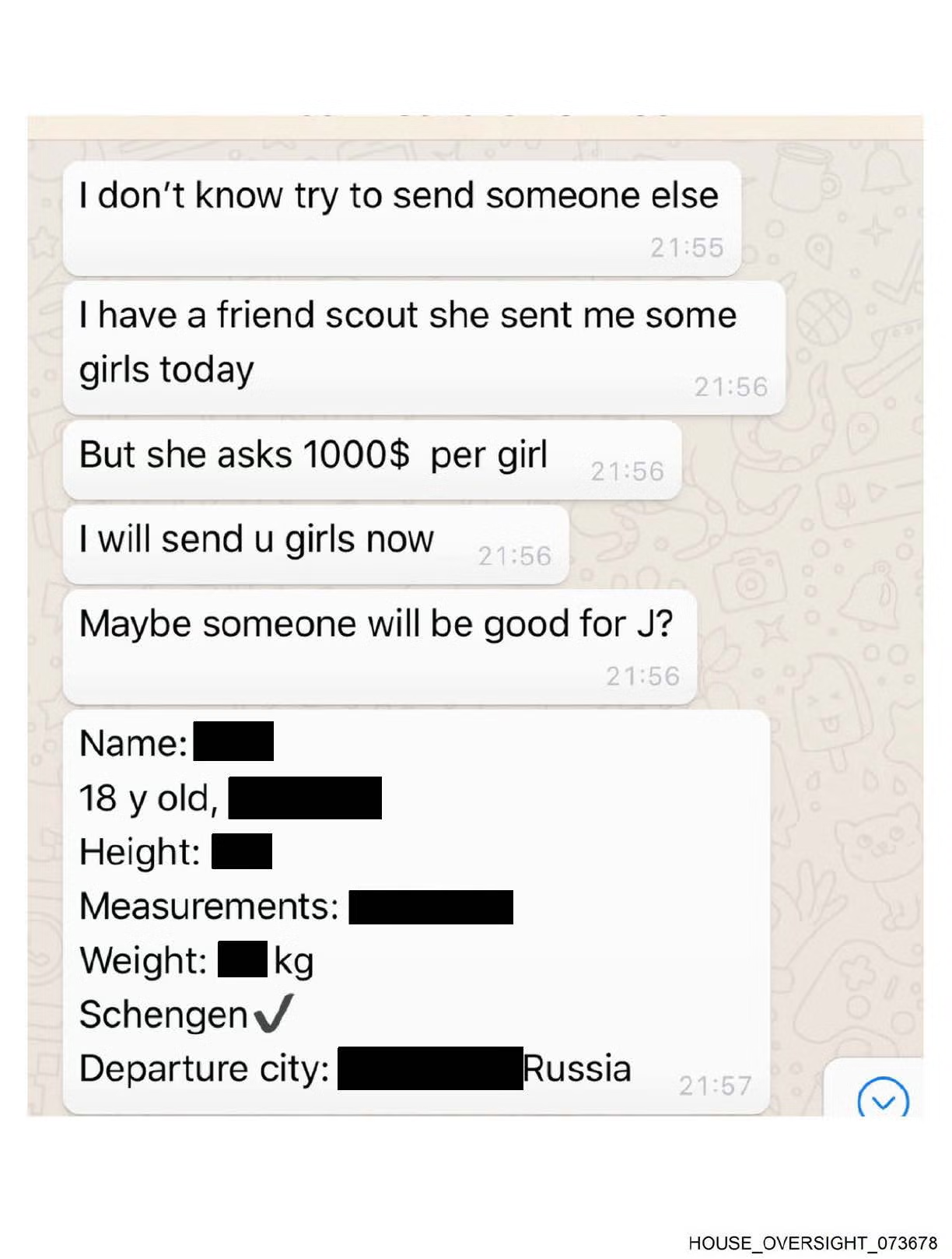
The newly released documents also reveal Epstein in social contexts with a range of high-profile individuals. These include renowned author Noam Chomsky, New York Times opinion columnist David Brooks, Microsoft co-founder Bill Gates, Google co-founder Sergey Brin, filmmaker Woody Allen, and far-right media personality Steve Bannon. It is crucial to note that the mere appearance of a person in these files or alongside Epstein does not, by itself, constitute an allegation of wrongdoing.
Further architectural details are brought to light through blueprints included in the collection, which illustrate the layouts of Epstein’s numerous properties. Notably, these include schematics for Little St. James, Epstein’s infamous private island in the U.S. Virgin Islands. This location has long been central to allegations where Epstein and his associates reportedly engaged in the sexual abuse and trafficking of underage girls.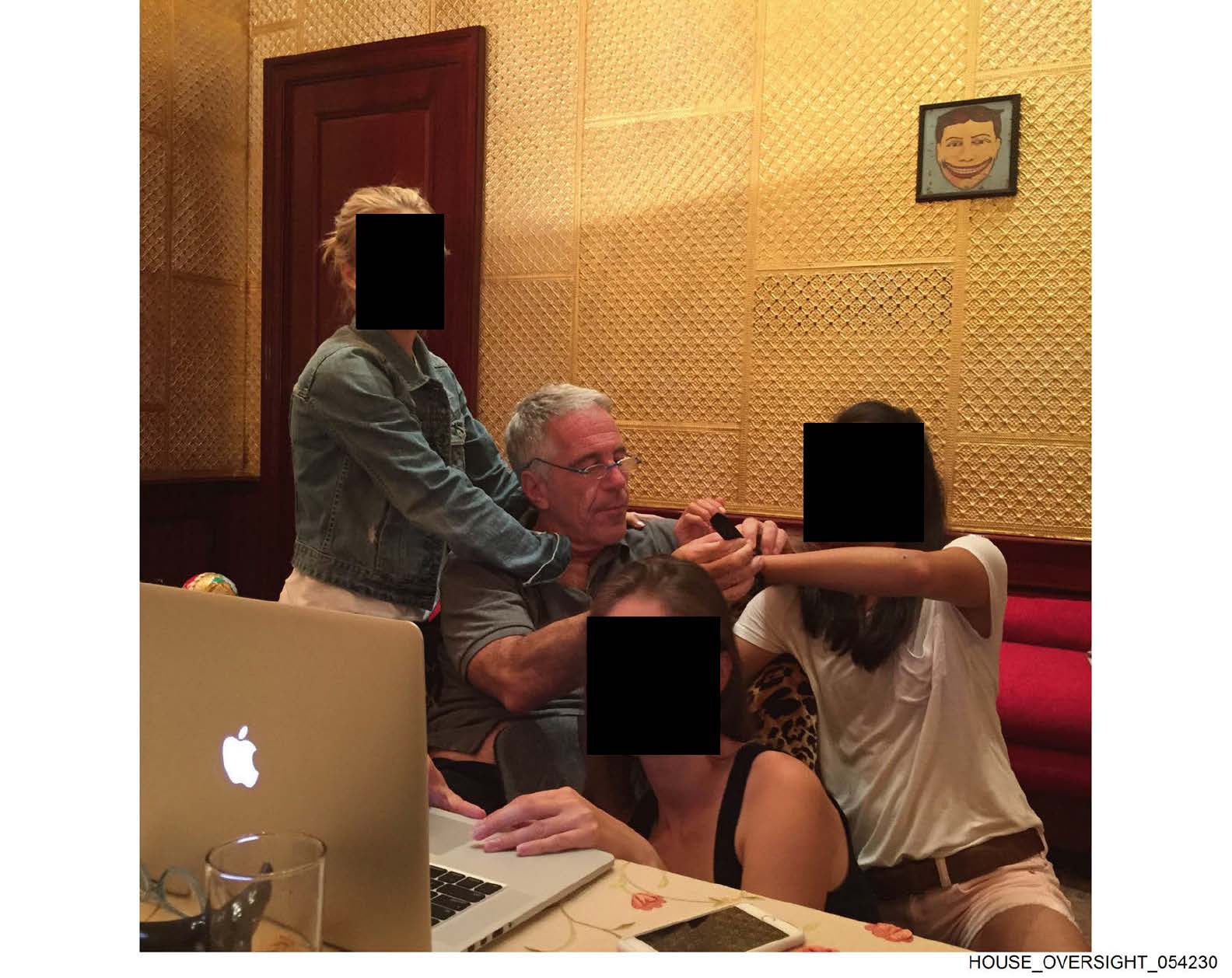
This latest batch of 68 documents, released by Democrats on the House Oversight Committee, forms part of an ongoing effort by members of Congress to conduct their own investigations into Epstein’s vast network. Over recent months, the committee has systematically published several previously unreleased images and documents, maintaining continuous pressure on the government for transparency and accountability.
The Department of Justice faces a firm Friday deadline to release all investigative files related to Epstein. This mandate follows a bipartisan congressional pressure campaign that culminated in President Donald Trump reluctantly signing a measure compelling the DOJ to act. Initially, the Justice Department had determined in July that “no further disclosure” in the Epstein case was “appropriate or warranted,” a stance that intensified public and political scrutiny.
Jeffrey Epstein died in his jail cell in 2019 while awaiting trial on federal sex trafficking charges, a death officially ruled a suicide but widely questioned. His long-time associate and alleged accomplice, Ghislaine Maxwell, is currently serving a 20-year prison sentence for her role in facilitating Epstein’s sex abuse and trafficking crimes, providing a legal precedent for the gravity of the offenses.
The impending government release is expected to be extensive, potentially encompassing tens of thousands of pages. This comprehensive disclosure is slated to include FBI notes from various investigations, transcripts of witness interviews, a multitude of videos and photographs, and even Epstein’s official autopsy report, among other critical documents. The sheer volume suggests the potential for significant new revelations.
The persistent demand for these documents has underscored a deep public and political desire for full transparency regarding Epstein’s activities and the extent of his alleged network. The complete release of these files is anticipated to shed further light on a complex and disturbing case that continues to captivate global attention and demand justice for the victims.

![[post_title]](https://samony.com.ng/wp-content/uploads/2025/12/1766080554_Are-T-Mobiles-Prepaid-Perks-a-Home-Run-or-a-Strikeout-300x200.jpg?lm=6944402B "T-Mobile Prepaid Plans: Perks, Value, and Network Considerations")
![[post_title]](https://samony.com.ng/wp-content/uploads/2025/12/Kolu-tattoos-Davidos-hand-on-his-head-after-Carter-Efes-300x150.jpg?lm=69444040 "Fan Tattoos Davido’s Touch After Viral Livestream Moment")
![[post_title]](https://samony.com.ng/wp-content/uploads/2025/12/Kia-and-Hyundai-will-spend-millions-fixing-old-cars-to-300x156.jpg?lm=69444097 "Kia, Hyundai Settle Over Thefts, Offer Free Anti-Theft Fixes")
![[post_title]](https://samony.com.ng/wp-content/uploads/2025/12/1766079645_Why-Ducati-had-no-doubt-that-Alex-Marquez-deserved-factory-300x200.jpg?lm=69443C9F "Alex Marquez Secures Factory Ducati GP26 for 2026 MotoGP Season")
![[post_title]](https://samony.com.ng/wp-content/uploads/2025/12/1766079384_Try-these-research-backed-home-remedies-for-a-sore-throat.jpeg?lm=69443B98 "Sore Throat Relief: Proven Home Remedies for Soothing Pain")
![[post_title]](https://samony.com.ng/wp-content/uploads/2025/12/How-to-watch-todays-Napoli-vs-AC-Milan-Supercoppa-Italiana-300x169.jpg?lm=69443963 "Napoli vs AC Milan: Supercoppa Italiana Semi-Final Showdown")

![[post_title]](https://samony.com.ng/wp-content/uploads/2025/12/Bishop-Kukah-Visits-Nnamdi-Kanu-In-Sokoto-Custodial-Centre.jpeg?lm=6944420F "Bishop Kukah Meets Nnamdi Kanu in Custodial Facility")
![[post_title]](https://samony.com.ng/wp-content/uploads/2025/12/1766080554_Are-T-Mobiles-Prepaid-Perks-a-Home-Run-or-a-Strikeout.jpg?lm=6944402A "T-Mobile Prepaid Plans: Perks, Value, and Network Considerations")
![[post_title]](https://samony.com.ng/wp-content/uploads/2025/12/Kolu-tattoos-Davidos-hand-on-his-head-after-Carter-Efes-1024x512.jpg?lm=69444040 "Fan Tattoos Davido’s Touch After Viral Livestream Moment")
