

Morocco is currently hosting the Africa Cup of Nations (Afcon), an event strategically positioned as a critical dress rehearsal for its co-hosting duties at the 2030 World Cup. The North African nation, which made history by reaching the semi-finals of the 2022 World Cup, aims to cement its status as a global football powerhouse. This biennial tournament sees 24 teams from across the continent competing in nine new or extensively renovated stadiums across six Moroccan cities.
This marks only the second time Morocco has staged the Afcon, yet it arrives amidst a period of intense football engagement and development. The country frequently hosts “home” games for other African nations during World Cup qualifiers and recently secured rights to host five consecutive Under-17 Women’s World Cups, alongside the Women’s Africa Cup of Nations in July. Officials openly frame the current Afcon as a high-visibility dry run for the 2030 World Cup, where Morocco will be a primary co-host alongside Spain and Portugal.
A cornerstone of Morocco’s grand vision is the planned Hassan II Stadium, projected to be the world’s largest football arena with a capacity of 115,000 upon its completion in 2028. This new national stadium symbolises one of Africa’s most aggressive infrastructure drives. Beyond sports facilities, Morocco has pursued rapid development across various sectors, updating airports, expanding high-speed rail networks, and attracting major tourism investments to cities such as Marrakech and Tangier, all aimed at accommodating a surge in visitors.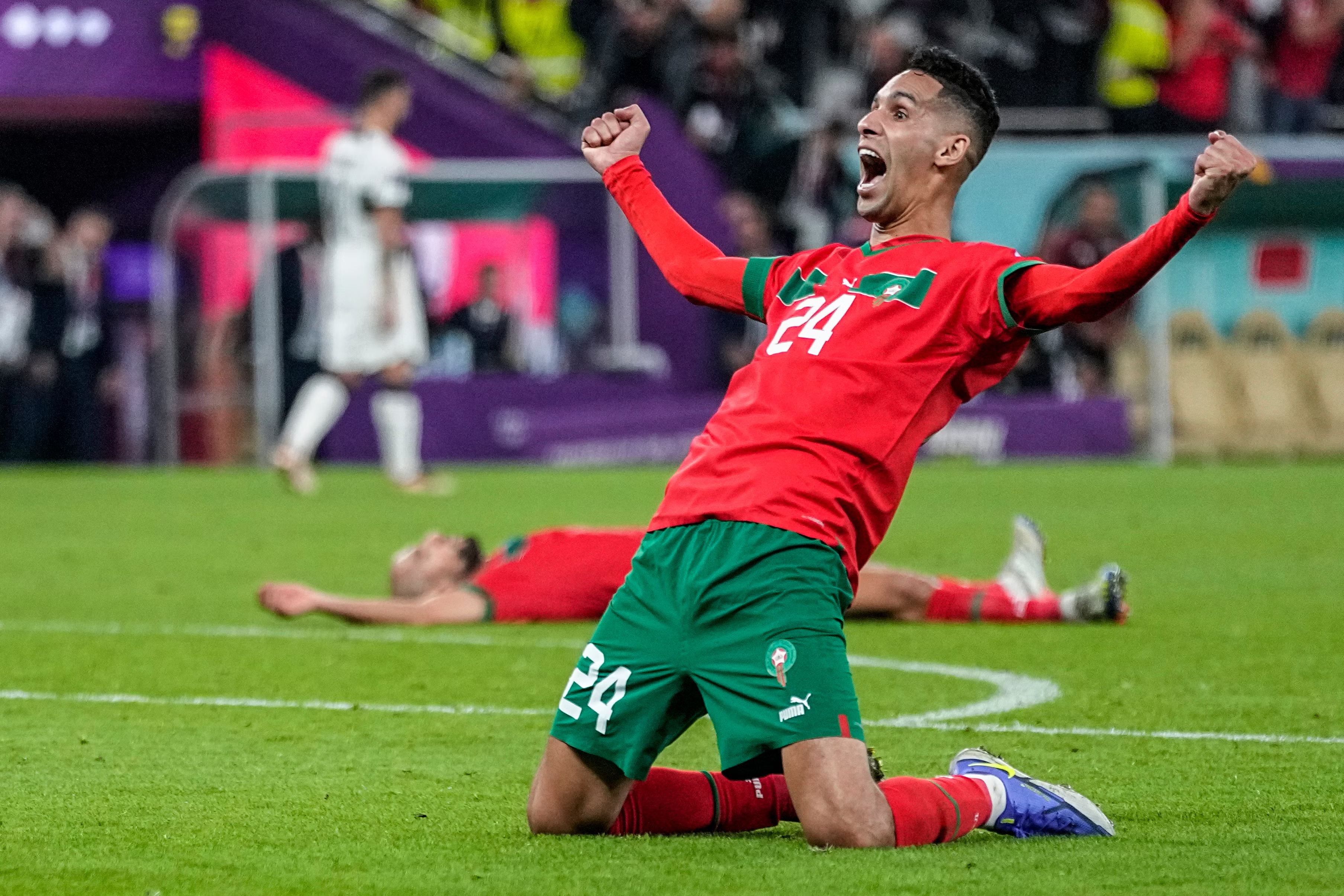
The Royal Moroccan Football Federation (FRMF) has simultaneously invested heavily in youth development and coaching, aspiring to elevate standards across the sport. The lavish Mohammed VI Football Complex near Rabat serves as a prime example, functioning as the training base for the senior national team. This commitment to nurturing young talent appears to be yielding significant results, highlighted by Morocco’s historic 2022 World Cup run and its Under-20 World Cup victory in October. FRMF President Fouzi Lekjaa, who also manages budget affairs within the prime minister’s cabinet, views sport as a vital engine for economic development, asserting the nation’s “legitimate ambitions.”
However, these substantial investments have not been without controversy, sparking heated debate regarding the nation’s priorities. While thousands of visitors encounter areas rich with hotels, restaurants, and new roads, vast swathes of the country present a stark contrast. In rural regions, far removed from financial hubs, residents frequently voice complaints of neglect and a lack of investment, citing critical issues such as healthcare, literacy, and employment.
During “Gen Z” demonstrations earlier this year, protesters notably chanted, “Stadiums are here but where are the hospitals,” directly linking the substantial football investments to broader societal inequalities. Young people, in particular, express frustration over overcrowded schools, deteriorating hospitals, and inconsistent basic services. Prime Minister Aziz Akhannouch’s government has faced accusations of channelling billions into prestige projects instead of addressing pressing social needs. King Mohammed VI, however, asserted in October that these two categories of development were not mutually exclusive or in competition.
The tournament also unfolds as Morocco actively works to solidify its position as a regional power. Through its “Atlantic Initiative,” the country has sought to deepen ties with landlocked nations in West and Central Africa, expanding the reach of its banking and telecommunications industries and offering those without coastlines access to newly constructed ports. Morocco’s normalisation of ties with Israel has strengthened its relationship with the United States, and it has also garnered support from most European Union members regarding its sovereignty over the disputed Western Sahara, despite ongoing tensions with Algeria.
Furthermore, while Morocco has offered tourist visas to spectators attending the Africa Cup, it has simultaneously moved in recent years to curb migration from some participating countries. Visa requirements for Ivorian citizens were reinstated last year, partly to deter irregular migration attempts. Morocco, long perceived as a gateway to Europe, has drawn criticism from migrant rights groups for aggressive enforcement measures, including clearing encampments and relocating migrants to remote areas. The Moroccan Association for Human Rights’ Rabat branch reported an increase in arbitrary arrests and forced expulsions of migrants in the run-up to the Africa Cup this week. The Afcon final is scheduled for 18 January at Prince Moulay Abdellah Stadium in Rabat.


![[post_title]](https://samony.com.ng/wp-content/uploads/2025/12/Extra-426-million-for-mental-health-support-after-Bondi-terror-300x169.jpeg?lm=6943F017 "Bondi Terror Attack Prompts $42.6M Mental Health Funding")
![[post_title]](https://samony.com.ng/wp-content/uploads/2025/12/Analysts-see-Dangote-Sugar-resuming-dividend-payment-on-profit-rebound-300x200.png?lm=6943F0B5 "Dangote Sugar Refinery Eyes 2027 Dividend Resumption Amid Profit Rebound")
![[post_title]](https://samony.com.ng/wp-content/uploads/2025/12/1766060261_Skys-10-per-month-Apple-iPad-deal-is-the-lowest-ever-price-and-300x158.jpg?lm=6943F0E7 "Sky Offers Record Low Price on New iPad for Christmas")
![[post_title]](https://samony.com.ng/wp-content/uploads/2025/12/1766059525_Predator-drugged-and-raped-woman-then-sent-her-Snapchat-like-300x158.jpg?lm=6943EE07 "Man Jailed 15 Years for Drugging, Raping Woman in Lancashire")




![[post_title]](https://samony.com.ng/wp-content/uploads/2025/12/Extra-426-million-for-mental-health-support-after-Bondi-terror.jpeg?lm=6943F015 "Bondi Terror Attack Prompts $42.6M Mental Health Funding")
