

![[post_title]](https://samony.com.ng/wp-content/uploads/2025/12/1765995988_The-Rule-of-Compounding-Why-Time-Is-an-Investors-Best-1024x683.jpg?lm=6942F5D5)
While many investors meticulously focus on selecting specific stocks or attempting to time market fluctuations, the fundamental driver of significant wealth accumulation often remains understated. This powerful, yet quiet, mechanism is compound interest, which steadily multiplies investments over time. Its efficacy is profoundly amplified by the duration of the investment, making time the most invaluable asset for any individual seeking financial growth.
Compound interest operates on the principle of earning interest not only on the initial principal but also on the accumulated interest from previous periods. Wes Crill, a senior client solutions director at Dimensional Fund Advisors, likens this process to rolling a small snowball; as it gathers more snow, its surface area expands, allowing it to collect even more snow at an accelerating rate. This exponential growth mirrors how financial earnings can rapidly accumulate.
Consider an initial investment of $1,000 generating a 10% annual compound interest. In the first year, it yields $100, bringing the total to $1,100. The following year, the 10% interest is calculated on $1,100, resulting in $110 earned. This seemingly modest increase rapidly transforms over decades; after 40 years, without further contributions, the initial $1,000 would grow to over $45,000 solely from compound interest, a stark contrast to the $4,000 earned through simple interest over the same period. This transformative power reportedly led Albert Einstein to describe compound interest as the “eighth wonder of the world.”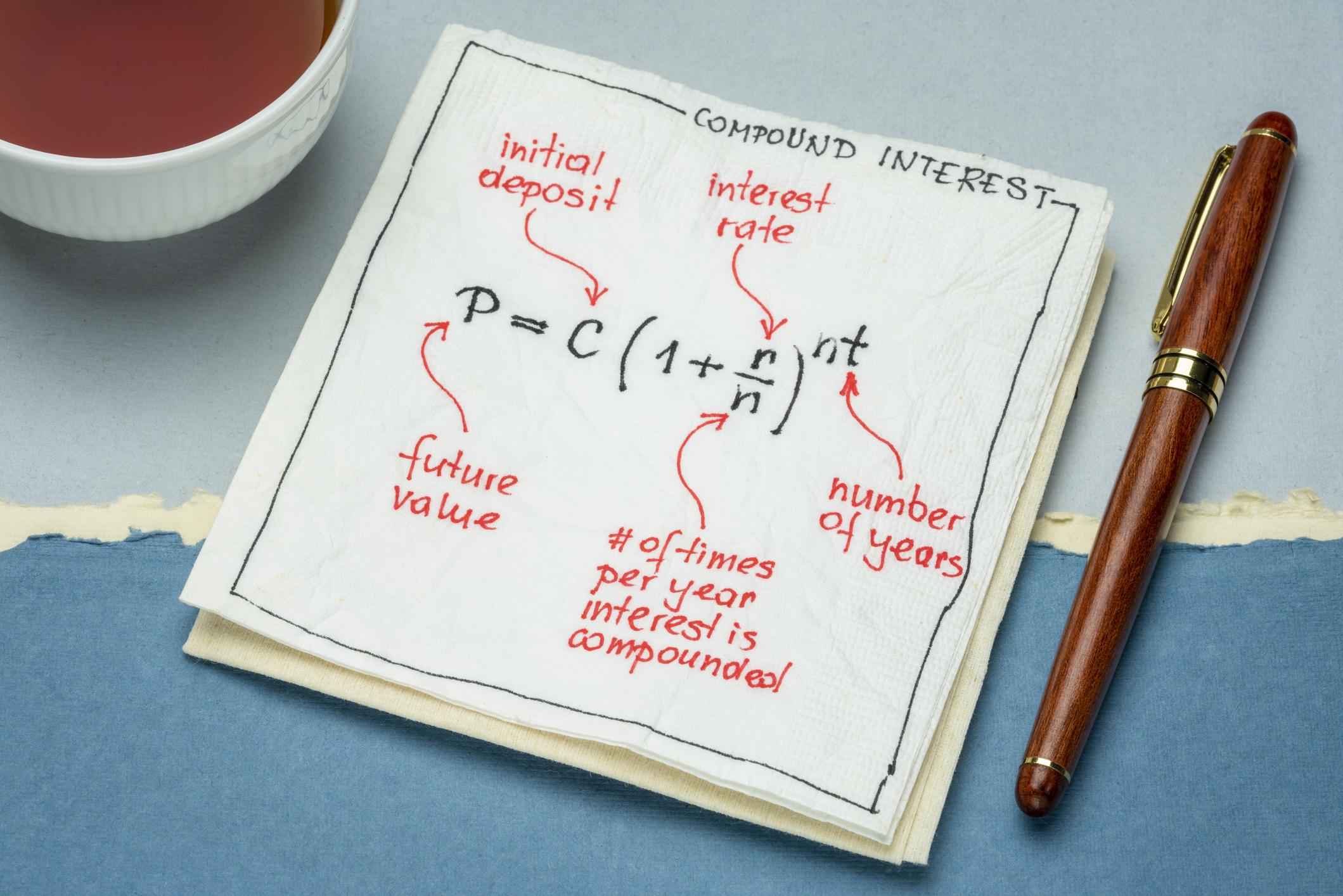
To effectively harness the potential of compounding, investors must embrace several strategic habits. Foremost among these is starting early. The longer money remains invested, the more extensively compound interest can work its magic. Andrew Crowell, vice chairman of Wealth Management at D.A. Davidson, emphasizes that even small, consistent monthly contributions initiated early in life can accumulate into substantial sums over decades, far surpassing larger, later investments.
Another critical habit involves prioritizing consistency over speculative market timing. Successful compounding necessitates keeping capital invested through various market cycles, rather than attempting to predict short-term movements. Missing even a few of the market’s best-performing days can significantly erode long-term gains. For example, a $1,000 investment in a Russell 3000 index fund from 2020 to 2024 could grow to over $6,000, yet missing just the three best months would reduce its value by nearly $2,000.
Maximizing compound growth also requires the continuous reinvestment of all earnings, including dividends, interest, and capital gains. This ensures that the growing sum consistently generates further returns, building upon an ever-larger base. Automating this reinvestment process within investment accounts is a simple yet powerful strategy. Additionally, gradually increasing regular contributions can provide a significant boost, as advised by private wealth adviser Matthew Mandell of Ameriprise Financial.
Despite its robust nature, the compounding engine can be derailed by several common missteps. A lack of diversification represents a primary threat. Concentrating investments in a single high-growth company or risky asset exposes capital to catastrophic loss, potentially wiping out years of accumulated growth. Spreading investments across diverse asset classes, sectors, and geographies provides a crucial layer of security, allowing the portfolio to absorb shocks and maintain growth.
Yelding to market panic during downturns is another significant impediment. Selling assets when the market dips locks in losses and, critically, removes capital from the compounding process entirely, making recovery far more challenging. For the patient, long-term investor, market corrections are often viewed as temporary opportunities to acquire quality assets at reduced prices, aligning with the historical trend of markets rising more often than they fall.
Finally, frequent trading introduces a detrimental “drag” on portfolio growth. Transaction costs and tax inefficiencies associated with short-term buying and selling can erode principal, even in small increments. Mandell advises focusing on tax-deferred or tax-free accounts and avoiding high-cost funds and unnecessary short-term trading to maximize long-term gains. It is also crucial to remember that compounding works in both directions; unchecked debt, particularly high-interest credit card balances, can rapidly diminish wealth, effectively reversing the compounding process against the individual.
Achieving substantial financial growth through compound interest demands a disciplined, long-term perspective. By starting early, remaining consistently invested, reinvesting all earnings, diversifying wisely, and resisting impulsive market reactions, investors can effectively leverage this powerful principle to build enduring wealth.

![[post_title]](https://samony.com.ng/wp-content/uploads/2025/12/GenocideJos-Crisis-Was-MuslimChristian-FightIt-Wasnt-Like-A-Group-Was-300x245.jpeg?lm=6942F411 "Jos Crisis: Ice Prince Denies Genocide, Calls It Muslim-Christian Fight")
![[post_title]](https://samony.com.ng/wp-content/uploads/2025/12/1765995596_Nick-Reiner-asked-A-listers-three-bizarre-questions-hours-before-murdering-300x158.jpg?lm=6942F44D "Son of Rob Reiner Accused of Parents’ Murder Amid Bizarre Party Reports")
![[post_title]](https://samony.com.ng/wp-content/uploads/2025/12/1765992875_Ranchers-in-Texas-are-turning-against-Trump-as-price-of.jpg?lm=6942E9AB "Texas Ranchers Express Discontent with Trump Over Beef Price Drop")
![[post_title]](https://samony.com.ng/wp-content/uploads/2025/12/Un-matagigantes-vuelve-a-rondar-a-Simeone-300x150.jpg?lm=6942EA8C "Atlético Madrid Navigates Copa del Rey Minefield Against Baleares")
![[post_title]](https://samony.com.ng/wp-content/uploads/2025/12/1765993272_Get-up-to-105-cashback-on-a-range-of-Sky-300x158.jpg?lm=6942EB3A "Sky TV Bundles Offer Up to £105 Cashback Through Partner Deals")
![[post_title]](https://samony.com.ng/wp-content/uploads/2025/12/Luis-Suarez-Signs-New-Contract-With-Inter-Miami.jpg?lm=6942E525 "Luis Suárez Extends Inter Miami Stay")

![[post_title]](https://samony.com.ng/wp-content/uploads/2025/12/FirstHoldCo-leads-tier-one-rally-as-52-billion-Ecobank-shares-tick-on-Customs-Street.jpeg?lm=6942F62B "Nigerian Equities Surge Towards 150,000, FirstHoldCo and Ecobank Shine")
![[post_title]](https://samony.com.ng/wp-content/uploads/2025/12/GenocideJos-Crisis-Was-MuslimChristian-FightIt-Wasnt-Like-A-Group-Was.jpeg?lm=6942F40F "Jos Crisis: Ice Prince Denies Genocide, Calls It Muslim-Christian Fight")
![[post_title]](https://samony.com.ng/wp-content/uploads/2025/12/1765995596_Nick-Reiner-asked-A-listers-three-bizarre-questions-hours-before-murdering-1024x538.jpg?lm=6942F44D "Son of Rob Reiner Accused of Parents’ Murder Amid Bizarre Party Reports")
