


A new two-lane toll road planned to link Madagascar’s capital Antananarivo with its main port Toamasina is poised to transform the nation’s economy but threatens to uproot ancestral communities and sacred sites. The ambitious 260km highway, a cornerstone of national development, has already marked its path through villages like Ambohidava, where residents face displacement and the loss of generations-old farmland. This vital infrastructure project presents a complex dilemma, balancing economic aspirations with profound social and cultural costs.
For 70-year-old Neny Fara, whose family has farmed rice and pineapples in Ambohidava for generations, the looming construction represents a profound betrayal. Her fields lie directly in the path of the new road, and she asserts that no government official has contacted her regarding compensation or relocation plans. This sentiment is echoed by many farmers in the area, who report a consistent lack of communication and formal agreements, despite official pledges that compensation will be provided within a year of the road’s completion.
The estimated $1 billion project, spearheaded by the Egyptian construction company Sancrete, aims to slash travel times between the capital and Toamasina from up to 16 hours to just three. The initial 8km stretch, inaugurated by former President Andriy Rajoelina in August, showcases smooth tarmac in stark contrast to Madagascar’s often-dilapidated existing road network. Funding for the vast undertaking relies on a fifth from the state budget, with the remainder sourced from international partners like the Arab Bank for Economic Development in Africa.
Proponents argue the highway is crucial for Madagascar’s economic revitalisation. Government projections anticipate a tripling of activity at Toamasina port, alongside the creation of new jobs in service industries such as hotels and petrol stations along the route. This infrastructure development is also expected to significantly boost exports, particularly Madagascar’s world-renowned vanilla, providing a much-needed economic stimulus in a country where the World Bank estimates three out of four people live in poverty.
The current primary route, National Road 2, is notorious for its slow progress, heavy traffic, and poor maintenance, often forcing vehicles to navigate deep potholes and crowded small towns. Lorry driver Reka, who has transported goods on this route twice weekly for nine years, describes journeys lasting up to 16 hours. He welcomes the prospect of a safer, faster alternative, stating, “The current road is very bad… That’s why our country needs to construct another road.”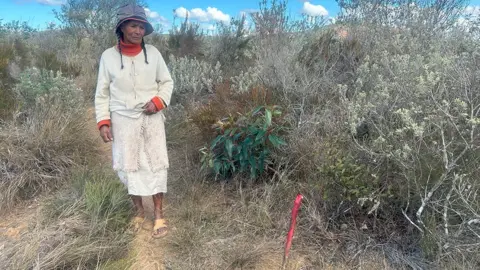
Concerns initially arose regarding the highway’s potential impact on Madagascar’s unique biodiversity, where over 80% of its fauna is endemic. However, authorities have indicated that the route has been adjusted to avoid virgin rainforest, instead traversing areas previously cleared for agriculture. Former Environment Minister Max Fontaine emphasized the government’s commitment to balancing economic development with environmental protection, asserting, “The highway changes everything. For agriculture, for water, for transport, for everything. This highway will radically change the face of Madagascar.”
Beyond economic benefits, the government also pledges to formalise land ownership for affected communities, aiming to prevent land grabbing and ensure legal recognition for ancestral holdings. The target is to issue two million land titles, with 75% already completed, intended to legally protect residents from arbitrary land confiscation. These measures are designed to respect the generations-long connection communities have to their land.
Despite these assurances, the community in Ambohidava remains defiant. An impromptu village meeting, chaired by Neny Fara, highlighted deep distress over the red marker posts indicating the road’s path through ancestral graveyards, a profound disrespect in Malagasy culture where honouring the dead is paramount. Villagers have collectively vowed to resist the project, asserting their right to protect their heritage and their ancestors’ resting places.
Madagascar’s predicament, balancing vital economic growth with the preservation of cultural heritage and environmental integrity, mirrors challenges faced by developing nations worldwide. As construction advances, the serene way of life in Ambohidava and other affected communities appears set for an irreversible transformation, underscoring the complex trade-offs inherent in large-scale infrastructure development.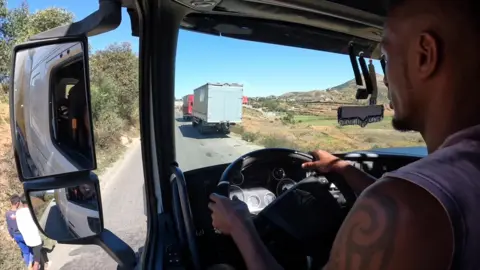


![[post_title]](https://samony.com.ng/wp-content/uploads/2025/12/10th-Day-in-Captivity-Bayagan-community-begs-Kwara-govt-police-300x169.png?lm=69364BDD "Nigeria Labour Congress Warns of Strike Over Protest Attack Plot")


![[post_title]](https://samony.com.ng/wp-content/uploads/2025/12/1765937048_Donald-Trump-orders-complete-blockade-of-Venezuela-oil-tankers-with-300x158.jpg?lm=69420F9A "Trump Orders Full Venezuela Oil Blockade Amid Asset Theft Claims")



![[post_title]](https://samony.com.ng/wp-content/uploads/2025/12/10th-Day-in-Captivity-Bayagan-community-begs-Kwara-govt-police-1024x576.png?lm=69364BDD "Nigeria Labour Congress Warns of Strike Over Protest Attack Plot")
