

![[post_title]](https://samony.com.ng/wp-content/uploads/2025/12/US-military-branch-officially-stops-classifying-swastikas-as-hate-symbols.avif)
The United States Coast Guard has reportedly reclassified the swastika from a “hate symbol” to “potentially divisive” within its updated workplace harassment policy. This significant change, which reportedly came into effect on Monday, has ignited widespread concern and debate, particularly given a global rise in antisemitism and recent incidents. The Independent has sought comment from both the Coast Guard and the Department of Homeland Security regarding the controversial policy adjustment.
Contradicting the reported policy change, Coast Guard Admiral Kevin Lunday issued a memo on November 20, emphatically denouncing symbols such as swastikas and nooses. Admiral Lunday’s directive stated that both symbols would remain prohibited for all Coast Guard personnel, asserting that his ruling would take precedence over any other language on the matter. This suggests a potential disparity between the official written harassment policy and the immediate orders from the Coast Guard’s leadership.
Admiral Lunday’s memo followed earlier reports by The Washington Post detailing the impending classification change, which the Trump administration had initially dismissed as false. However, within hours of that initial report, Lunday’s swift action aimed to clarify the Coast Guard’s stance. At the time, the Coast Guard itself stated, “This is not an updated policy but a new policy to combat any misinformation and double down that the U.S. Coast Guard forbids these symbols,” indicating a reactive effort to control the narrative.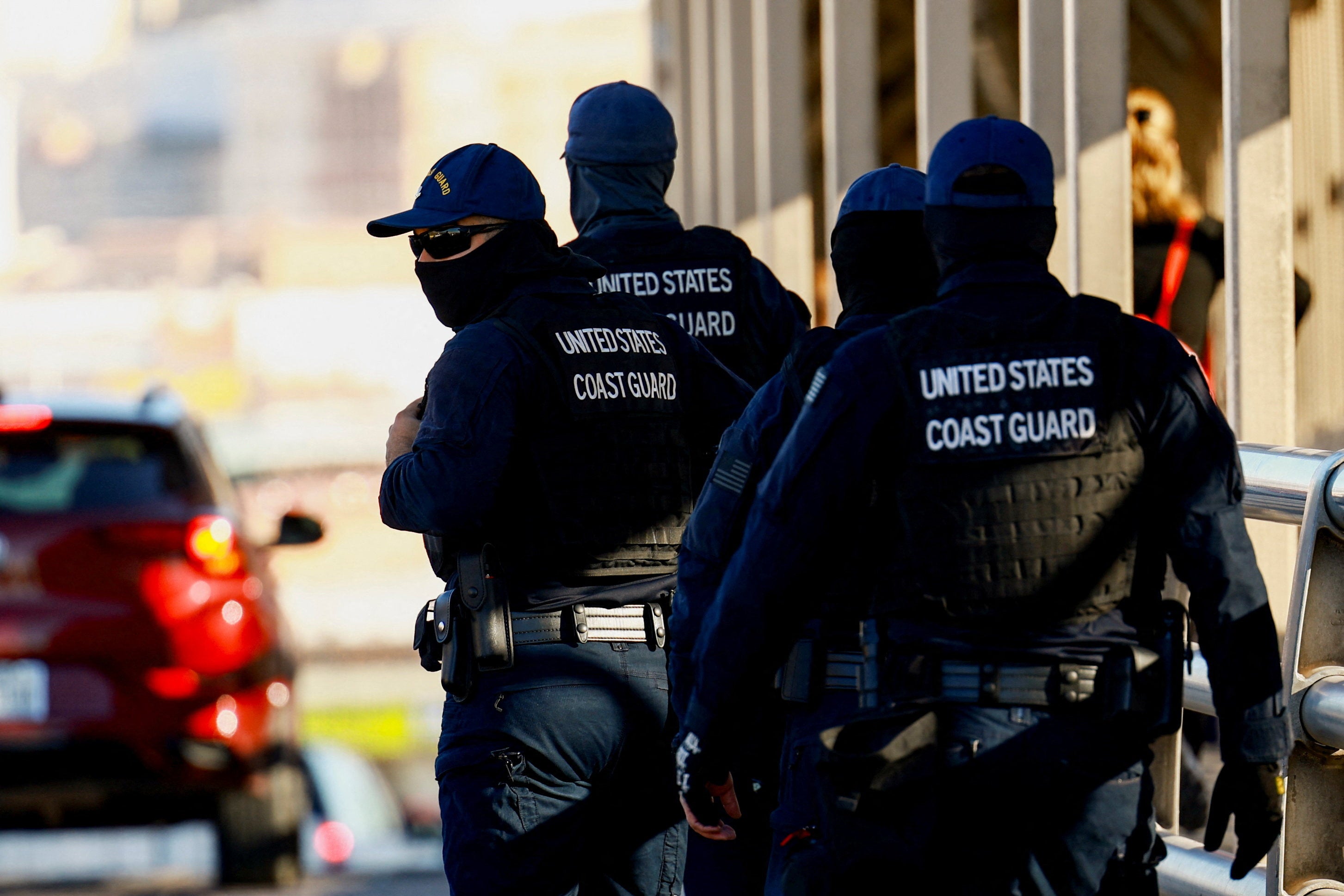
The previous Coast Guard policy provided a clear and non-exhaustive list of symbols whose display constituted a potential hate incident. This list explicitly included a noose, a swastika, supremacist symbols, Confederate symbols or flags, and anti-Semitic symbols. The rationale behind this classification was that “hate-based groups have co-opted or adopted them as symbols of supremacy, racial or religious intolerance, or other bias,” acknowledging the profound historical and social impact of such imagery.
Democratic Senator Jacky Rosen of Nevada voiced strong condemnation of the reported policy alteration. Senator Rosen expressed concern that the change “rolls back important protections against bigotry and could allow for horrifically hateful symbols like swastikas and nooses to be inexplicably permitted to be displayed.” Her comments underscore the perceived risk that such a reclassification could send a deeply troubling message to service members and the public alike.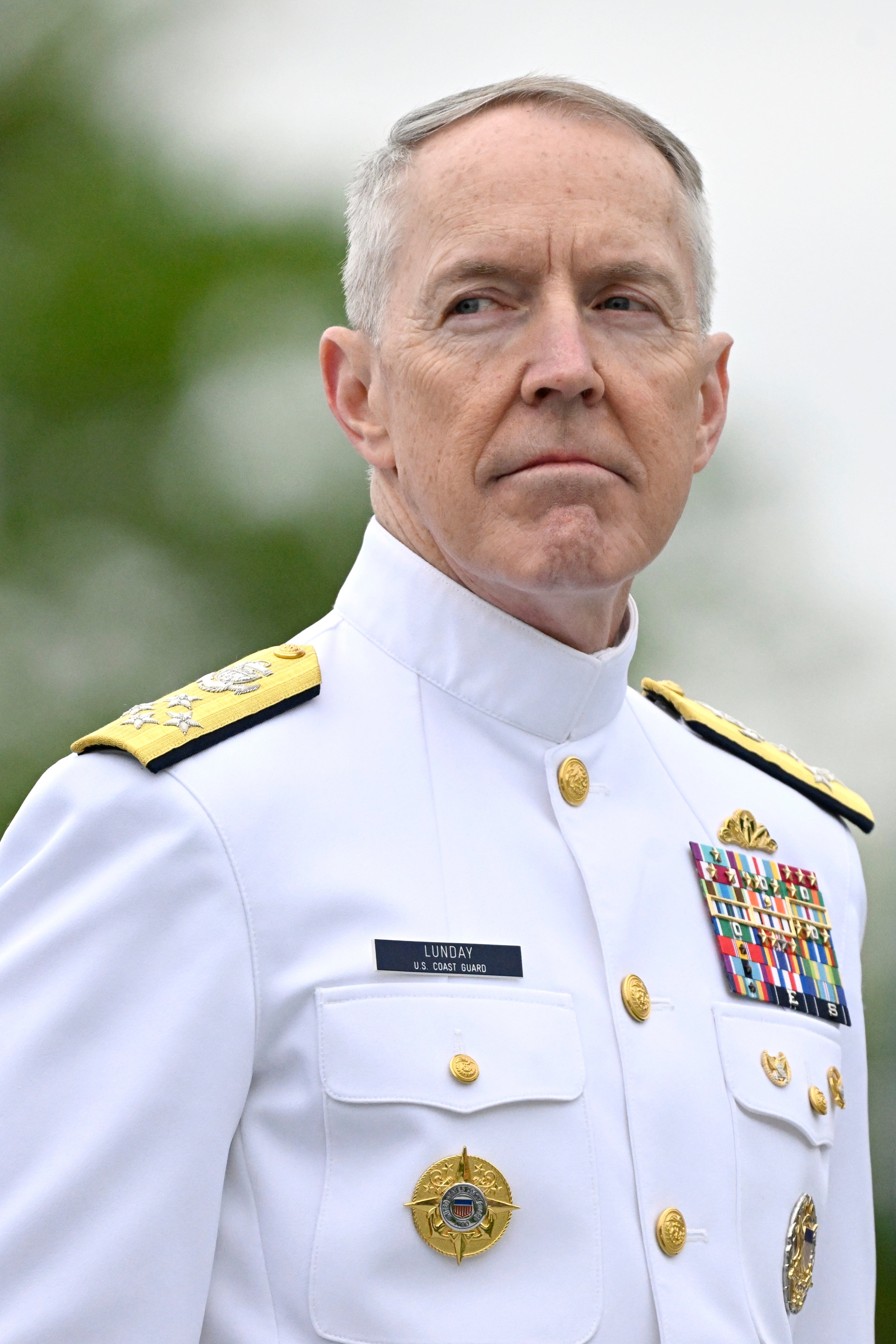
The context surrounding Admiral Lunday’s appointment adds another layer to the controversy. President Donald Trump installed Lunday as the commandant of the Coast Guard after dismissing Admiral Linda Fagan, whom he reportedly considered overly focused on “non mission critical” Diversity, Equity, and Inclusion (DEI) initiatives. At the time of the initial reports, Lunday’s confirmation was still pending, with a hearing scheduled to occur later that week, placing his leadership under intense scrutiny.
The downgrading of the swastika’s categorization from a “hate symbol” to “potentially divisive” also emerges at a particularly sensitive moment. The change occurred just days after a violent incident in Australia, where at least 15 people were shot and killed at a Hanukkah celebration. This local event coincides with a documented global surge in antisemitism, making the timing of the Coast Guard’s policy adjustment particularly jarring for many observers.
Senator Rosen further elaborated on her concerns, stating, “At a time when antisemitism is rising in the United States and around the world, relaxing policies aimed at fighting hate crimes not only sends the wrong message to the men and women of our Coast Guard, but it puts their safety at risk.” Her remarks highlight the potential practical implications for service members who might encounter such symbols in a reclassified environment, as well as the broader moral implications.
Deborah Lipstadt, a distinguished historian and President Joe Biden’s special envoy to monitor and combat antisemitism, described the policy change as “terrifying.” Lipstadt articulated her profound dismay, particularly in the current climate where she observes a “whitewashing of Nazis amongst some on the far right.” She found it incomprehensible “to take the swastika and call it ‘potentially divisive’” under such circumstances.
Lipstadt further emphasized the profound historical weight of the swastika, noting that it represents an ideology against which “hundreds of thousands of Americans fought and gave their lives to defeat.” Her powerful statement serves as a stark reminder of the symbol’s indelible connection to atrocities and the immense sacrifice made by Allied forces, making its reclassification a deeply contentious issue for many.
The ongoing debate surrounding the Coast Guard’s classification of the swastika reflects broader societal tensions concerning historical memory, freedom of expression, and the imperative to combat hate. It also underscores the complexities faced by military institutions in balancing policy updates with their core values and the need to protect personnel from harmful ideologies, especially in an era of heightened global extremism.
As the Coast Guard navigates this contentious issue, the eyes of the public, political leaders, and advocacy groups remain fixed on how the service will ultimately reconcile its official policy with the strong condemnations from its own leadership and external stakeholders. The resolution of this matter will undoubtedly set a precedent for how other institutions address symbols of hate in an evolving social and political landscape, both domestically and internationally.

![[post_title]](https://samony.com.ng/wp-content/uploads/2025/12/Beautiful-Lady-Discovered-Dead-Inside-The-Hotel-Room-After-Lodging-300x172.png?lm=6941E12D "Woman Found Dead in Hotel Room After Checking In With Unidentified Man")


![[post_title]](https://samony.com.ng/wp-content/uploads/2025/12/1765922745_Stocks-Chop-as-the-Unemployment-Rate-Jumps-Stock-Market-Today-300x225.jpg?lm=6941D7BA "Stocks Decline as Unemployment Rate Rises")

![[post_title]](https://samony.com.ng/wp-content/uploads/2025/12/Police-Arrest-Influencer-Peller-Over-Reckless-Driving.jpg?lm=6941E300 "Lagos Police Arrest Influencer Peller Over Reckless Live-Stream Crash")
![[post_title]](https://samony.com.ng/wp-content/uploads/2025/12/Beautiful-Lady-Discovered-Dead-Inside-The-Hotel-Room-After-Lodging.png?lm=6941E12B "Woman Found Dead in Hotel Room After Checking In With Unidentified Man")
