

![[post_title]](https://samony.com.ng/wp-content/uploads/2025/12/1765915585_Traditional-cable-providers-see-subscribers-increase-for-the-first-time.png?lm=6941BBC1)
Traditional cable providers have experienced their first subscriber increase in eight years, a notable shift occurring in the third quarter of 2025. This surge in subscriptions comes amidst escalating costs associated with popular streaming services, prompting consumers to reconsider their entertainment choices. Industry analysts suggest this trend marks a significant turning point in the long-standing battle between traditional pay television and the burgeoning world of digital streaming.
Data from Light Reading, citing MoffettNathanson’s latest Cord-Cutting Monitor report, indicates that over 303,000 subscribers returned to traditional cable providers during this period. This influx has helped to reverse a prolonged trend of subscriber attrition that has plagued the industry for nearly a decade, offering a glimmer of hope for legacy providers.
The uptick in subscriptions is attributed to a confluence of factors, including a reduction in subscriber losses for traditional providers and robust performance from internet-based services, often referred to as virtual multichannel video programming distributors (vMVPDs). These hybrid services appear to be bridging the gap between the familiarity of cable and the flexibility of streaming.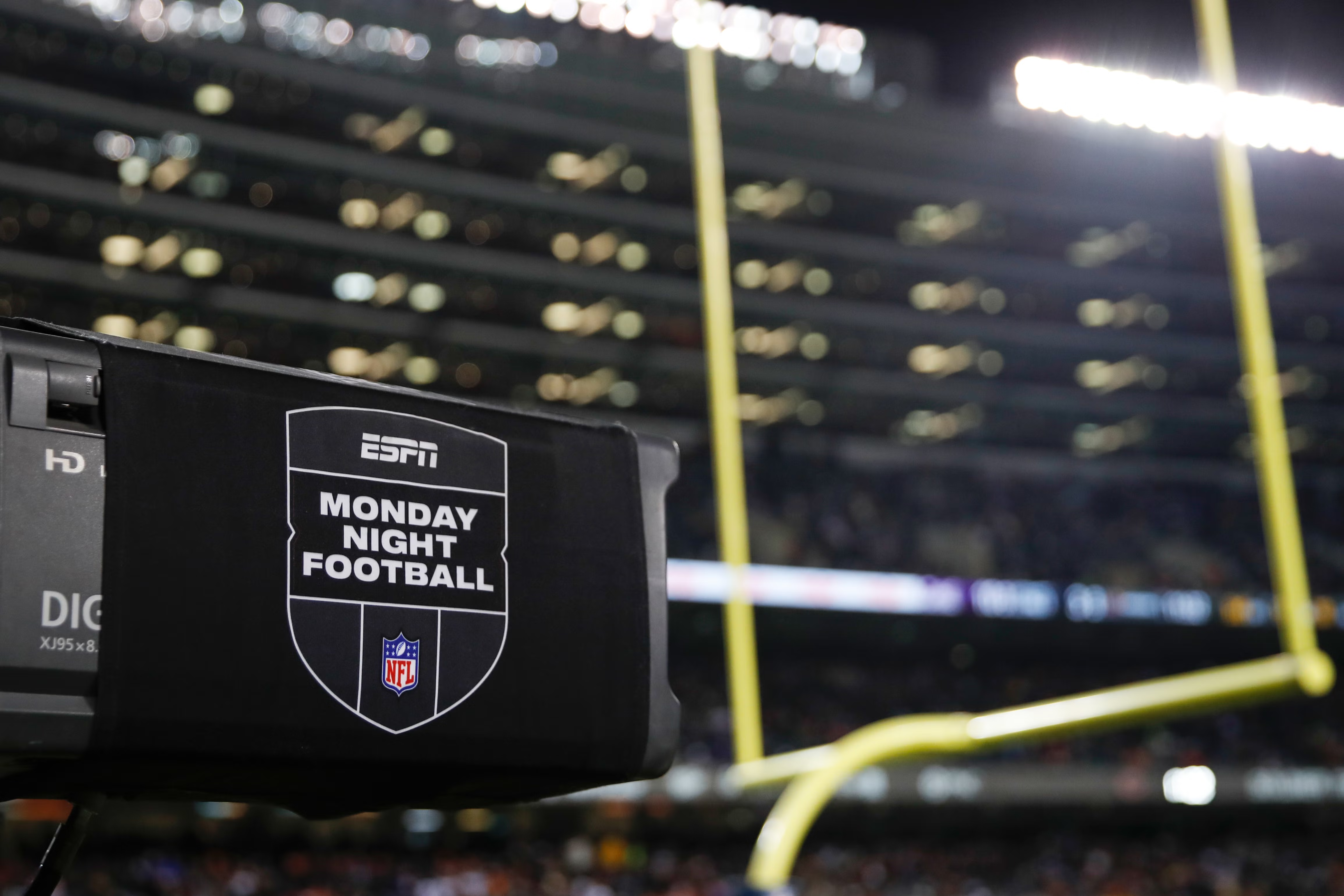
However, industry experts caution that this growth may prove to be temporary. A significant portion of the subscriber gain coincided with the commencement of the National Football League (NFL) regular season. Historically, this period sees a surge in pay TV subscriptions as sports enthusiasts flock to access live games, a trend that could diminish once the football season concludes.
Overall pay TV subscriptions, encompassing cable, satellite, telco, and vMVPD services, reached an estimated 64.77 million in the third quarter. This represents a reversal of a year-on-year loss of 274,000 subscribers, a marked improvement for an industry long defined by cord-cutting. The annual rate of subscriber decline also eased, moving from -6.4 percent to -5.8 percent.
Within the traditional pay TV segment, both cable and satellite providers continued to see net losses, though at considerably reduced rates compared to the previous year. The primary driver of the industry’s net growth was vMVPDs, with services like YouTube TV leading the charge by adding approximately 750,000 subscribers, pushing their total user base to over 21 million.
Meanwhile, streaming services, once lauded for their cost-effectiveness, are increasingly becoming more expensive. U.S. viewers now subscribe to an average of four streaming services, with monthly expenditures reaching $69, a 13 percent increase from the previous year, according to Deloitte’s 19th annual Digital Media Trends report.
This rising cost, coupled with frustrations over extra fees for new releases and regional sports blackouts, is driving consumer dissatisfaction. Nearly half of streaming subscribers feel they are overpaying, and 41 percent question whether the content justifies the expense. A substantial 60 percent indicated they would cancel their subscription if their favorite service raised its price by just $5 per month.
Consumer sentiment, as reflected on social media platforms, highlights this shift. One user expressed dismay at paying $91 for YouTube TV, $12 for Netflix, $15 for HBO Max, and $10 for Peacock, questioning the original premise of streaming as a cost-saving alternative to cable. This sentiment was echoed by others who noted that the initial promise of lower costs has been eroded by the proliferation of individual subscriptions and associated fees.
Some users defended traditional cable for its consistent channel lineups and lack of service interruptions, arguing that the cumulative cost of multiple streaming services often negates any perceived savings. Conversely, others lamented the perceived lack of compelling content on traditional cable, questioning the value proposition of paying for a service with limited programming options.

![[post_title]](https://samony.com.ng/wp-content/uploads/2025/12/Inician-las-semifinales-de-la-Copa-Pacena-Blooming-vs-Bolivar-300x300.jpeg?lm=6941BA47 "Paceña Cup Semifinals Commence: Teams Vie for Glory and Libertadores Spot")
![[post_title]](https://samony.com.ng/wp-content/uploads/2025/12/1765914418_Jarvis-confirms-breakup-with-Peller-300x198.jpeg?lm=6941B733 "Jarvis Addresses Peller Split, Urges Compassion Post-Livestream Crash")

![[post_title]](https://samony.com.ng/wp-content/uploads/2025/12/1765913910_Ned-Nwoko-Speaks-Out-Regina-Daniels-Must-Seek-Rehab-to-300x289.jpeg?lm=6941B537 "Regina Daniels Barred From Seeing Children Pending Rehab")



![[post_title]](https://samony.com.ng/wp-content/uploads/2025/12/1765914863_How-to-see-alien-spaceship-3IATLAS-yourself-as-it-makes-1024x538.jpg?lm=6941B8F2 "Interstellar Comet 3I/ATLAS Makes Rare Close Earth Approach")
![[post_title]](https://samony.com.ng/wp-content/uploads/2025/12/Inician-las-semifinales-de-la-Copa-Pacena-Blooming-vs-Bolivar-1024x1024.jpeg?lm=6941BA47 "Paceña Cup Semifinals Commence: Teams Vie for Glory and Libertadores Spot")
![[post_title]](https://samony.com.ng/wp-content/uploads/2025/12/1765914418_Jarvis-confirms-breakup-with-Peller.jpeg?lm=6941B732 "Jarvis Addresses Peller Split, Urges Compassion Post-Livestream Crash")
