

![[post_title]](https://samony.com.ng/wp-content/uploads/2025/12/1765034917_Catastrophic-Indonesia-flooding-death-toll-rises-to-900-1024x683.jpg?lm=69344BA8)
Indonesia Flooding: A Catastrophe Unfolds, Questions Arise
The recent flooding in Indonesia, specifically across Sumatra, paints a grim picture. Over 900 lives lost, hundreds still missing, and communities struggling to access even basic necessities – the scale of this disaster is undeniably immense. We see images of survivors trekking through debris, a stark reminder of the destruction left behind by cyclone-induced deluges. Beyond the immediate tragedy, this event demands a critical look at underlying causes and the effectiveness of response efforts.
It’s tempting to attribute such events solely to natural disasters. Yet, there’s a growing chorus pointing to the role of deforestation, driven by industries like mining and logging. Environmental groups assert that widespread land clearing has significantly exacerbated the flooding. The Indonesian environment ministry has begun investigating companies suspected of illegal deforestation in the affected areas, including North Sumatra Hydro Energy and Agincourt Resources. I will be looking to see the results of these environmental audits, and hopefully, the results will be open to the public. It’s not simply about pointing fingers, but rather understanding how human activity amplifies the impact of natural phenomena.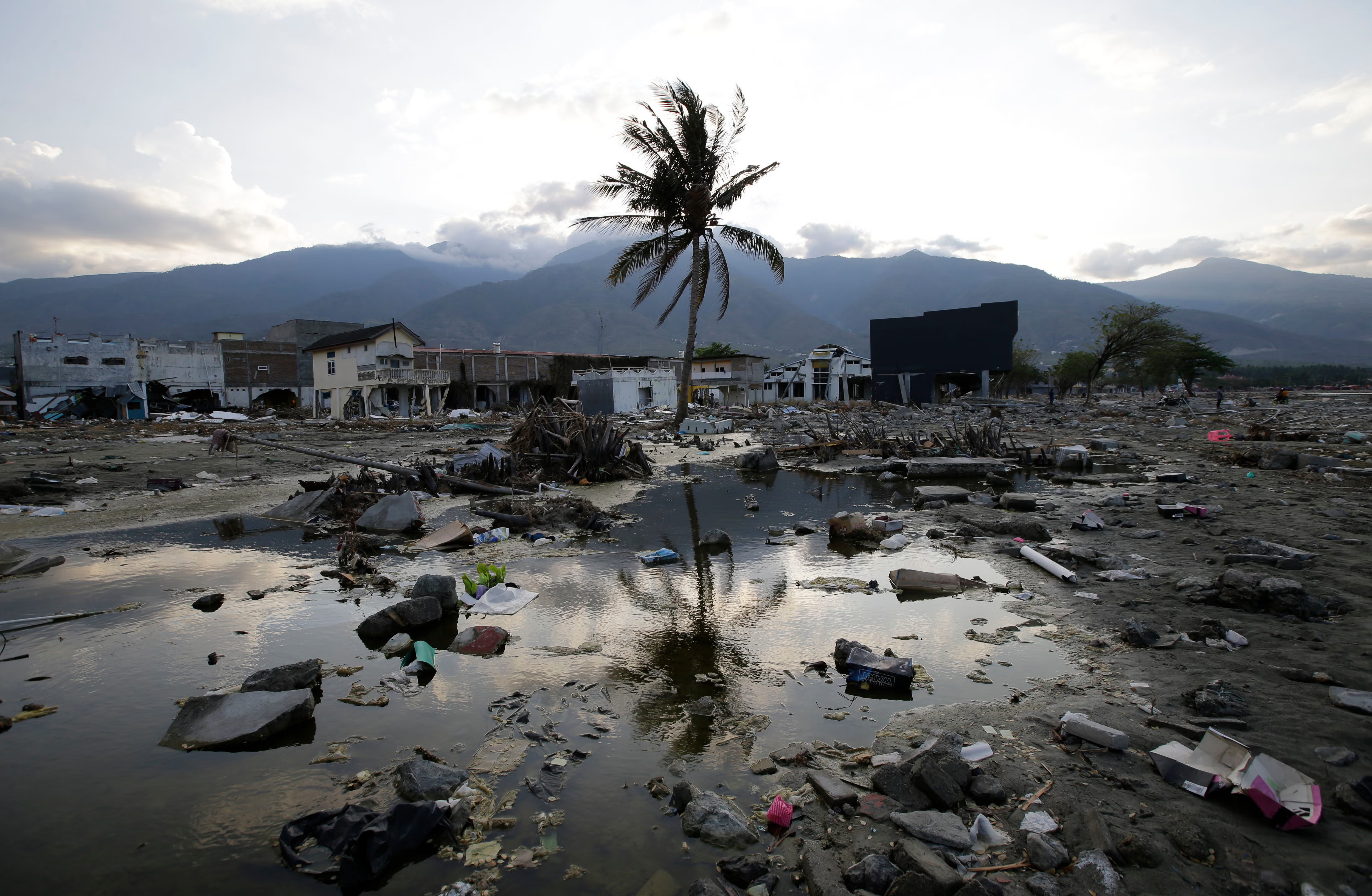 >
>
Consider the perspectives on the ground. Residents are enduring unimaginable hardship. Stories emerge of people trapped for days, forced to boil floodwater for survival. Dimas Firmansyah’s account, a 14-year-old student trapped at his boarding school, vividly illustrates the desperation. He pleads for government officials to witness the devastation firsthand. Those appeals speak volumes about the perceived disconnect between the affected communities and the authorities in Jakarta.
Local officials on Sumatra have urged the central government to declare a national emergency, a move aimed at unlocking additional resources for rescue and relief. However, President Subianto suggested that the situation was improving and that current measures were sufficient. I’ve seen this pattern before – a difference in perception between those directly impacted and those in positions of power, often geographically removed from the crisis. This disconnect can hinder effective disaster response.
The response to the Indonesian floods requires careful analysis. Are resources being allocated effectively? Is aid reaching those who need it most? What are the bottlenecks hindering rescue and relief efforts? The reports of survivors having to travel long distances to access aid indicate potential logistical challenges. These aren’t simple questions, and the answers are likely multifaceted.>
The long-term implications of this disaster are equally important. Beyond the immediate humanitarian crisis, the floods will have lasting economic and social consequences. Rebuilding infrastructure, restoring livelihoods, and addressing the psychological trauma experienced by survivors will require sustained effort and investment. The potential displacement of communities could also lead to further social and economic challenges.
Now, about those environmental audits. The temporary suspension of suspected firms and the mandated environmental audits sound promising. Still, the devil’s in the details. Will these audits be thorough and independent? Will the findings be made public? Will those found responsible for environmental damage be held accountable? Past experiences suggest that regulatory enforcement can be weak in some regions.
It’s worth noting the broader context. Indonesia, as an archipelago nation, faces a complex set of environmental challenges, including deforestation, climate change impacts, and disaster vulnerability. Addressing these challenges requires a holistic approach that integrates environmental protection, sustainable development, and disaster risk reduction.
Given these facts, the Indonesian flooding serves as a stark reminder of the interconnectedness of environmental, social, and economic issues. It is a wake-up call for the government, industries, and communities to take concrete action to mitigate disaster risks and promote sustainable practices. The focus now needs to be on preventing the next catastrophic flooding. It’s about implementing better land management practices, enforcing environmental regulations, and investing in early warning systems.
This challenge extends beyond Indonesia. The floods also claimed lives in southern Thailand and Malaysia, indicating a regional pattern of vulnerability to extreme weather events. Climate change is projected to increase the frequency and intensity of such events, making it crucial for countries in the region to enhance their preparedness and resilience.
Ultimately, the response to the Indonesian floods will be judged not only by the immediate relief efforts but also by the long-term measures taken to prevent similar tragedies in the future. We need to move beyond reactive responses and embrace proactive strategies that address the root causes of vulnerability and promote sustainable development. Only then can we hope to build more resilient communities and protect them from the devastating impacts of natural disasters. And of course, this requires consistent pressure and complete transparency from those in power. It remains to be seen if those demands will be met.

![[post_title]](https://samony.com.ng/wp-content/uploads/2025/12/1765034981_Im-a-Celebrity-star-Aitchs-real-name-and-clever-meaning-300x158.jpg?lm=69344BE6 "From Aitch to AI: Navigating Authenticity in the Evolving Entertainment Landscape")
![[post_title]](https://samony.com.ng/wp-content/uploads/2025/12/1765034171_A-massive-Chinese-backed-port-could-push-the-Amazon-Rainforest-over-300x169.jpg?lm=693448BE "China’s Amazon Port: Is Development Worth the Risk to the Rainforest?")
![[post_title]](https://samony.com.ng/wp-content/uploads/2025/12/Championship-scores-LIVE-Updates-from-11-games-including-Derby-v-300x169.jpg?lm=69343666 "Charlton-Portsmouth Match Abandoned: Fan’s Medical Emergency Highlights Football’s Human Side")
![[post_title]](https://samony.com.ng/wp-content/uploads/2025/12/After-9-years-of-dating-lady-kneels-down-to-collect-300x157.jpg?lm=693436A3 "Decoding Viral Love: Unpacking Modern Relationship Anxieties and Gendered Expectations")


![[post_title]](https://samony.com.ng/wp-content/uploads/2025/12/1765034897_Why-Gonorrhoea-is-becoming-harder-to-treat.jpg?lm=69344B91 "Outpacing Super Gonorrhea: A Call for Vigilance Forged in Experience")
![[post_title]](https://samony.com.ng/wp-content/uploads/2025/12/1765034981_Im-a-Celebrity-star-Aitchs-real-name-and-clever-meaning-1024x538.jpg?lm=69344BE6 "From Aitch to AI: Navigating Authenticity in the Evolving Entertainment Landscape")
