

![[post_title]](https://samony.com.ng/wp-content/uploads/2025/12/1765006345_Ashes-2025-live-score-England-search-for-early-Australia-wickets-1024x683.jpg?lm=6933DC0C)
Ashes 2025: A Critical Look at England’s Struggles and Australia’s Dominance
The Ashes series is always a major focal point in the cricket world, and the 2025 series is no different. Early indications point towards another challenging campaign for England Down Under. Australia clinched the first test, and day two of the second test at The Gabba reveals some concerning trends for the English side. Let’s dive into the key talking points.
England’s Woes: A Cascade of Errors?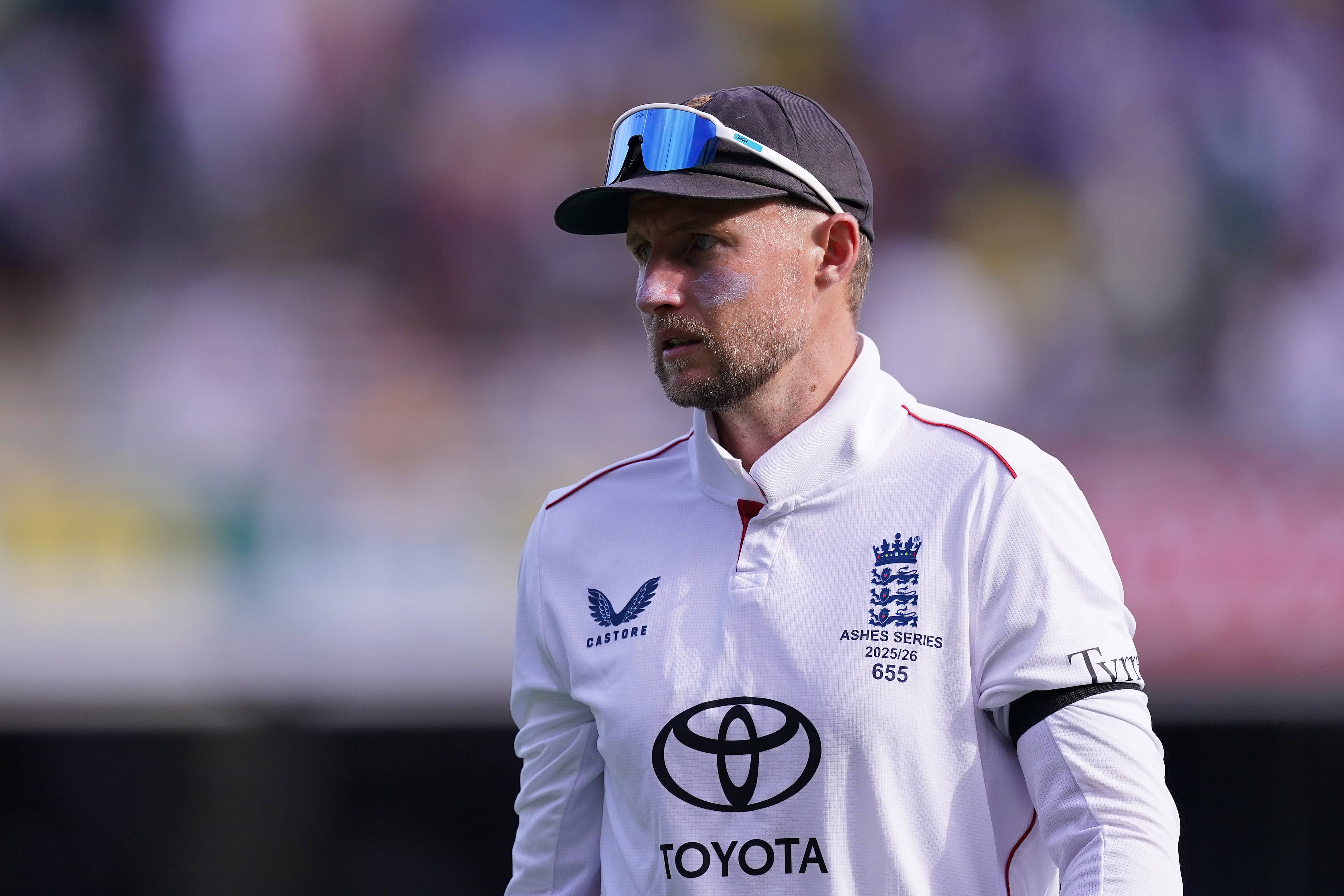 >
>
Reports highlight dropped catches and erratic bowling as significant contributors to England’s struggles at The Gabba. Michael Vaughan’s observation about England’s catching woes rings true. History tends to repeat itself; touring England sides often struggle with the basics in Australia. These aren’t just missed opportunities; they are momentum killers. The Australians capitalize ruthlessly on such lapses. Joe Root acknowledges the errors, but insisting the campaign is “firmly on track” might be a bit optimistic given the scale of those mistakes.
The bowling attack has come under fire, too. Nasser Hussain pointedly remarks on their inability to control the bounce, leading to easy runs for the Australian batsmen. Stuart Broad even joked that England bowled more bad balls in a single day than some Australian legends did in their entire careers. Ouch. It raises serious questions about the team’s preparation and adaptability to Australian conditions.
Michael Atherton didn’t mince words either, branding England’s performance as “awful.” It seems harsh, and there were glimpses of resilience towards the end of the day. Still, the overall picture is one of a team struggling to find its footing. Brydon Carse apparently had a particularly difficult day, and the bowling attack seemed to lack a cohesive strategy outside of Archer and Atkinson’s partnership.>
Australia’s Perspective: Lyon’s Frustration and Starc’s Threat
Australia, naturally, appears to be in a stronger position. Yet, there’s a surprising twist: Nathan Lyon, a veteran spinner, expresses his disappointment at being dropped for the second Test. Calling himself “filthy” and “gutted,” Lyon’s reaction reveals the intense competition within the Australian squad. This depth is a luxury England simply doesn’t possess right now.
Nasser Hussain’s comments regarding Mitchell Starc and the new pink ball are telling. He warns that England needs to wrap up Australia’s remaining wickets quickly and get a substantial lead before Starc can exploit the conditions under lights. This highlights the tactical awareness that Australia seems to bring to the game, constantly looking for ways to press their advantage.
Injuries and Team Composition: A Constant Factor
Josh Hazlewood’s injury setback adds another layer of complexity. Cricket Australia reports Achilles soreness during his rehabilitation. His participation in the rest of the Ashes series is now uncertain. This is the reality of modern cricket: managing player workloads and dealing with injuries. Hazlewood’s absence, while a blow to Australia, might open doors for other players to step up.
Beyond the Scoreboard: Observations and Reflections
Having watched numerous Ashes series over the years, certain patterns emerge. England often arrives with good intentions, but the relentless pressure of the Australian crowds, combined with the home team’s clinical execution, can quickly derail their plans. Mental fortitude becomes just as important as skill.
The reliance on short-pitched bowling by England in the second test showcases a lack of awareness of Australian conditions. The Gabba is notorious for its extra bounce. However, it is not always consistent.
The pink ball Test adds another dimension. The twilight period can be particularly challenging for batsmen, as the ball tends to swing more. Both teams need to strategize accordingly.
Looking ahead, England needs to address its catching woes immediately. They cannot afford to squander opportunities against a team as strong as Australia. The bowling attack needs to find more consistency and adapt to the conditions more effectively. Joe Root’s leadership will be crucial in keeping the team focused and motivated despite the setbacks.
For Australia, the challenge will be to maintain their momentum and avoid complacency. Lyon’s situation needs to be handled carefully to ensure team morale remains high. Managing Hazlewood’s injury and finding a suitable replacement will also be key.
The Ashes is a marathon, not a sprint. There’s plenty of cricket to be played. Whether England can turn things around remains to be seen. So far, Australia looks in control. The key might lie in how England responds to the adversity and whether they can find a way to disrupt Australia’s dominance. Only time will tell.

![[post_title]](https://samony.com.ng/wp-content/uploads/2025/12/1765006345_Ashes-2025-live-score-England-search-for-early-Australia-wickets-300x200.jpg?lm=6933DC0C "Ashes 2025 live score: England search for early Australia wickets on day three after painful dropped catches")
![[post_title]](https://samony.com.ng/wp-content/uploads/2025/12/Dangote-Speaks-On-Reducing-Price-Of-Petrol-After-Meeting-Tinubu.webp.webp "Dangote Speaks On Reducing Price Of Petrol After Meeting Tinubu")

![[post_title]](https://samony.com.ng/wp-content/uploads/2025/12/1764998564_Ukraine-Russia-war-latest-Putin-risks-fresh-row-with-Trump-after-300x200.jpeg?lm=6933BDA8 "Ukraine War Reshapes Global Order: A Complex Web of Power, Diplomacy, and Risk")

![[post_title]](https://samony.com.ng/wp-content/uploads/2025/12/High-Risk-for-Frostbite-Heart-Strain-and-Chronic-Conditions-300x169.jpg?lm=6933A071 "Polar Vortex Here? What You MUST Know to Stay Safe")


![[post_title]](https://samony.com.ng/wp-content/uploads/2025/12/Nigerian-Athlete-Oghenebrume-Faces-15-Years-Jail-Time-Over-Firearm.jpg?lm=6933DA51 "Nigerian Athlete’s American Nightmare: How Could This Firearm Charge Happen?")
