Jesse Lingard’s FC Seoul Exit: A Calculated Move or a Sign of Shifting Football Dynamics?
Jesse Lingard’s departure from FC Seoul after just two seasons raises some intriguing questions about the evolving landscape of professional football. News outlets report a mutual agreement to terminate his contract at the close of the 2025 season. It’s easy to frame this as just another player transfer, but taking a closer look reveals more.
Lingard’s move to the K League in early 2024 already surprised many. He became arguably the highest-profile signing in the league’s history. Sixty-six appearances, eighteen goals, and ten assists – that’s a solid contribution. Yet, the partnership seems to have run its course. FC Seoul cites Lingard’s desire for a “new challenge” as the primary reason. While the club publicly expresses support and gratitude, one can’t help but wonder what truly prompted this parting.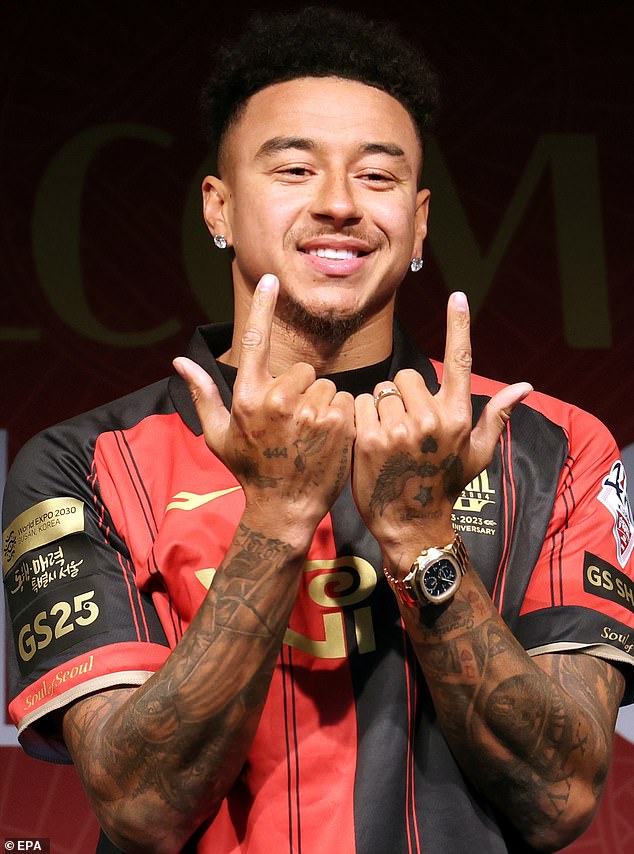 >
>
Did Lingard fulfill expectations? FC Seoul undoubtedly benefited from his presence, even qualifying for the AFC Champions League after a strong initial season. However, a sixth-place finish in the subsequent campaign suggests a plateau, or even a decline. Did the initial hype translate into sustained success on the pitch? It’s a question worth pondering.
Clubs often present these decisions as amicable. Lingard’s statement about his “unbelievable” time in South Korea and the club’s glowing tribute paint a rosy picture. Still, experience whispers that there’s often more beneath the surface. Sometimes, “mutual agreement” is just a polite way of saying things didn’t quite work out as planned.
Consider the broader context. Football is increasingly global, and players are more willing than ever to explore opportunities outside traditional powerhouses. Leagues in Asia and the Middle East are attracting big names with lucrative contracts. This influences players’ decisions. It gives them choices they never had before.>
The K League undoubtedly sought to elevate its profile through Lingard’s signing. A player with Premier League pedigree brings instant recognition and media attention. But is that enough to guarantee long-term success? Perhaps the league is learning that attracting foreign stars is only one piece of the puzzle. Building a truly competitive league requires a deeper investment in local talent and infrastructure.
It’s also worth considering Lingard’s perspective. At 32, he’s likely weighing his options carefully. He may be seeking a more competitive environment, a bigger payday, or simply a fresh start. The allure of a new challenge is genuine for many athletes, particularly those who have already experienced the highs and lows of top-flight football.
Where does Lingard go from here? He hasn’t disclosed his next destination, fueling speculation. Will he return to Europe? Explore opportunities in another emerging market? His decision will offer further insights into his priorities and the broader trends shaping player movement.
This situation highlights the complexities of modern football. It’s not just about goals and assists; it’s about marketing, brand building, and the ever-shifting dynamics of a globalized sport. Lingard’s departure from FC Seoul isn’t necessarily a failure. Instead, it serves as a reminder that even the most promising partnerships can have a limited lifespan.
Looking ahead, this situation also presents opportunities. FC Seoul now needs to demonstrate that it can thrive without a marquee signing. They must focus on developing domestic talent. For Lingard, this is a chance to redefine his career. He must show he can still contribute at a high level.
Ultimately, the success of this separation will be judged by what happens next – both for Lingard and for FC Seoul. This split should also serve as a lesson to other leagues about the realities of building a sustainable competitive environment. It’s a harsh lesson, one that many will probably learn from. It’s a situation to watch.

![[post_title]](https://samony.com.ng/wp-content/uploads/2025/12/1764998564_Ukraine-Russia-war-latest-Putin-risks-fresh-row-with-Trump-after-300x200.jpeg?lm=6933BDA8 "Ukraine War Reshapes Global Order: A Complex Web of Power, Diplomacy, and Risk")
![[post_title]](https://samony.com.ng/wp-content/uploads/2025/12/High-Risk-for-Frostbite-Heart-Strain-and-Chronic-Conditions-300x169.jpg?lm=6933A071 "Polar Vortex Here? What You MUST Know to Stay Safe")

![[post_title]](https://samony.com.ng/wp-content/uploads/2025/12/Full-List-Of-Lawmakers-Who-Refused-To-Dump-PDP-For.jpg?lm=6933A187 "Rivers State: Defection Dynamics and Political Fortunes")

![[post_title]](https://samony.com.ng/wp-content/uploads/2025/12/Dangote-Speaks-On-Reducing-Price-Of-Petrol-After-Meeting-Tinubu.webp.webp "Dangote Speaks On Reducing Price Of Petrol After Meeting Tinubu")
![[post_title]](https://samony.com.ng/wp-content/uploads/2025/12/1764998564_Ukraine-Russia-war-latest-Putin-risks-fresh-row-with-Trump-after-1024x683.jpeg?lm=6933BDAE "Ukraine War Reshapes Global Order: A Complex Web of Power, Diplomacy, and Risk")