

Analyzing the 2026 World Cup Draw: A Critical Look at Group Dynamics and FIFA’s Influence
The 2026 World Cup draw is complete, and the initial reactions are pouring in. England finds itself in Group L, alongside Croatia, Ghana, and Panama. Scotland, on the other hand, landed in Group C with Brazil, Morocco, and Haiti. How do we interpret these pairings? What are the underlying factors shaping these outcomes?
England drawing Croatia sparks immediate interest. It’s a rematch of sorts, stirring memories of past encounters. Croatia has consistently proven a tough opponent for England on the international stage. Their opening match will set the tone. Ghana adds an element of unpredictability, being a team England hasn’t faced competitively before. Panama shouldn’t pose too significant a hurdle, but complacency can be dangerous.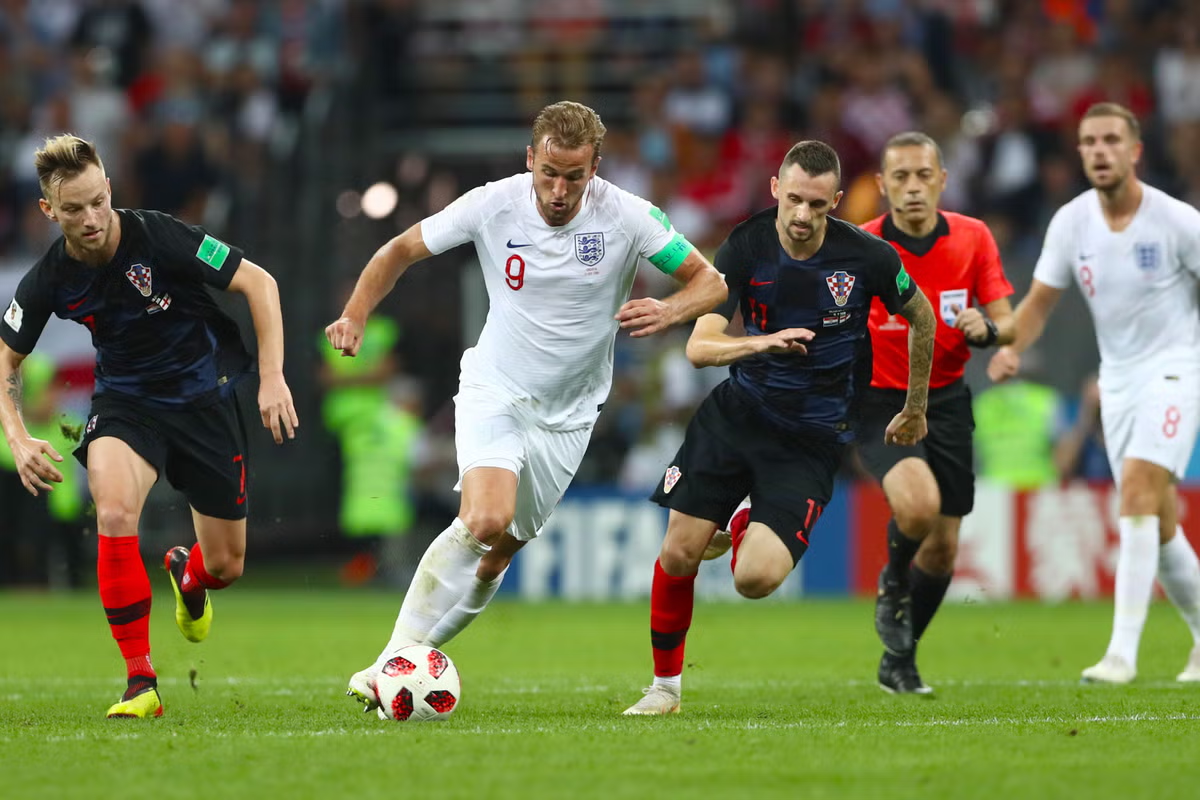 >
>
Scotland’s path appears steeper. Brazil and Morocco present formidable challenges. Brazil is always a threat, and Morocco demonstrated their capabilities in the last World Cup. Haiti presents an opportunity for points, but Scotland will need to be at their best to advance. The memory of their last World Cup appearance in 1998 looms large, adding pressure to this campaign.
It’s worth noting FIFA’s new seeding system, designed to keep certain powerhouses apart until the later stages. England benefits from this, avoiding Spain and Argentina until the semi-finals, and France until the final, assuming they all top their groups. It raises questions about fairness and whether it skews the competition in favor of established teams. The draw should ideally be random. Yet, FIFA’s interventions are not accidental. Revenue generation and satisfying key stakeholders play a part.
The Republic of Ireland’s potential inclusion in Group A, pending playoff results, adds another layer of intrigue. Their group, featuring Mexico, South Korea, and South Africa, feels relatively balanced. A successful playoff campaign could see them make a significant impact. Similarly, Wales or Northern Ireland could land in Group B, facing Canada, Qatar, and Switzerland. The playoffs add another layer to the storylines already emerging.>
Consider the broader implications. The expanded format of the 2026 World Cup, hosted across North America, changes the dynamics significantly. More teams mean more opportunities, but also potentially more diluted competition in the early rounds. There’s a balance to strike between inclusivity and maintaining the quality of the tournament.
These initial groupings invite speculation about potential upsets and dark horses. A team like Morocco, fresh off their 2022 performance, could surprise again. Similarly, the performance of emerging nations like Ghana will be worth monitoring. Tournament football is about momentum, and a strong start can propel a team deep into the knockout stages.
It’s not just about the draw. Player fitness, tactical innovations, and even luck will play a role. Predicting the outcome at this stage is pure speculation. However, analyzing the groups gives us a framework for understanding the challenges and opportunities that lie ahead.
Looking at England, their path to the quarter-finals seems reasonable, provided they navigate the group stage effectively. They need to avoid complacency and adapt to the unique conditions of playing in North America. The pressure to perform will be immense, given the talent in their squad. For Scotland, qualifying from their group would be a major achievement. They will need to be tactically astute and defensively solid to withstand the attacking threat of Brazil and Morocco. The opening game against Haiti is crucial for building confidence.
These are still early days, but the draw has set the stage for an intriguing World Cup. We should anticipate surprises, tactical battles, and moments of brilliance. The journey to the final will be full of twists and turns. I’ve seen enough of these tournaments to know that nothing is predictable. The beautiful game always has a way of confounding expectations.
The location of matches also merits attention. Playing in Toronto or Dallas could favor England against Croatia, exposing the latter to potentially unfamiliar conditions. This is something for coaching teams to consider during preparations. Home advantage may play a larger-than-usual role, as fans provide momentum to their teams.

![[post_title]](https://samony.com.ng/wp-content/uploads/2025/12/What-is-SPF-and-how-is-sunscreens-sun-protection-factor-300x169.jpeg?lm=69332F2E "Australian Sunscreen Standards Under Fire: Are SPF Claims Reliable?")
![[post_title]](https://samony.com.ng/wp-content/uploads/2025/12/1764962269_Federal-judge-orders-Epstein-grand-jury-documents-unsealed-as-DOJ-300x200.jpeg?lm=69332FE0 "Epstein Documents Unsealed: Transparency or Obstruction?")
![[post_title]](https://samony.com.ng/wp-content/uploads/2025/12/1764962435_Star-says-Im-a-Celeb-stint-drove-him-back-to-300x158.jpg?lm=69333084 "Iain Lee’s Relapse After Reality TV: Time for Shows to Actually Care?")
![[post_title]](https://samony.com.ng/wp-content/uploads/2025/12/BREAKING-Full-draw-for-2026-World-Cup-group-stages-confirmed-300x169.jpg?lm=69333125 "2026 World Cup Draw: Initial Reactions and Open Questions")
![[post_title]](https://samony.com.ng/wp-content/uploads/2025/12/SteamOS-vs-Windows-on-dedicated-GPUs-Its-complicated-but-Windows-300x169.jpeg?lm=69332D16 "SteamOS vs. Windows Gaming: 2026 Performance Showdown")
![[post_title]](https://samony.com.ng/wp-content/uploads/2025/12/Spurs-U19s-vs-Slavia-Prague-U19s-UEFA-Youth-League-300x146.jpg?lm=69331A87 "Tottenham Hotspur U19s vs. Slavia Prague U19s: How to Get Free Tickets")

![[post_title]](https://samony.com.ng/wp-content/uploads/2025/12/What-is-SPF-and-how-is-sunscreens-sun-protection-factor.jpeg?lm=69332F2C "Australian Sunscreen Standards Under Fire: Are SPF Claims Reliable?")
![[post_title]](https://samony.com.ng/wp-content/uploads/2025/12/1764962269_Federal-judge-orders-Epstein-grand-jury-documents-unsealed-as-DOJ-1024x683.jpeg?lm=69332FE3 "Epstein Documents Unsealed: Transparency or Obstruction?")
