

![[post_title]](https://samony.com.ng/wp-content/uploads/2025/12/1764876887_Mohbads-Widow-Wunmi-Issues-Fresh-Update-on-Her-DNA-Court.jpeg?lm=6931E257)
Mohbad’s Paternity Case: New Court Ruling and Lingering Questions
The legal battle surrounding the paternity of Liam, son of the late Nigerian singer Mohbad, continues. Mohbad’s widow, Wunmi, recently provided an update on the DNA dispute involving Joseph Aloba, Mohbad’s father. This case, already heavy with grief and speculation, throws up interesting observations on how families navigate inheritance and legacy in the public eye.
The core issue? Joseph Aloba wants to confirm Liam’s paternity, requesting the DNA test occur in hospitals of his choosing, specifically abroad. This request, however, didn’t fly with the court. The judge ruled that the DNA examination must take place in neutral, independent medical facilities, avoiding any perceived bias. It appears that the responsibility for covering the test’s expense now rests on Joseph Aloba, as he initiated the request for a second DNA examination.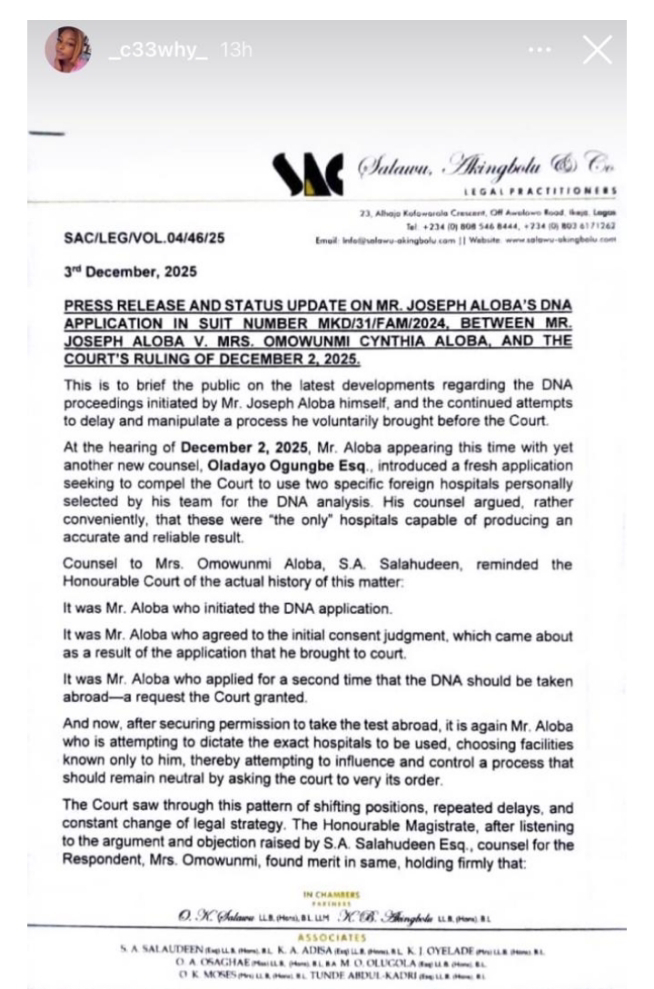 >
>
Wunmi, through her legal team, has stated her willingness to comply with the court’s directive. Furthermore, she alleges that Joseph Aloba keeps “shifting the goalpost,” hinting at attempts to deliberately complicate or stall the process.
This whole saga, playing out in courtrooms and headlines, highlights a few things. First, it illustrates the deep-seated cultural importance placed on lineage and biological connection in Nigeria. Second, it showcases the challenges families face when grief is compounded by legal and financial uncertainties, amplified by public scrutiny. It’s worth noting that the magistrate court in Ikorodu initially ordered two DNA tests in September 2025, both locally and abroad, aiming to definitively establish Liam’s paternity.
One can observe the emotional toll this prolonged dispute must have on all parties involved. Beyond the legal jargon and court rulings, there’s a young child whose life is inevitably shaped by these events. It raises complex ethical questions about the rights of the child versus the rights of the family to know their lineage, especially when significant assets and inheritance are at stake.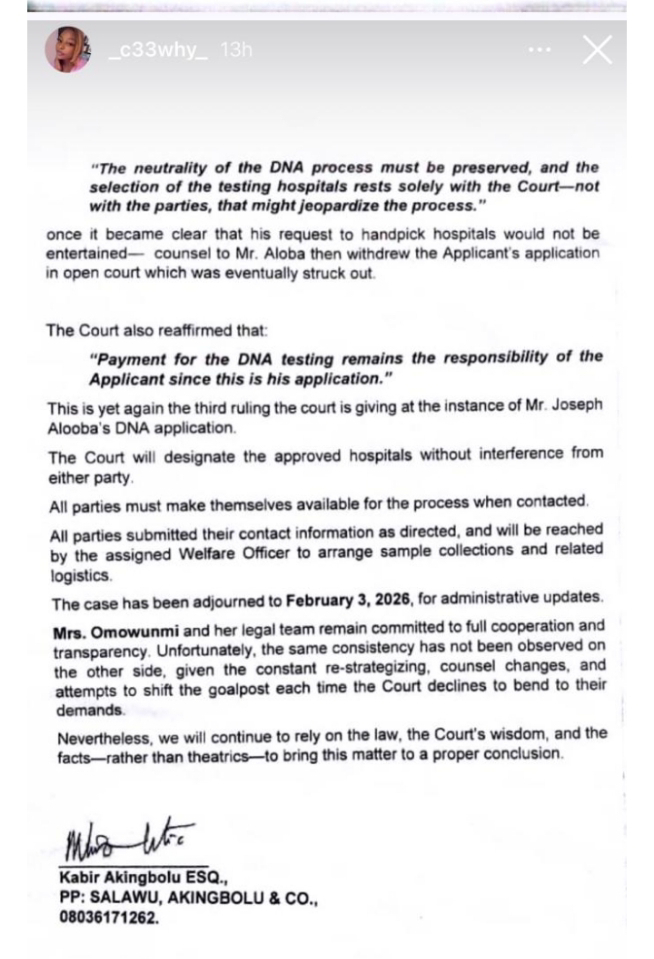 >
>
The entertainment industry is no stranger to disputes over estates and legacies. What makes this case particularly poignant is the tragic loss of Mohbad at a young age. This incident fuels the existing questions and concerns regarding the circumstances surrounding his death and the subsequent management of his musical estate.
While DNA testing offers a seemingly objective route to establishing paternity, it doesn’t address the underlying issues of trust and family dynamics. This challenge remains, regardless of the test results. Even with scientific certainty, repairing fractured relationships and navigating grief requires a level of empathy and understanding that seems sorely lacking in this situation.
It’s interesting to consider the role of social media and public opinion in shaping the narrative around this case. Every filing, every statement, is dissected and debated online, adding pressure on everyone involved. This constant scrutiny can skew perceptions and make it more difficult to reach a resolution that prioritizes the child’s well-being.
Given these facts, it seems prudent to approach updates on this case with a healthy dose of skepticism. Sensationalism often trumps accuracy in online reporting, and it’s crucial to rely on verified sources and avoid jumping to conclusions. It’s a reminder that behind every headline, there are real people grappling with complex emotions and difficult choices.
Having witnessed similar situations unfold in the past, I’ve learned that legal battles rarely offer easy answers. They often exacerbate existing tensions and create new ones. In this particular case, the court’s decision to mandate a neutral testing facility is a step in the right direction, promoting fairness and transparency. Yet, the underlying issues of mistrust and strained family ties require more than just a court order to resolve.
The future of Liam, Mohbad’s son, is undeniably intertwined with the outcome of this legal dispute. Hopefully, whatever the result, it prioritizes his welfare and provides him with the stability and support he needs to thrive, irrespective of the confirmed paternity. It’s up to the adults involved to put aside their differences and act in the best interests of the child, ensuring that his father’s legacy is one of love and protection, not discord.
To that end, open communication and a willingness to compromise are crucial. If both parties can focus on Liam’s well-being, it paves the way for a more amicable resolution, regardless of the DNA test results. It’s a tall order, no doubt, but one that is essential for the sake of the child’s future.

![[post_title]](https://samony.com.ng/wp-content/uploads/2025/12/1764875122_Inside-Im-A-Celebrity-Aitchs-dating-history-as-rapper-sparks-300x158.jpg?lm=6931DB75 "Celebrity Dating: The “I’m a Celebrity” Publicity Machine")

![[post_title]](https://samony.com.ng/wp-content/uploads/2025/12/How-to-Break-a-Bad-Habit-11-Tips-and-Strategies-300x169.jpg?lm=6931DA31 "Work With Your Brain to Break Bad Habits")
![[post_title]](https://samony.com.ng/wp-content/uploads/2025/12/Pope-Leo-dissolves-one-of-Francis-final-acts-in-major-300x200.jpeg?lm=6931DAAB "Vatican Finances: Pope Leo Scraps Predecessor’s Plan – What’s Next?")
![[post_title]](https://samony.com.ng/wp-content/uploads/2025/12/In-1995-a-Netscape-employee-wrote-a-hack-in-10-300x169.jpg?lm=6931D870 "JavaScript’s Reign: How a 10-Day Hack Took Over the Web (And What’s Next)")

![[post_title]](https://samony.com.ng/wp-content/uploads/2025/12/Syria-vs-Qatar-LIVE-Score-Updates-The-match-is-tie-1024x576.png?lm=6931E1DC "Syria Stuns Qatar: Was This Arab Cup Draw a Warning Sign?")
![[post_title]](https://samony.com.ng/wp-content/uploads/2025/12/1764875122_Inside-Im-A-Celebrity-Aitchs-dating-history-as-rapper-sparks-1024x538.jpg?lm=6931DB75 "Celebrity Dating: The “I’m a Celebrity” Publicity Machine")
