

Analyzing the Proposed Expansion of Trump’s Travel Ban: A Critical Perspective
The specter of an expanded travel ban, potentially encompassing 32 countries, is once again making headlines. Prompted by a recent shooting in Washington D.C. allegedly involving an Afghan national, the Trump administration is reportedly considering widening the scope of its existing immigration restrictions. It’s a move that sparks immediate debate and warrants a thorough look.
Reportedly, this potential expansion comes on the heels of a halt to immigration applications from the 19 nations already facing travel limitations. Secretary Noem’s inflammatory rhetoric about “killers, leeches, and entitlement junkies” adds fuel to the fire, painting immigrants with a broad brush of negativity. Now, before we jump to conclusions, it’s vital to sift through the layers of this situation.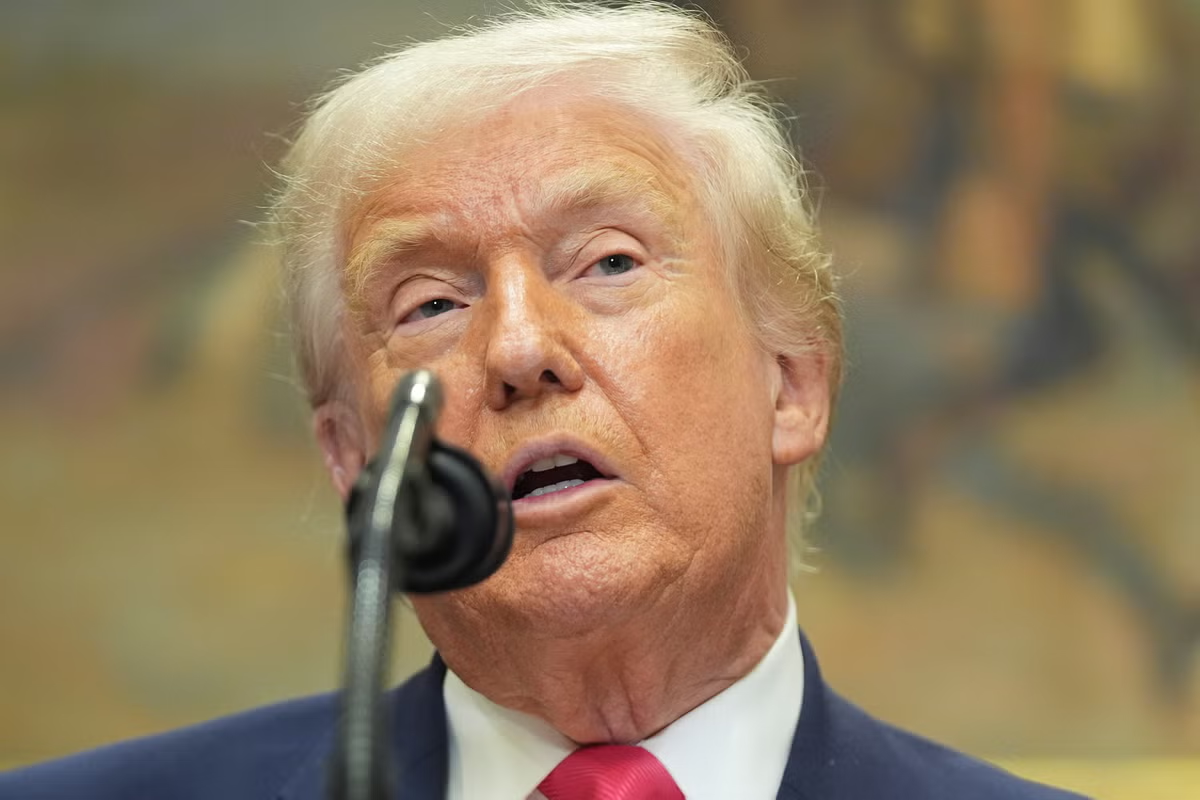 >
>
The justification for such drastic action typically revolves around national security. The argument goes: restricting travel from certain countries minimizes the risk of admitting individuals who might pose a threat. Yet, it’s a complex issue to address. Does broad-stroke restriction genuinely enhance security, or does it primarily serve to demonize entire populations? Is it effective security policy, or is it a political maneuver disguised as one?
From my own experiences observing similar policies unfold, I’ve noticed a few recurring patterns. One is the often-tenuous link between specific incidents and sweeping policy changes. This shooting, while tragic, becomes the catalyst for measures impacting millions. Is it a proportional response, or an overreaction? We also see how quickly political narratives gain traction. Secretary Noem’s comments, for example, tap into existing anxieties about immigration, potentially shaping public opinion in a way that bypasses nuanced discussion.
Moreover, it’s reasonable to be skeptical about the actual effectiveness of such bans. Do they truly prevent those with malicious intent from entering the country? History shows that determined individuals often find ways around obstacles. These bans can also strain diplomatic relationships, hindering cooperation on crucial issues like counter-terrorism. The political impact is a central point. Such policies often play well with a particular segment of the electorate, regardless of their tangible security benefits.>
One also wonders about the unintended consequences. Consider the potential impact on families seeking to reunite, students pursuing education, or professionals contributing to the economy. These are real people with legitimate aspirations, caught in the crossfire of political agendas. These are rarely considered. Then there’s the question of due process. Are these restrictions applied fairly and consistently? Do individuals have the opportunity to challenge these decisions?
The Department of Homeland Security launched a sweeping immigration operation in New Orleans after the city’s “sanctuary policies.” One can question the intent behind this enforcement surge. It appears to be a calculated move, intended to punish cities perceived as being soft on immigration. The rhetoric used by DHS officials further underscores this point, creating a narrative of “law and order” versus “sanctuary politicians.”
We must also be wary of oversimplifications. It’s tempting to reduce complex issues to sound bites. Secretary Noem’s generalizations about immigrants, while politically expedient, lack the depth and understanding required for sound policymaking. It’s easy to stoke fear and resentment, but it’s far more difficult to engage in thoughtful, evidence-based discussions about immigration reform.
In the flurry of executive actions, Trump has even declared “void” all Biden orders and pardons not signed by hand, raising concerns about the legitimacy of executive power and its potential for abuse. This demonstrates the increasingly blurred lines between policy and political grandstanding.
Consider also the announcement from U.S. Citizenship and Immigration Services (USCIS) that “a comprehensive re-review, potential interview, and re-interview of all aliens from high-risk countries of concern” who entered the U.S. on or after January 20, 2021, was necessary. This highlights the enormous amount of resources that will be needed to vet and screen applicants.
These developments raise critical questions:
What criteria are used to determine which countries are deemed “high-risk”? Is it based on credible intelligence, or is it driven by political considerations? How do these policies impact the United States’ image and standing in the world? Do they alienate allies and undermine diplomatic efforts? What are the long-term economic consequences of restricting immigration? Do these policies stifle innovation and hinder economic growth?
It is clear that the implications of an expanded travel ban extend far beyond national security. They touch upon issues of human rights, economic prosperity, and international relations. To address this issue responsibly, we require open dialogue, critical analysis, and a willingness to confront uncomfortable truths.


![[post_title]](https://samony.com.ng/wp-content/uploads/2025/12/1764786558_Singer-Peter-Okoye-opens-up-on-greatest-fear-in-life-300x183.jpeg?lm=69308181 "Mr. P’s biggest fear isn’t what you think, and it’s surprisingly relatable")
![[post_title]](https://samony.com.ng/wp-content/uploads/2025/12/1764786691_The-best-fitness-trackers-and-watches-weve-tested-for-2025-300x156.jpg?lm=69308206 "Top Fitness Trackers 2025: Reviews & Buying Guide")
![[post_title]](https://samony.com.ng/wp-content/uploads/2025/12/1500-PDP-members-have-defected-to-the-APC-in-Kebbi-300x162.jpg?lm=69307E4D "Kebbi Defections: Ground Truth vs. Political Theater")

![[post_title]](https://samony.com.ng/wp-content/uploads/2025/12/1764786928_Canada-puts-new-restrictions-on-pistachios-from-Iran-amid-salmonella.jpg?lm=693082F2 "Canada Imposes Tighter Controls on Iranian Pistachios Due to Salmonella Outbreak")
