

![[post_title]](https://samony.com.ng/wp-content/uploads/2025/12/1764719832_Larry-Summers-banned-for-life-from-American-Economic-Association-over-1024x683.jpg?lm=692F7CDC)
Analyzing the Larry Summers Ban: Reputation, Ethics, and Industry Implications
Larry Summers, a name synonymous with high-powered economics and policy, now carries a different weight. The American Economic Association (AEA) has effectively banished him for life, reacting to revealed communications with Jeffrey Epstein. This action transcends a simple disciplinary measure; it serves as a stark commentary on ethical boundaries, reputational risk, and the evolving expectations within influential sectors.
The core issue is the disclosure of emails showing Summers engaging with Epstein even after the latter’s conviction. It’s not about a single misstep, but a sustained, friendly association. We’re talking about a prominent figure seemingly seeking advice from a known sex offender. The emails detail exchanges that, at best, show a lack of awareness; at worst, a troubling disregard for the gravity of Epstein’s crimes.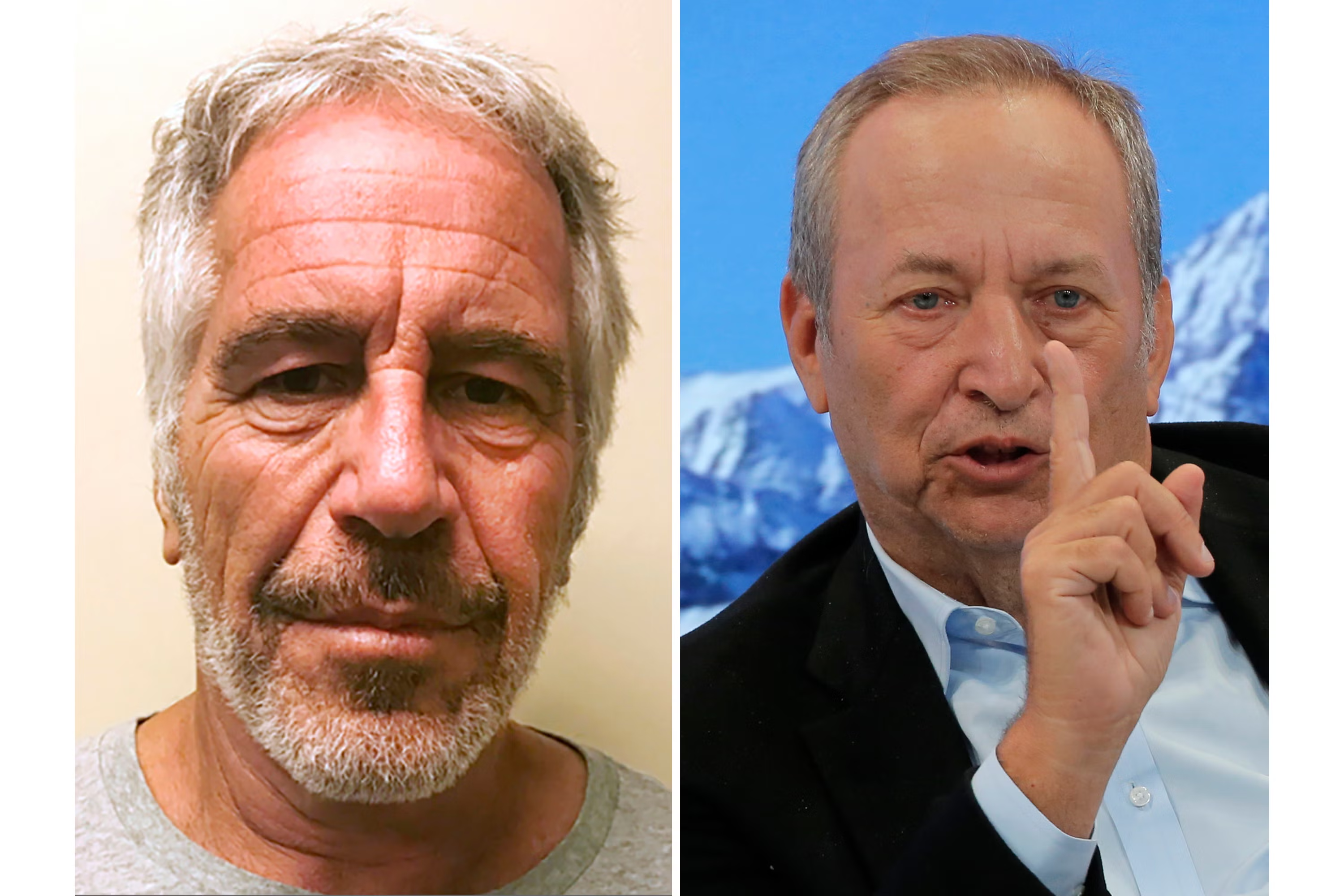 >
>
Now, the AEA’s decision isn’t unprecedented. Organizations are more attuned than ever to reputational damage. Maintaining distance from those perceived as toxic becomes a protective reflex. Look at the speed with which other institutions distanced themselves: Harvard, the Center for American Progress, Yale’s Budget Lab, among others. The message is clear: association carries consequences.
Yet, the AEA’s action feels different. This wasn’t a corporate board reacting to a scandal, but a scholarly body. The ban strikes at Summers’ professional identity, restricting his participation in the community he helped shape. It signals a deeper reckoning within academia about the responsibilities of mentorship, the influence of prominent voices, and the need for ethical guardrails.
Some will argue that Summers’ economic contributions shouldn’t be overshadowed by his personal failings. Others might point to the potential for ‘cancel culture’ to stifle discourse and punish past mistakes disproportionately. These are fair arguments, but they miss the central point. The AEA’s decision isn’t about erasing Summers’ past work; it’s about upholding standards for the future.>
Indeed, there are complexities. The definition of “professional integrity” evolves. Relationships are rarely black and white. We judge past actions through the lens of current sensibilities. Still, the details revealed in the Epstein emails highlight a level of misjudgment that demands scrutiny.
This case is also a reminder that power doesn’t insulate individuals from accountability. Summers held influential positions in government and academia. His actions were always under a microscope. The Epstein connection placed an even harsher light on his choices, leading to this career setback.
Having watched similar cycles play out across various industries, a pattern emerges. When powerful figures fail to grasp the changing expectations around ethical conduct, they risk significant reputational and professional repercussions. This doesn’t just apply to individuals, of course. Companies, institutions, even entire industries face similar tests.
One cannot help but ponder whether this moment heralds a permanent shift. Will other academic and professional associations adopt stricter ethical guidelines? Will individuals in positions of power think twice before associating with controversial figures? One hopes so. The Summers case provides a practical example of the cost of ethical missteps, and perhaps that alone will spark lasting change.
The implications for the economics profession specifically should not be overlooked. The field is frequently criticized for its lack of diversity and its tendency to perpetuate existing power structures. This incident throws those issues into sharp relief. The AEA’s response can be viewed as an attempt to signal a commitment to greater accountability and ethical conduct, potentially fostering a more inclusive and equitable environment.
However, this action, on its own, is not enough. Systemic change requires ongoing effort. It necessitates critical self-reflection within the field of economics about the values it promotes and the individuals it chooses to elevate. Only time will tell whether the Summers ban marks a turning point or remains a singular event.
Ultimately, the Larry Summers saga is a cautionary tale about the intersection of power, ethics, and reputation. It’s a reminder that in an age of increasing transparency and accountability, even the most prominent figures are not immune to the consequences of their actions. The AEA’s decision, however one views it, establishes a precedent. It underscores the need for organizations and individuals to prioritize ethical conduct and to recognize that association, particularly with those who have committed egregious offenses, carries significant risk.

![[post_title]](https://samony.com.ng/wp-content/uploads/2025/12/1764719532_Inside-Real-Madrid-Differences-in-the-dressing-room-and-difficulties.jpg "Real Madrid Crisis: Dressing Room Unrest and Alonso’s Tactical Puzzle")
![[post_title]](https://samony.com.ng/wp-content/uploads/2025/12/As-Colonel-Sani-Bello-Rtd-Marks-his-83rd-Birthday-On.webp.webp "What Colonel Sani Bello’s Life Can Teach Us About Nigeria")
![[post_title]](https://samony.com.ng/wp-content/uploads/2025/12/1764717679_OpenAI-CEO-declares-code-red-as-Gemini-gains-200-million.jpg "OpenAI Just Hit the Panic Button Over Google’s AI?! What’s Really Going On")
![[post_title]](https://samony.com.ng/wp-content/uploads/2025/12/1764716752_Sabrina-Carpenter-slams-White-House-for-using-her-music-in.jpg "Sabrina Carpenter vs. White House: When Pop Music Gets Political")
![[post_title]](https://samony.com.ng/wp-content/uploads/2025/12/1764716611_Reactions-After-The-Certificate-Of-Expulsion-That-PDP-Issued-To.png "Wike Got Kicked Out of PDP?! What This Means for Nigeria’s 2027 Elections")
![[post_title]](https://samony.com.ng/wp-content/uploads/2025/12/1764715530_How-Arne-Slot-fits-Mohamed-Salah-into-his-long-term-Liverpool.jpeg "Salah’s Future: Slot’s Liverpool Strategy Takes Shape")


