

The Evolving Landscape of Football: Is VAR About to Change the Game Again?
Football is a tradition, yet it is also an ever-changing spectacle. Rule tweaks happen. Technology advances. The latest development? A potential shift in how Video Assistant Referees (VAR) operate, with the 2026 World Cup possibly serving as a testing ground for new applications.
The International Football Association Board (IFAB), the game’s law-makers, are considering allowing tournaments to trial new rules within their own competitions, rather than only in smaller leagues. Essentially, FIFA desires its own VAR “rulebook” for major events. What does this mean? Next summer’s World Cup may pilot VAR reviews for corner kick decisions. The tech would determine if the ball fully crossed the line and which player last touched it.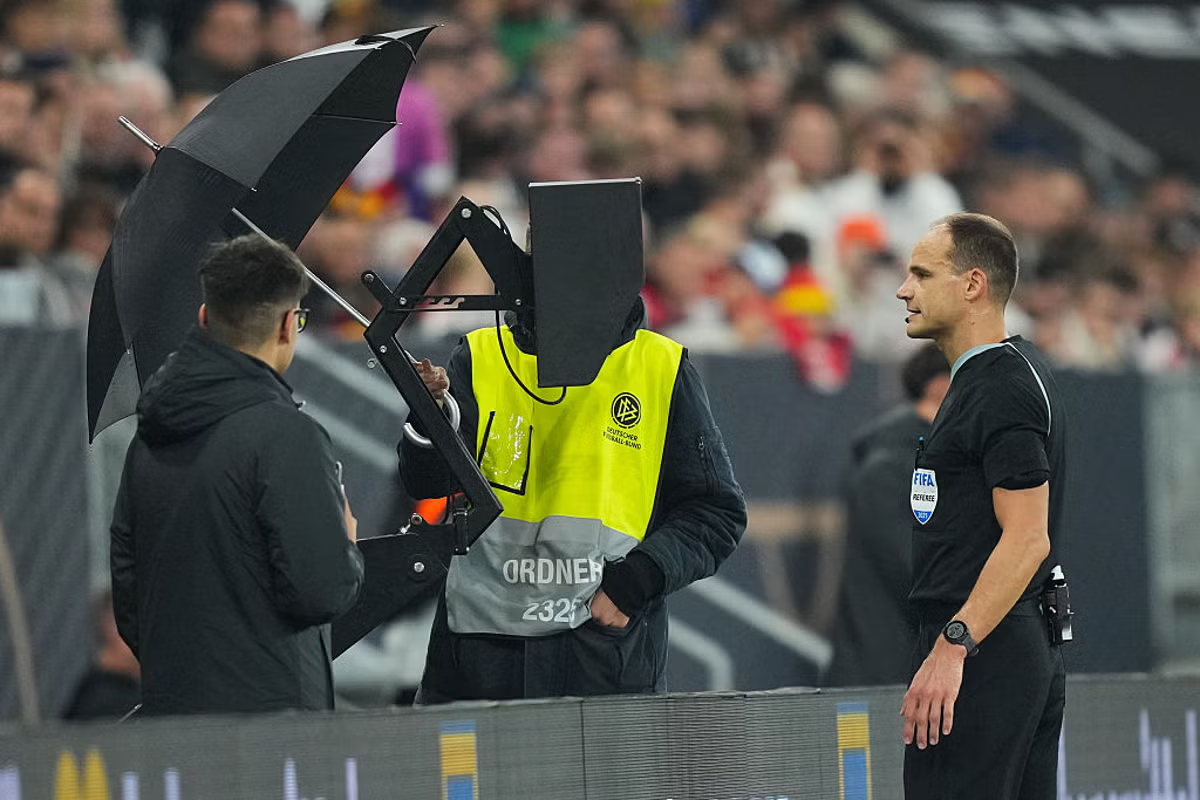 >
>
It is worth asking: is this a needed advancement or simply overcomplicating matters? Proponents claim it provides a safety net, preventing incorrectly awarded set-pieces from influencing pivotal matches. The specter of a wrongly-awarded corner leading to a goal in a World Cup final clearly haunts some within FIFA. To that end, they appear keen on an “insurance rule.”
Still, this proposal faces resistance. A technical panel for IFAB voiced mixed reactions to the corner kick review idea. A key concern is, of course, delays. The 2022 World Cup already saw substantial added time, a trend that frustrated many fans. Adding another layer of VAR review could exacerbate this issue, further interrupting the flow of the game.
The Premier League is watching closely. Some managers have already voiced their frustrations with incorrect corner decisions. A VAR review system for corners would be welcomed by some, but it wouldn’t be a universal change across all competitions. This selective adoption of rules could create a fractured system, where VAR protocols differ depending on the league or tournament. This challenge raises questions about consistency and fairness across the sport.>
Other, more radical, rules have also been discussed, including reviews for second yellow cards and declaring the ball “dead” after a penalty save by the goalkeeper. These changes appear less likely to gain traction, probably due to their potential to fundamentally alter the game’s dynamics. I suspect most traditionalists will scoff at these.
For these short-term trials to happen, IFAB needs to approve them at their annual general meeting in March. So the ball is in their court.
Now, from someone who’s watched these sorts of changes unfold, some personal observations. Football has struggled to integrate VAR seamlessly. What was intended to reduce errors has, at times, sparked controversy and debate. The implementation hasn’t always been smooth, and interpretations of the rules still vary.
This expansion of VAR raises a fundamental question: how much technology is too much? Football’s beauty lies in its simplicity and the subjective element of officiating. Introducing VAR for every marginal call could erode the game’s character and transform it into a series of starts and stops. We risk losing the spontaneity and passion that make football so captivating.
Yet, advancements in technology are inevitable. It’s up to IFAB to strike the right balance – using technology to enhance fairness without sacrificing the soul of the sport. Allowing individual tournaments to experiment with rules is an intriguing approach. It provides a flexible way to assess the impact of changes before implementing them universally.
Ultimately, the success of any new VAR application hinges on its effectiveness, efficiency, and its impact on the overall viewing experience. Will it make the game fairer and more accurate, or will it simply create more frustration and controversy? Only time will tell. This is worth watching, but with a healthy dose of skepticism. We’ve seen this play out before.



![[post_title]](https://samony.com.ng/wp-content/uploads/2025/12/1764615902_NCSCN-hails-nomination-of-ex-NIA-DG-Oke-as-ambassador-300x169.jpg?lm=692DE6E1 "Ambassador Nomination Controversy: Law vs. Public Trust")

![[post_title]](https://samony.com.ng/wp-content/uploads/2025/12/Cancer-patient-laments-poor-working-conditions-facilities-at-Abuja-hospital-300x188.jpeg?lm=692DE34F "Nigeria’s Cancer Crisis: Patient Video Exposes Under-Resourced Care and Urgent Needs")

![[post_title]](https://samony.com.ng/wp-content/uploads/2025/12/A-Lot-Happened-From-The-Red-Card-To-The-Goal.jpeg?lm=692DEBBD "Mikel Obi dissects Chelsea’s tactical evolution under Maresca after Arsenal draw.")
![[post_title]](https://samony.com.ng/wp-content/uploads/2025/12/1764617215_Kylie-Minogue-talks-risque-Office-Party-as-she-overtakes-Mariah-1024x538.jpg?lm=692DEC00 "Kylie’s Christmas Campaign: Pop, Virality, and Festive Ambition")
![[post_title]](https://samony.com.ng/wp-content/uploads/2025/12/Malami-calls-EFCC-allegations-on-Abacha-loot-baseless.jpg?lm=692DEA1E "Abacha Loot Fight: Is This About Justice, or Something Else?")
