

England’s Ashes Hopes: Can They Recapture the Perth Fire?
Brydon Carse exuded confidence. He believes England’s bowlers can reignite the fiery pace and aggression that initially rattled Australia during the Ashes series opener. The Perth Test was a tale of two halves. Australia’s batting lineup faced turmoil early on, only to see Travis Head snatch victory with a brilliant counter-attack.
Day one in Perth saw England’s bowlers setting the tempo, consistently hitting speeds close to 88mph. Australia crumbled, posting their lowest Ashes total since 2013 at just 132. However, when called upon again, England’s seamers struggled to replicate that intensity, allowing Head to seize control of the game. The drop in firepower was noticeable.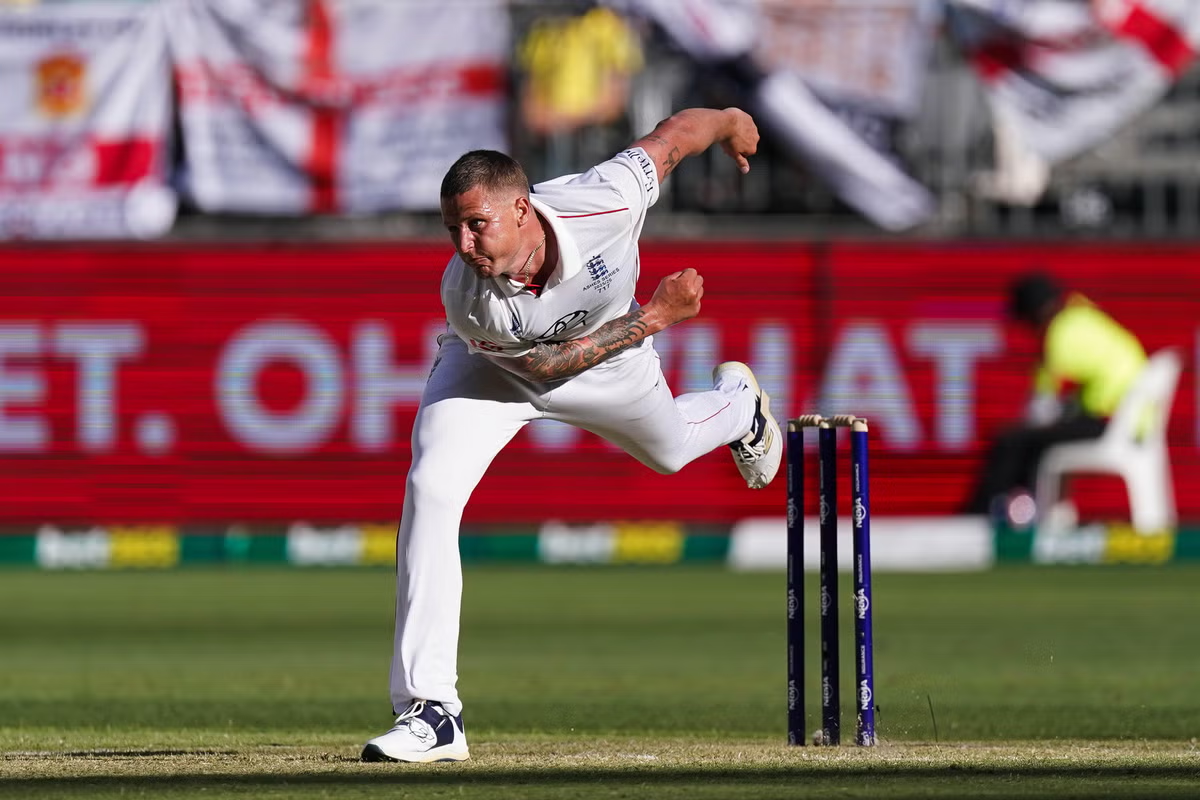 >
>
Despite the Perth loss, Carse emphasizes that the team draws immense encouragement from their initial success. He suggests that the variety of skills and attributes within England’s pace attack positions them to continue challenging the Australian batsmen throughout the series. This sentiment echoes the shared belief that England possesses exciting bowlers capable of turning the tide in their favor.
The second Test, a day/night affair at the Gabba, presents a fresh opportunity. England will field at least one change due to Mark Wood’s knee injury. Carse, Jofra Archer, Gus Atkinson, and Ben Stokes are all expected to feature. Reinforcements have arrived in Brisbane, with Josh Tongue, Matthew Potts, and Jacob Bethell joining the squad following a warm-up match.
Tongue appears the most likely to gain selection should England retain a five-seamer strategy. Alternatively, England could opt for Shoaib Bashir, a frontline spinner, or Will Jacks, an off-spinning all-rounder. The decision underscores the strategic flexibility England is prepared to employ.>
England’s training focuses on adapting to the pink Kookaburra ball’s peculiarities. While five workout days are planned, only two are scheduled during the critical twilight period. This creates a compressed window for acclimatization.
Lacking extensive first-hand data, England aims to learn from Australia’s past strategies. Australia possesses more experience and wins in day/night Tests than any other nation. Their expertise with the pink ball is significant.
Carse acknowledges the unique challenges of day/night cricket. The general consensus points to increased ball movement during the twilight phase. England has studied footage from previous Australian day/night games, admiring Australia’s new-ball bowling performances. It’s worth noting that adapting on the field will be key.
The question remains: can England consistently deliver the hostility displayed on day one in Perth? The Gabba Test is poised to provide some answers.
Analyzing England’s Ashes Strategy: More Than Just Pace
Beyond Carse’s optimistic outlook, a deeper analysis reveals the complexities facing England. While raw pace is undoubtedly a weapon, relying solely on it against a seasoned Australian batting lineup seems risky. The Australians are adept at countering pace, often using it to their advantage on their bouncy home wickets.
England’s success hinges on more than just speed. Control, variation, and sustained pressure are essential. The ability to build pressure through tight spells, coupled with clever changes of pace, can frustrate even the most accomplished batsmen.
Consider the selection dilemma surrounding the bowling attack. While Tongue offers potential, the inclusion of a specialist spinner like Bashir could prove crucial. Australian pitches often offer turn as the game progresses, and a quality spinner can exploit this, adding another dimension to England’s attack. Jacks is another, more unorthodox, option.
The reliance on studying Australia’s previous day/night performances also warrants scrutiny. While useful, blindly replicating their strategies is unwise. England needs to adapt its approach to its strengths and the specific conditions at the Gabba. The weather, pitch conditions, and even the crowd atmosphere can all influence the game.
Furthermore, England’s batting also needs to step up. The collapses in Perth exposed vulnerabilities that Australia will look to exploit. A solid foundation at the top of the order, coupled with aggressive middle-order hitting, is crucial for posting competitive scores.
The Broader Context: The Evolution of Cricket
These Ashes developments mirror trends playing out across the broader cricket landscape. Teams are increasingly focusing on pace and aggression, but the importance of skill and strategy remains paramount. The rise of T20 cricket has undoubtedly influenced this trend, with batsmen becoming more adept at scoring quickly against fast bowling.
Yet, Test cricket demands a more nuanced approach. The ability to adapt to different conditions, build partnerships, and maintain concentration over long periods remains essential. England’s success in the Ashes will depend on their ability to blend pace and aggression with these traditional virtues. It’s about more than just bowling fast; it’s about bowling smart.
Having witnessed similar patterns in cricket over the years, I can say with some certainty that the team that adapts best to the evolving conditions and pressures of the game will ultimately prevail. England has the talent and potential to succeed, but they need to be smart, adaptable, and resilient. The Gabba Test represents a crucial test of their resolve. Can they learn from the Perth defeat and emerge stronger? Only time will tell.

![[post_title]](https://samony.com.ng/wp-content/uploads/2025/12/Police-bust-suspected-cult-group-in-Sokoto-300x169.jpeg?lm=692D2829 "Sokoto WhatsApp Cult Busted: Digital Indoctrination Alarms Police")
![[post_title]](https://samony.com.ng/wp-content/uploads/2025/12/1764578567_Aplastic-anaemia-Teenagers-rash-and-headaches-lead-to-devastating-diagnosis-300x200.jpeg?lm=692D550B "Aplastic Anemia: The Unseen Urgency and My Call for a Better Donor System")
![[post_title]](https://samony.com.ng/wp-content/uploads/2025/12/1764567092_UK-braces-for-NINE-inches-of-snow-as-weather-maps-300x158.jpg?lm=692D2837 "Snow Forecasts: Separating Weather Fact from Fear in UK Winter Preparedness")
![[post_title]](https://samony.com.ng/wp-content/uploads/2025/12/Bitcoin-slides-in-rocky-December-opener-breaches-86K-support-level-300x169.jpg?lm=692D517A "Bitcoin’s Wild Ride: What’s REALLY Behind the Price Drop?")
![[post_title]](https://samony.com.ng/wp-content/uploads/2025/12/1764577927_The-best-Cyber-Monday-earbuds-deals-offer-huge-discounts-on-300x169.jpg?lm=692D528A "Cyber Monday Earbud Deals: Are the Discounts Real or Just Noise?")
![[post_title]](https://samony.com.ng/wp-content/uploads/2025/12/The-winter-spice-found-to-control-blood-sugar-and-protect-300x200.jpeg?lm=692D298F "Ginger’s Health Perks: Separating Fact from Fiction")


![[post_title]](https://samony.com.ng/wp-content/uploads/2025/12/Police-bust-suspected-cult-group-in-Sokoto.jpeg?lm=692D2828 "Sokoto WhatsApp Cult Busted: Digital Indoctrination Alarms Police")
![[post_title]](https://samony.com.ng/wp-content/uploads/2025/12/1764578567_Aplastic-anaemia-Teenagers-rash-and-headaches-lead-to-devastating-diagnosis-1024x683.jpeg?lm=692D550C "Aplastic Anemia: The Unseen Urgency and My Call for a Better Donor System")
