

![[post_title]](https://samony.com.ng/wp-content/uploads/2025/11/Netanyahu-submits-pardon-request-to-Israeli-president-Herzog-1024x683.jpg?lm=692C2778)
Netanyahu Seeks Presidential Pardon: A Critical Look at Israel’s Political Landscape
Benjamin Netanyahu’s formal plea for a pardon from President Isaac Herzog has injected fresh turmoil into Israel’s already complex political narrative. The confirmation from Herzog’s office sets the stage for a decision laden with potential repercussions. Herzog’s pledge to give the matter responsible thought only underscores the gravity of the situation.
Netanyahu’s legal battles are no secret. He’s been battling corruption charges for years, accusations he flatly denies. These aren’t minor infractions, either. We’re talking about bribery, fraud, and breach of trust – serious allegations that carry significant weight. The core of the prosecution’s case revolves around claims that Netanyahu traded regulatory favors for positive media coverage, a scenario that raises serious questions about the integrity of the political process.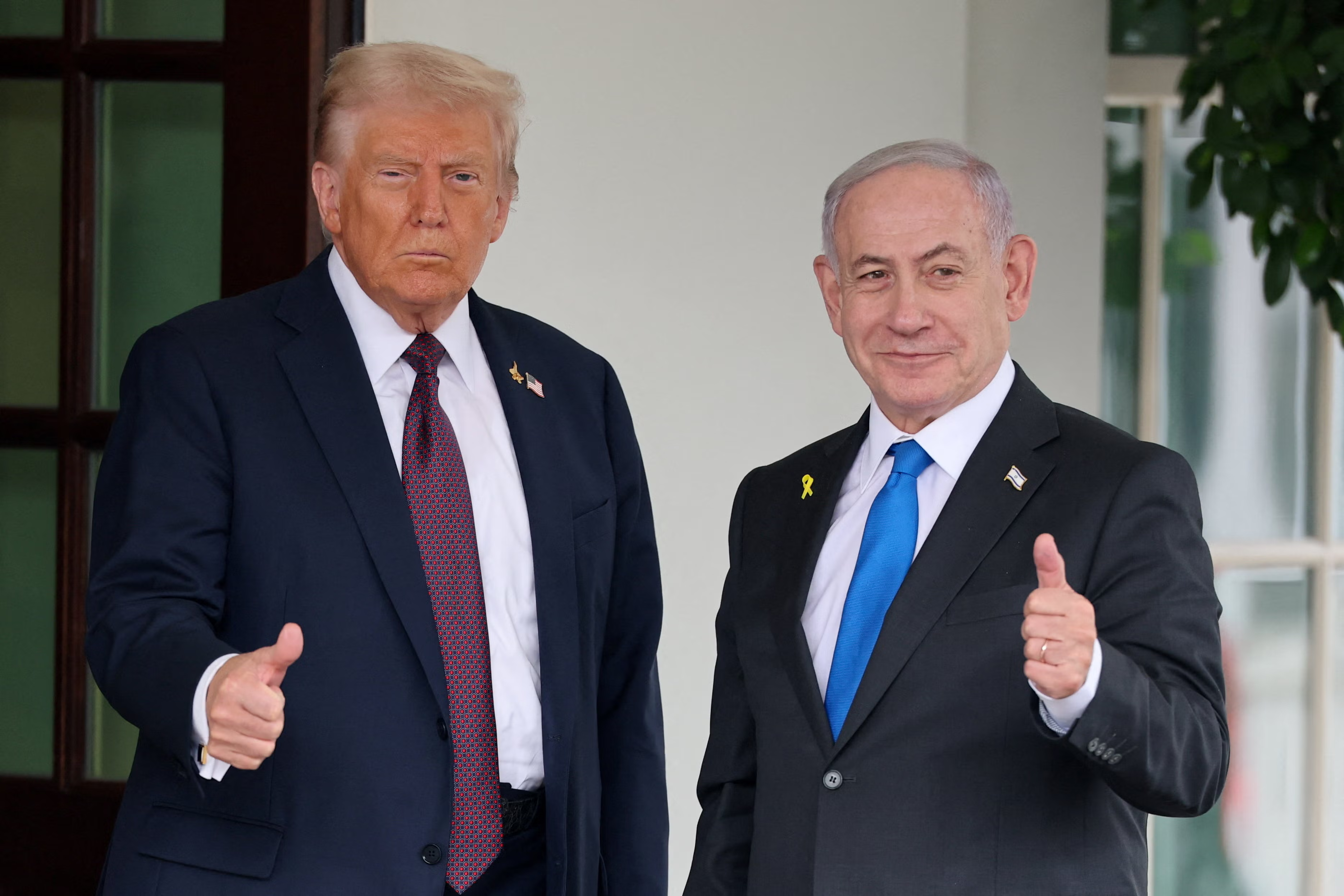 >
>
Looking at the details, the prosecution claims Netanyahu granted favors, reportedly worth hundreds of millions, to Bezeq Telecom in return for favorable press. Then, there are allegations of accepting lavish gifts from Hollywood producer Arnon Milchan and Australian billionaire James Packer in exchange for unspecified personal favors. Netanyahu’s defense insists that these gifts were merely expressions of friendship, devoid of any quid pro quo. It’s a situation where perceptions matter.
The timing of this pardon request is also noteworthy. It comes on the heels of a rather public endorsement from former US President Donald Trump. Trump penned a letter urging Herzog to consider the pardon, dismissing the case against Netanyahu as a “political, unjustified prosecution.” He argued that Netanyahu’s focus should be on regional peace efforts, unburdened by legal distractions. This external intervention adds another layer of complexity to the decision.
Is Trump’s support helpful? That’s debatable. On one hand, it might boost Netanyahu’s image among his base. Yet, such outspoken support can also be seen as interference, potentially swaying public opinion against the pardon. It’s a delicate balance.>
Herzog’s predicament is clear. Granting the pardon could ignite widespread criticism, fueling perceptions of favoritism and undermining the rule of law. Rejecting it, however, could plunge Israel into further political instability, particularly given Netanyahu’s central role in the current government. Finding a middle ground will be tricky.
There is the core question here: does a pardon serve the greater good? Supporters will say that ending the legal proceedings will stabilize the government and allow Netanyahu to focus on pressing national security concerns. Critics will argue that it sets a dangerous precedent, suggesting that powerful figures are above the law. Both viewpoints carry weight.
I’ve seen similar scenarios play out in other countries. The public loses trust when it appears justice isn’t applied equally. The perception that the system is rigged damages faith in democracy. Restoring confidence is paramount.
Herzog must also consider the impact on Israel’s international standing. Granting a pardon in the face of such serious corruption allegations could tarnish the country’s reputation, particularly among allies who prioritize the rule of law.
This isn’t just a legal matter; it’s a political high-stakes game with implications for the future of Israeli democracy. The decision will test the strength and resilience of Israel’s institutions. It will highlight the tensions between political expediency and the principles of justice.
Netanyahu’s supporters will claim the charges are fabricated. They will try to paint him as a victim of a political witch hunt. On the other hand, his detractors will see a pardon as a blatant attempt to evade accountability. Separating fact from fiction in such a polarized environment is tough.
In any case, Herzog’s decision warrants close attention. It goes beyond the fate of one individual. This action speaks volumes about the health of Israel’s democracy. Let’s see how this develops. The consequences, whatever they are, will be felt for years.
It’s worth noting that public discourse around this case has become increasingly heated. Accusations of bias fly freely, and nuanced debate is often drowned out by partisan rhetoric. Maintaining a balanced perspective is crucial, especially when emotions run high. A focus on facts and a willingness to engage in respectful dialogue are essential for navigating these turbulent waters.
The way this situation resolves will undoubtedly impact not only Israel’s internal politics but also its relationships on the global stage. A decision on this pardon won’t be simply about one man’s fate. It will speak to the very core values of the nation and its commitment to fairness and accountability. The world is watching.

![[post_title]](https://samony.com.ng/wp-content/uploads/2025/11/Netanyahu-files-formal-pardon-request-to-President-Herzog-300x169.jpg?lm=692C27A9 "Netanyahu’s Pardon Plea: Last Hope or Political Masterstroke?")
![[post_title]](https://samony.com.ng/wp-content/uploads/2025/11/Lecce-Torino-le-formazioni-ufficiali-Torino-FC-300x200.jpg?lm=692C26C4 "Serie A Lineups: Reading Between the Tactical Lines")
![[post_title]](https://samony.com.ng/wp-content/uploads/2025/11/1764499550_Inside-Adam-Peatys-explosive-engagement-party-that-sparked-family-feud-300x158.jpg?lm=692C2061 "Peaty-Ramsay Engagement: Family Feud in the Spotlight")
![[post_title]](https://samony.com.ng/wp-content/uploads/2025/11/1764499907_Furious-Pedro-Porro-rows-with-Lucas-Bergvall-after-latest-Tottenham-300x200.jpeg?lm=692C21C8 "Tottenham Turmoil: Are Internal Conflicts Derailing Spurs?")
![[post_title]](https://samony.com.ng/wp-content/uploads/2025/11/1764499228_Who-Hates-Taxes-The-Best-Time-to-Plan-for-Them-300x169.jpg?lm=692C1F21 "Mastering Your Taxes: A Proactive Guide to Wealth Management")
![[post_title]](https://samony.com.ng/wp-content/uploads/2025/11/1764499271_Decoding-The-ODI-Rivalry-And-Its-Shifting-Dynamics-300x200.jpg?lm=692C1F49 "India vs. South Africa ODI Series: History, Rivalry, and What’s at Stake")


![[post_title]](https://samony.com.ng/wp-content/uploads/2025/11/Netanyahu-files-formal-pardon-request-to-President-Herzog-1024x576.jpg?lm=692C27A9 "Netanyahu’s Pardon Plea: Last Hope or Political Masterstroke?")
![[post_title]](https://samony.com.ng/wp-content/uploads/2025/11/Lecce-Torino-le-formazioni-ufficiali-Torino-FC.jpg?lm=692C26C4 "Serie A Lineups: Reading Between the Tactical Lines")
