


Lando Norris, His Girlfriend, and the Evolving F1 Spectacle: More Than Just Speed?
Lando Norris’s relationship with model Margarida Corceiro is generating headlines, and it sparks a bigger discussion about Formula 1’s evolving presentation. Corceiro, often photographed at races and active on social media, recently addressed concerns about the attention she receives, especially from TV cameras. It’s an interesting intersection of sport, celebrity, and the changing media landscape.
The article highlights Corceiro’s stance: she’s simply there to support her partner and doesn’t orchestrate the camera’s gaze. Yet, her presence fuels a wider debate. Are these glimpses into the drivers’ personal lives adding to the F1 experience, or are they a distraction from the racing itself?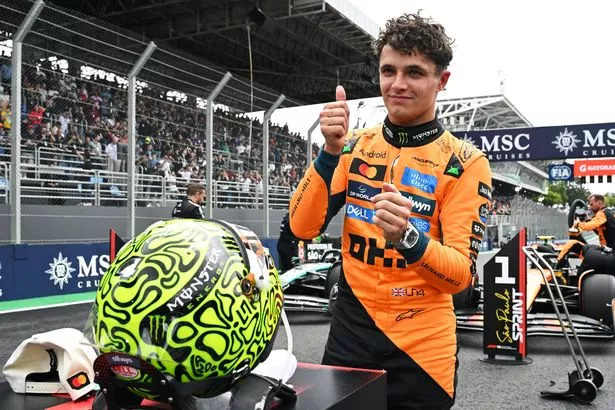 >
>
Some drivers, like Carlos Sainz, appear to dislike the intrusion on their personal lives. He believes the focus should remain firmly on the on-track action. But Corceiro clearly doesn’t mind the attention. She embraces her role and interacts with her fanbase.
This begs the question: what does the modern F1 fan want? Do they crave pure racing, or are they drawn to the drama, the personalities, and the lifestyle associated with the sport? It seems the series is trying to capture both audiences, and this could be a slippery slope.
F1 has always been about more than just the cars. It’s about the technology, the strategy, the rivalries, and, yes, the glamour. But has that balance shifted? Are celebrity cameos and glimpses into drivers’ personal lives overshadowing the sport’s core appeal? It wouldn’t be the first time entertainment trends altered a beloved sport. >
>
The rise of social media certainly plays a role. Drivers and their partners are more accessible than ever before, offering fans a peek behind the curtain. This increased access can deepen engagement, but it also blurs the lines between sport and spectacle.
I’ve seen similar patterns emerge across various industries. The insatiable demand for content forces media outlets to pursue ever more sensational or intimate stories. The challenge is maintaining authenticity while catering to this appetite.
Perhaps the key lies in moderation. A well-placed shot of a driver’s reaction, or a brief glimpse of their support system, can humanize the experience. But excessive focus on personal lives risks turning the sport into a reality TV show.
Moreover, the commercial interests at play are immense. F1 is a global business, and attracting a wider audience, including those who might not be traditional racing fans, is crucial for growth. That often means leveraging celebrity and lifestyle elements.
Still, neglecting the core fanbase – the individuals who are passionate about the engineering, the skill, and the competition – would be a strategic misstep. These fans provide the foundation upon which F1’s popularity rests.
What’s more, different cultures perceive this shift differently. What works in the US market, with its emphasis on celebrity culture, might not resonate as well in Europe, where a more purist approach to motorsport is often preferred.
The disqualification of Norris in the Las Vegas Grand Prix for a technical infringement adds another layer to the narrative. It highlights the inherent tension between the sport’s technical complexities and its increasingly celebrity-driven image. In any case, the incident serves as a reminder that, at its core, F1 remains a highly regulated and intensely competitive sport.
The future of F1’s presentation hinges on finding a delicate balance. It must entertain and engage a broad audience without sacrificing the integrity and authenticity that have made it a global phenomenon. This challenge falls on the shoulders of F1 management, broadcasters, and, indeed, the drivers themselves.
The sport should find ways to improve the viewing experience so the average fan can appreciate what is happening on the track. This means better camera angles, more data about the cars shown graphically, and announcers that can provide useful insight.
It’s a conversation worth having, not just for F1, but for any industry grappling with the impact of social media, celebrity culture, and the evolving expectations of consumers. I’ve seen this play out before, and the organizations that adapt while staying true to their core values are the ones that thrive. Finding that equilibrium is the million-dollar question – or perhaps, in F1’s case, the billion-dollar one.

![[post_title]](https://samony.com.ng/wp-content/uploads/2025/11/1764485591_Premier-League-predictions-and-best-bets-Can-Chelsea-become-title-300x169.jpg?lm=692BE9D9 "Premier League predictions and best bets: Can Chelsea become title contenders? | Football News")


![[post_title]](https://samony.com.ng/wp-content/uploads/2025/11/Burna-Boy-THE-GOOD-THE-BAD-and-THE-UGLY.jpg?lm=692BE360 "Is Burna Boy’s Attitude Threatening His Empire?")

![[post_title]](https://samony.com.ng/wp-content/uploads/2025/11/1764483101_Great-but-Wait-for-a-Good-Sale-1024x576.jpg?lm=692BE021 "Great, but Wait for a Good Sale")
![[post_title]](https://samony.com.ng/wp-content/uploads/2025/11/1764485830_Judy-Austin-absent-as-Yul-Edochie-reunites-happily-with-Rita-1024x512.jpg?lm=692BEACA "Judy Austin absent as Yul Edochie reunites happily with Rita Edochie")
![[post_title]](https://samony.com.ng/wp-content/uploads/2025/11/1764485591_Premier-League-predictions-and-best-bets-Can-Chelsea-become-title-1024x576.jpg?lm=692BE9DA "Premier League predictions and best bets: Can Chelsea become title contenders? | Football News")
