

Analyzing the Trend of Protective Masks in Football: More Than Just a Fashion Statement?
Randal Kolo Muani sporting a face mask following a jaw injury has recently captured attention, reigniting discussions about player safety and performance in professional football. We see Tottenham’s forward join a growing list of players, including Kylian Mbappe, opting for protective gear after facial injuries. But, is this simply a fleeting trend, or does it signal a more profound shift in how we approach athlete welfare in a high-stakes sport?
These masks aren’t new. Footballers have worn them for years to safeguard against further injury after a knock, fracture, or surgery. It’s worth remembering that these facial injuries, especially around the eyes and jaw, are common in a contact sport like football. Yet, the increased visibility – Mbappe at Euro 2024, Kolo Muani in Premier League and Champions League fixtures – highlights a few interesting facets.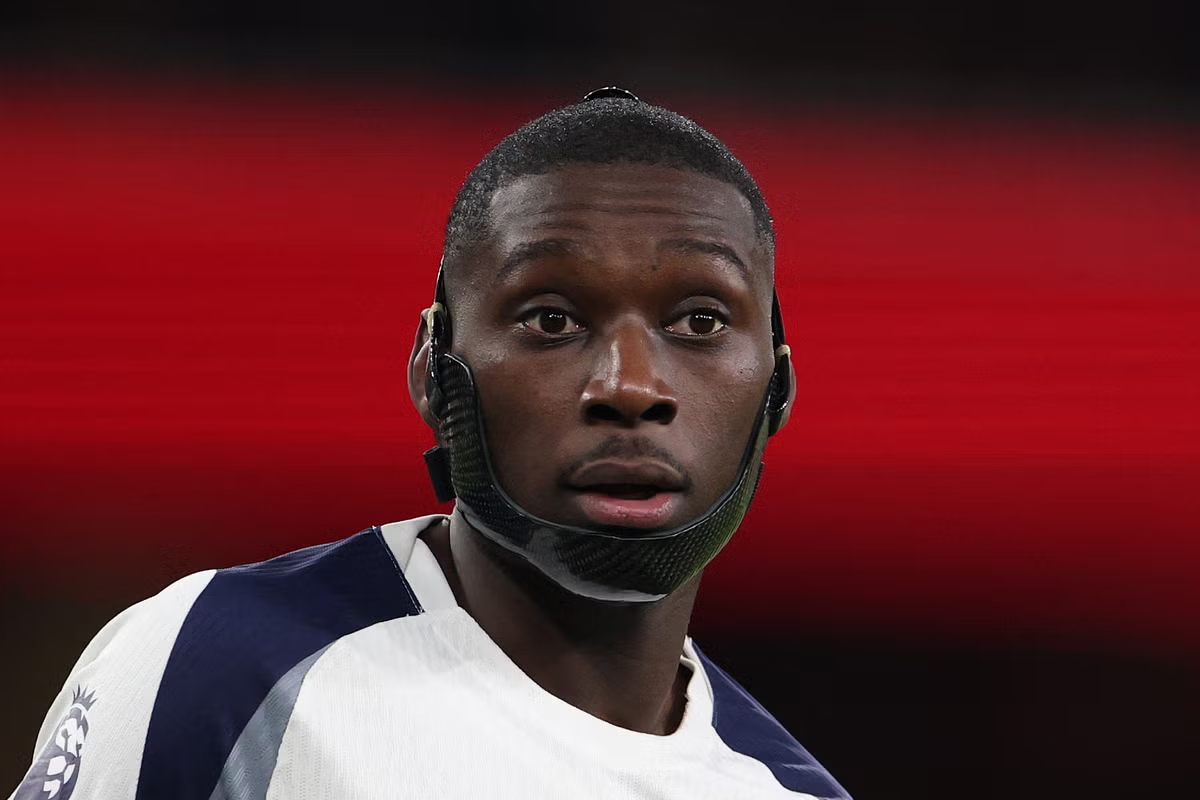 >
>
On one hand, it shows clubs and players are seemingly more cautious about player health. Perhaps the rising awareness of long-term consequences from head trauma and facial injuries plays a key role. Players are valuable assets. Protecting them, even with what some might consider cumbersome equipment, makes financial sense.
Mbappe’s comments about the mask being “awful and horrible” should not be ignored. He touched on critical elements: limited vision and discomfort. These can affect performance. Peripheral vision is crucial in football. Any obstruction, even minimal, changes a player’s awareness and reaction time. It’s conceivable that some players might rush back to the pitch despite not being fully comfortable with wearing a mask.
Then there’s the psychological aspect. Confidence is king in professional sports. If a player constantly thinks about their injury or the limitations of their mask, their game suffers. It’s a mental game. One wonders how thoroughly teams gauge these psychological impacts when clearing players to return to play with protective gear.>
The materials and designs used in these masks matter. We see custom-fitted masks crafted from lightweight, impact-resistant materials like carbon fiber. But not all masks are created equal. A poorly designed or ill-fitting mask could be more of a hindrance than a help. It could even pose a risk. Imagine a mask shifting during a tackle and obstructing a player’s vision at a crucial moment.
The speed of return to play is another consideration. Modern football demands a relentless schedule. Pressure to get key players back on the field quickly is immense. Are clubs prioritizing short-term gains over long-term player well-being? It’s a difficult balance. I can’t say I envy the team doctors who must navigate these decisions.
Technology and research are shaping the future of protective gear. Imagine masks with integrated sensors that monitor impact forces and provide real-time feedback to medical staff. This tech could improve our understanding of injury mechanisms and inform the design of safer equipment.
The increased use of masks in football might also influence the sport’s aesthetics. In a world of hyper-stylized athletes, a protective mask becomes part of a player’s identity, like Edgar Davids’ iconic eyewear. Could this lead to personalized, performance-enhancing masks that are as much about style as they are about safety?
Of course, there’s the cynical view. Is some of this theatrical? Does it project an image of toughness and resilience? Probably a little. Image management is part of modern sports. But, at its core, the trend reflects a growing awareness of player safety, even if the ideal solution remains elusive.
Ultimately, the prevalence of protective masks encourages discussions about how we can mitigate risks, improve protective gear, and support athletes through the recovery process. This means ongoing dialogue between players, medical professionals, equipment manufacturers, and governing bodies.
What I am confident in is this: we will continue to see evolution in the design, technology, and acceptance of protective gear in football. What’s certain is the conversation around player protection will remain center stage. The end goal must be both safety and performance, because the two are not mutually exclusive.

![[post_title]](https://samony.com.ng/wp-content/uploads/2025/11/1764452700_I-tested-15-Nintendo-Switch-2-cases-and-these-are-300x156.jpg?lm=692B695E "Top Nintendo Switch 2 Cases of 2025: Protection and Style Guide")
![[post_title]](https://samony.com.ng/wp-content/uploads/2025/11/Resident-doctors-suspend-nationwide-strike-300x200.png?lm=692B6A1A "Nigeria’s Doctor’s Strike: From Truce to Transformation Requires More Than Promises")
![[post_title]](https://samony.com.ng/wp-content/uploads/2025/11/1764453072_Im-A-Celeb-chaos-as-Alex-Scott-rushed-to-medical-300x158.jpg?lm=692B6AD0 "I’m A Celebrity: Alex Scott’s Tick Scare Exposes Jungle Challenges and Show Secrets")
![[post_title]](https://samony.com.ng/wp-content/uploads/2025/11/1764453145_The-diet-thats-better-for-you-than-the-Mediterranean-according-300x200.jpg?lm=692B6B1A "Dietary Duel: Vegan vs. Mediterranean for Weight Loss")



![[post_title]](https://samony.com.ng/wp-content/uploads/2025/11/1764452700_I-tested-15-Nintendo-Switch-2-cases-and-these-are-1024x532.jpg?lm=692B695F "Top Nintendo Switch 2 Cases of 2025: Protection and Style Guide")
![[post_title]](https://samony.com.ng/wp-content/uploads/2025/11/Resident-doctors-suspend-nationwide-strike.png?lm=692B6A19 "Nigeria’s Doctor’s Strike: From Truce to Transformation Requires More Than Promises")
