

Rugby’s Evolving Landscape: A Critical Look at the Nations Championship and International Fixtures
The announcement of rugby’s Nations Championship a couple of years back was met with both anticipation and a healthy dose of skepticism. Now, as the inaugural finals at Twickenham’s Allianz Stadium approach next November, with Wales slated to face South Africa beforehand, it’s time to scrutinize what this new structure actually means for the sport.
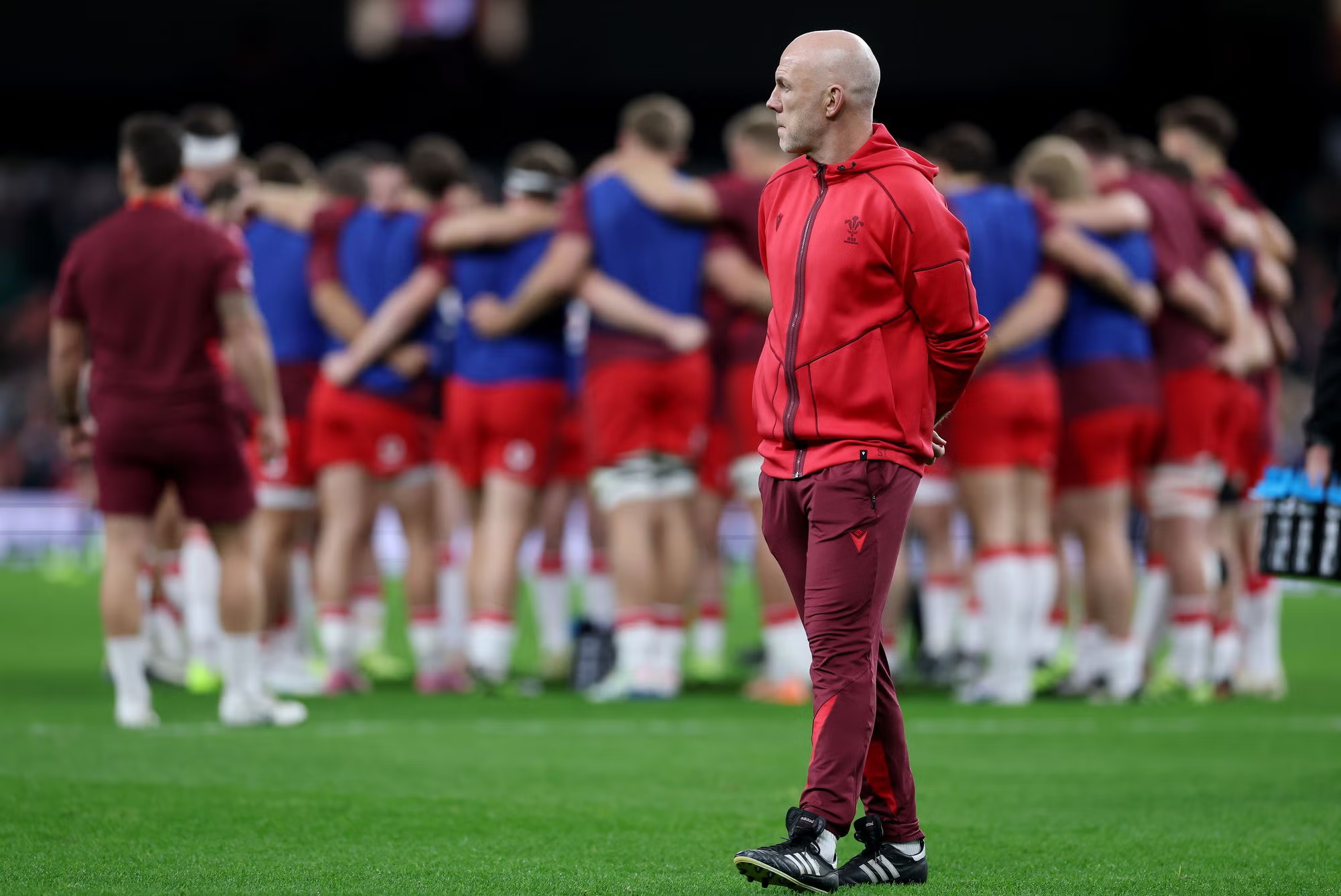
One immediate observation is the scheduling conflict highlighted by Wales’ recent match against South Africa. Played outside the official World Rugby test window, it forced coach Steve Tandy to field a weakened side, missing key players based in England and France. This situation, thankfully, shouldn’t repeat itself under the new Nations Championship framework, slated to launch with a four-Test window next November. Tandy himself has expressed relief, touting the clarity and certainty the new calendar promises. He sees value in cohesion and the ability of players to build on momentum from week to week. The players based outside of Wales who’d missed the South Africa match, were said to be gutted. The new setup should address that.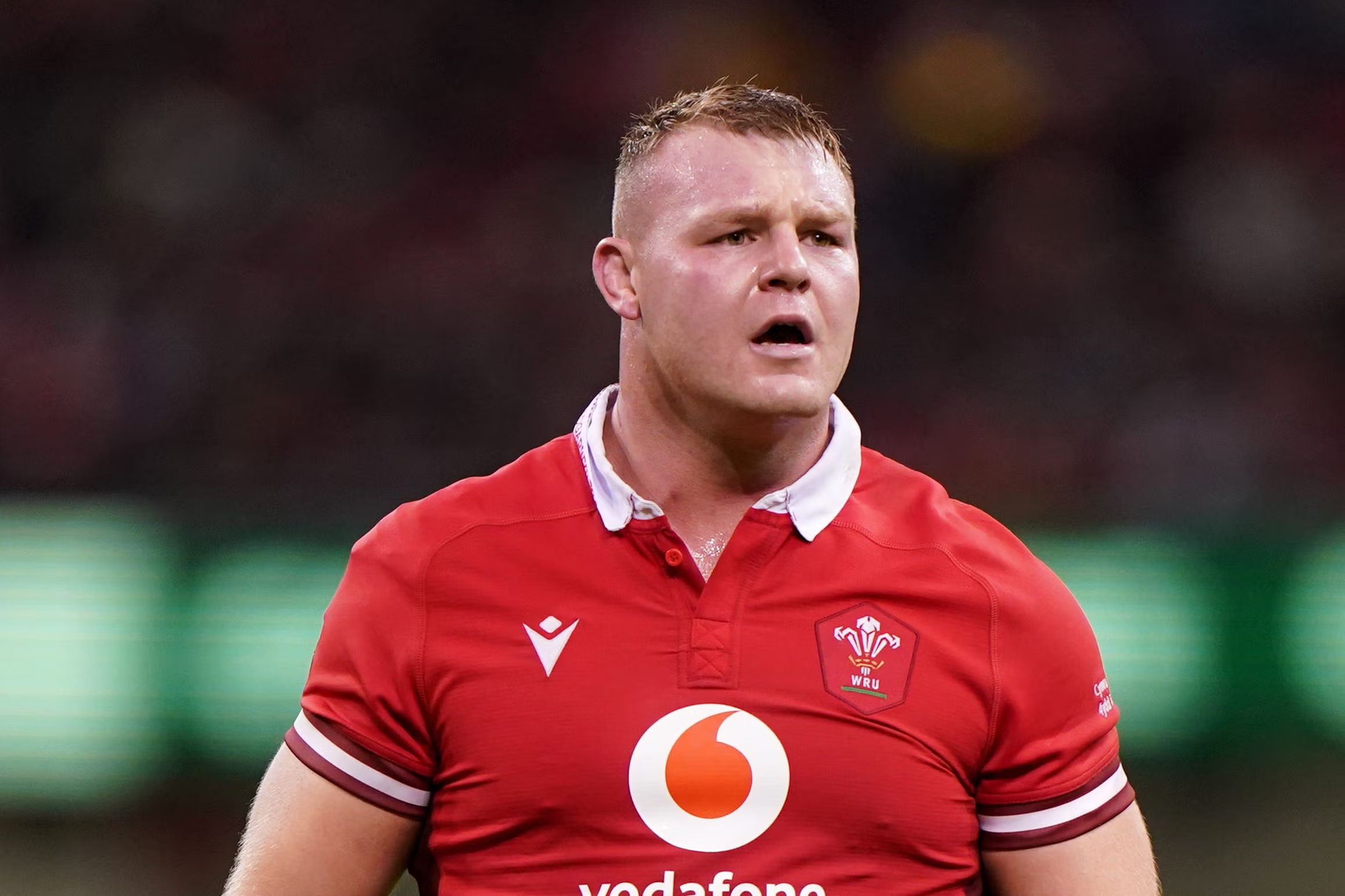 >
>
Yet, a nagging question persists: was that Wales vs. South Africa game, in its compromised form, really worth it? Critics slammed the Welsh Rugby Union (WRU) for allegedly prioritizing revenue over the integrity of the competition and the well-being of the squad. Skipper Dewi Lake put on a brave face, emphasizing the honor of playing for one’s country. Still, the reality of facing the world champions without a full complement of players cannot be overlooked. It seems fair to wonder if the potential damage to morale outweighed any financial gain.
The issue goes deeper than just one match. The core of the problem here is the perennial tension between club and country. Releasing players for international duty always creates friction, particularly when matches fall outside designated windows. The Nations Championship aims to ease this tension by creating a more predictable and structured international calendar.
But will it succeed? That remains to be seen. The devil, as always, will be in the details. How will revenue be shared among participating nations? What safeguards will be put in place to prevent player burnout? And crucially, how will the competition balance the needs of established rugby powerhouses with the aspirations of emerging nations? These are crucial questions that need addressing.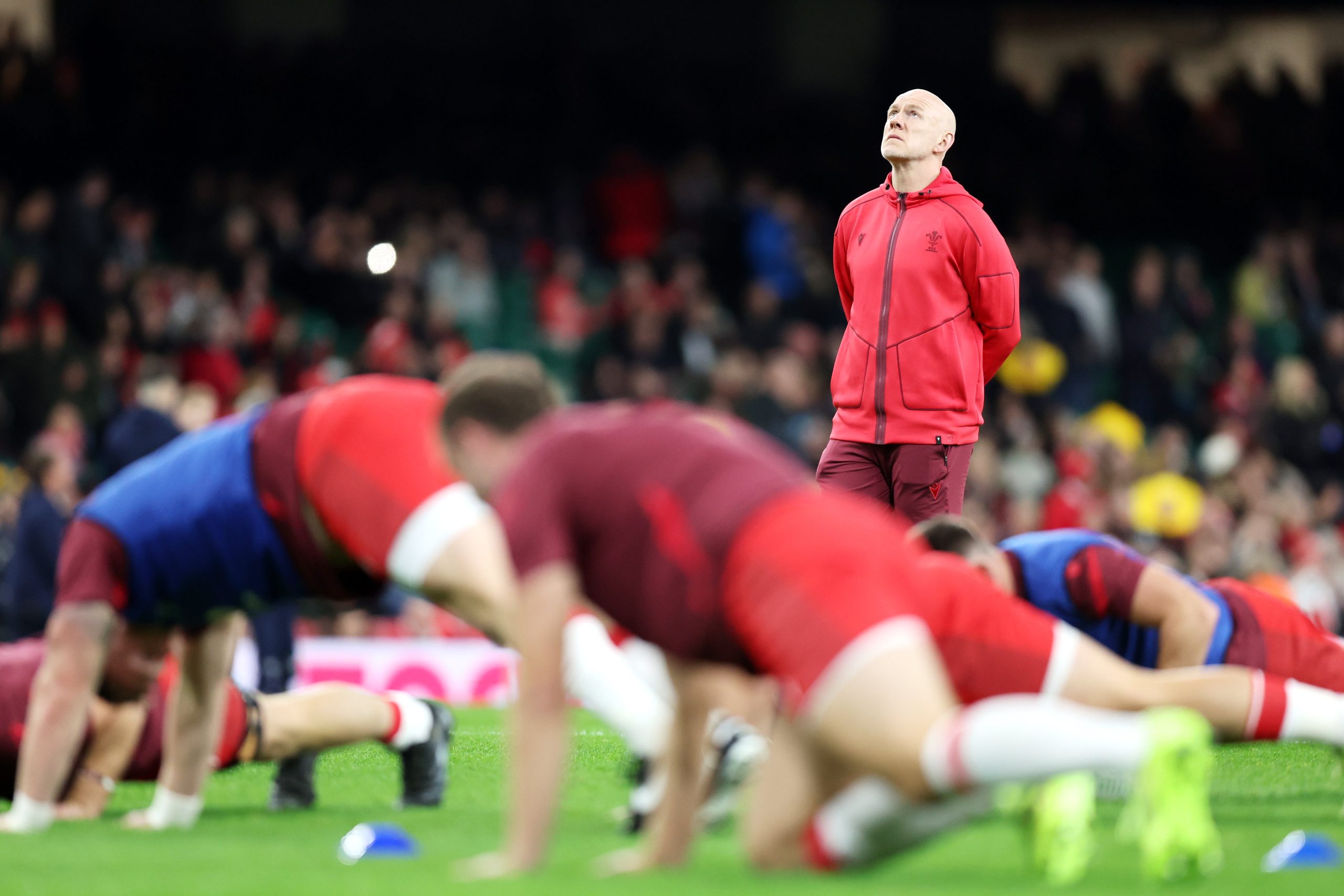 >
>
It’s worth remembering that these kinds of structural changes often have unintended consequences. The homogenizing effect on playing styles, for example. Standardized training regimes and increased international exposure may lead to a loss of the unique regional flavors that have always made rugby so compelling. Will the Nations Championship, in its quest for global competitiveness, inadvertently dilute the sport’s character?
Furthermore, the long-term impact on player welfare demands close scrutiny. While a more structured calendar might reduce some scheduling conflicts, the intensity of international rugby continues to rise. The physical demands placed on players are already immense, and any further increase in match volume or intensity could lead to more injuries and shorter careers. Preventing this needs a proactive, rather than reactive approach.
I’ve seen similar reforms in other sports, and they rarely deliver on all their promises. The key is to approach these changes with a balanced perspective, acknowledging both the potential benefits and the inherent risks. The Nations Championship offers a chance to streamline international rugby and boost its global appeal. However, it also carries the risk of exacerbating existing inequalities and sacrificing the sport’s unique identity.
The challenge, as I perceive it, lies in striking the right balance. Rugby needs to evolve to stay relevant, but it must also protect the values and traditions that have made it such a beloved sport. The Nations Championship is a step in a new direction, but its success will depend on careful planning, open dialogue, and a willingness to adapt along the way. Only time will tell if it truly elevates the game or just adds another layer of complexity to an already intricate landscape. For now, I remain cautiously optimistic, with a healthy dose of “wait and see.” Let’s observe closely how these changes unfold. The future of rugby might just depend on it. This is not just about games; it’s about the soul of the sport.




![[post_title]](https://samony.com.ng/wp-content/uploads/2025/12/What-it-means-that-the-FDA-claims-Covid-vaccines-caused-300x200.jpg?lm=693467EE "Is the FDA About to Change Vaccine Rules Based on Unproven Claims?")
![[post_title]](https://samony.com.ng/wp-content/uploads/2025/12/Cleric-condemns-abduction-of-worshippers-in-Kogi-300x233.jpg?lm=69346875 "Kogi Church Abduction: Gauging the Tipping Point for Religious Security in Nigeria")
![[post_title]](https://samony.com.ng/wp-content/uploads/2025/12/1765042298_Katie-Prices-family-deeply-concerned-after-star-shares-alarming-health-300x158.jpg?lm=6934687D "Celebrity Health Cycles: Decoding Addiction, Vaping, and the Path to Lasting Change")

![[post_title]](https://samony.com.ng/wp-content/uploads/2025/12/Real-Betis-vs-Barcelona-LIVE-Spanish-La-Liga-score-stats-1024x576.jpg?lm=69346F11 "Rashford & Antony: Are Failed Transfers Ruining Football’s Soul?")
![[post_title]](https://samony.com.ng/wp-content/uploads/2025/12/1765044065_Ex-Jehovah-Witness-member-shares-what-happens-to-any-member-who-1024x512.jpeg?lm=69346F64 "Balancing Faith, Freedom, and Healthcare: A Veteran’s Perspective on Jehovah’s Witnesses and Blood Transfusions.")
