

![[post_title]](https://samony.com.ng/wp-content/uploads/2025/11/1764418023_Professional-mermaid-can-hold-breath-underwater-for-four-minutes-and-1024x538.jpg?lm=692AE1EA)
The Rise of Real-Life Mermaids: Industry Trends and Ocean Conservation
The story of Hannah Fraser, a professional mermaid, recently splashed across the Daily Star. This isn’t just a quirky human-interest piece; it reflects fascinating, emerging trends in both entertainment and environmentalism. It showcases how a niche passion can evolve into a legitimate career, combining performance art with a crucial message about ocean conservation. But is this more than just fleeting novelty?
The mermaid industry, believe it or not, has undergone a significant transformation. What began as children’s fantasy is now a multifaceted sector. Consider the custom tail market. Fraser herself spends months crafting her high-end silicone tails, a testament to the artistry and investment involved. Companies now produce everything from entry-level fabric tails for recreational use to professional-grade equipment for performers.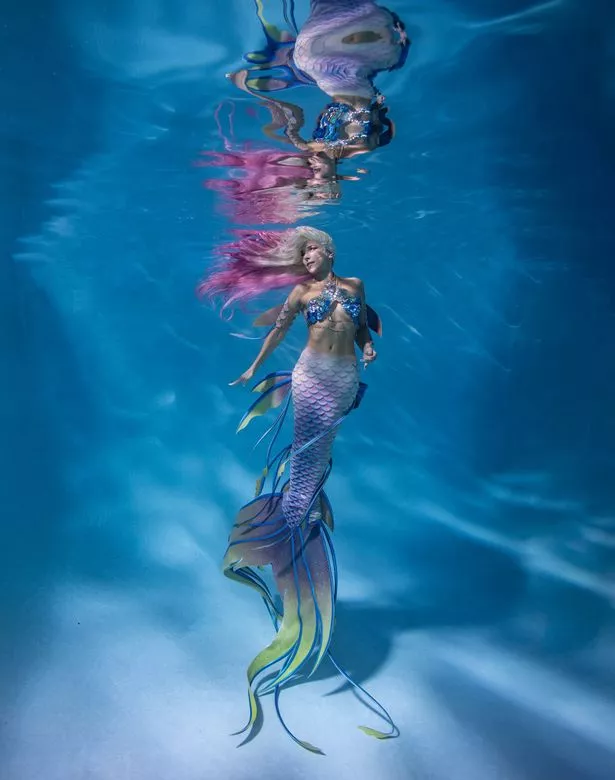 >
>
Beyond bespoke tail creation, mermaid schools and performance opportunities are gaining traction. People want to become mermaids, not just watch them. These schools offer training in breath-holding techniques, underwater posing, and safe interaction with marine life. This development alone shows a maturing market with dedicated participants.
Yet, there’s more to this than meets the eye. Fraser’s story highlights the significant overlap between the mermaid subculture and ocean conservation. She uses her platform to raise awareness about pollution, overfishing, and the destruction of coral reefs. This brings a crucial layer of legitimacy to the “mermaid” identity. It is no longer just about aesthetics; it has a purpose.
This purpose ties in nicely with the growing consumer demand for ethical and sustainable products and services. People are actively seeking businesses that align with their values. By embodying the role of an ocean ambassador, professional mermaids can attract attention to marine conservation efforts in a way that traditional methods often fail to do. It is an unconventional method to connect with audiences on an emotional level. >
>
Now, let’s inject some healthy skepticism. Will the “professional mermaid” career path endure? The sustainability of any niche industry hinges on adaptability. The mermaid industry must avoid trivializing the vital messages of ocean conservation. The line between entertainment and activism needs careful navigation. The mermaid world could easily morph into pure spectacle, overshadowing the purpose of their swim, thus negating any positive impact.
This raises concerns about accessibility and inclusivity. Custom mermaid tails can be expensive, creating a barrier to entry. Additionally, the image of the “mermaid” often aligns with specific body types and representations of beauty, excluding diverse perspectives. The industry must prioritize inclusivity to avoid becoming a homogenous bubble.
From my experience observing industry developments, I’ve noticed a pattern: Authenticity is key. Audiences can quickly detect insincerity. If the commitment to ocean conservation appears superficial, the impact will be minimal. The most successful “mermaid entrepreneurs” will likely be those who genuinely champion marine ecosystems and sustainability.
It’s worth noting the safety aspect. Holding your breath for extended periods underwater can be risky. Mermaid schools and performance venues have a responsibility to prioritize participant safety and provide proper training and supervision. Neglecting safety protocols could lead to accidents and tarnish the industry’s reputation.
The increasing popularity of mermaid culture provides new avenues for educational outreach. Aquariums, marine parks, and even schools can collaborate with professional mermaids to engage audiences with marine science and conservation. They present valuable opportunities to combine entertainment with education, creating an immersive and impactful learning experience.
Consider the impact of virtual reality (VR) and augmented reality (AR). Imagine immersive underwater experiences where people can “swim” alongside virtual mermaids and learn about marine life. That blends entertainment with education. This can draw more audiences.
Yet, we must ask: How can we ensure these technologies don’t further disconnect people from the real ocean? It’s a balancing act. The goal should be to use these tools to inspire real-world action, not just create fleeting digital entertainment.
The evolution of the mermaid profession shows how creativity, passion, and environmentalism intersect. While challenges exist, the potential for lasting impact is undeniable. The future of the “mermaid industry” will depend on its commitment to authenticity, inclusivity, safety, and its ability to harness innovation while staying true to its core purpose: protecting our oceans. It’s a space to watch, with equal parts wonder and a watchful eye.


![[post_title]](https://samony.com.ng/wp-content/uploads/2025/12/1765034897_Why-Gonorrhoea-is-becoming-harder-to-treat-300x300.jpg?lm=69344B94 "Outpacing Super Gonorrhea: A Call for Vigilance Forged in Experience")
![[post_title]](https://samony.com.ng/wp-content/uploads/2025/12/1765034917_Catastrophic-Indonesia-flooding-death-toll-rises-to-900-300x200.jpg?lm=69344BA9 "Indonesian Floods: Bridging the Disaster Divide Between Jakarta and Sumatra.")
![[post_title]](https://samony.com.ng/wp-content/uploads/2025/12/1765034981_Im-a-Celebrity-star-Aitchs-real-name-and-clever-meaning-300x158.jpg?lm=69344BE8 "From Aitch to AI: Navigating Authenticity in the Evolving Entertainment Landscape")
![[post_title]](https://samony.com.ng/wp-content/uploads/2025/12/1765034171_A-massive-Chinese-backed-port-could-push-the-Amazon-Rainforest-over-300x169.jpg?lm=693448BE "China’s Amazon Port: Is Development Worth the Risk to the Rainforest?")


![[post_title]](https://samony.com.ng/wp-content/uploads/2025/12/1765034897_Why-Gonorrhoea-is-becoming-harder-to-treat.jpg?lm=69344B93 "Outpacing Super Gonorrhea: A Call for Vigilance Forged in Experience")
