Russian Launch Pad Incident: Is the Space Station Program Grounded?
A recent incident at the Baikonur Cosmodrome involving a Soyuz launch has stirred the space industry. The launch itself – carrying cosmonauts and an astronaut to the International Space Station (ISS) – went off without a hitch. Yet, what transpired on the ground afterward raises some serious questions about the future of the Russian space program, and by extension, the ISS.
Roscosmos, in its initial statement, painted a rather benign picture, characterizing the damage as routine post-launch wear and tear. A closer look, however, revealed something far more disconcerting. Video footage showed a massive service platform, weighing approximately 20 tons, seemingly ripped from its moorings and plunged into the flame trench. Sources within the industry are calling the damage “significant.”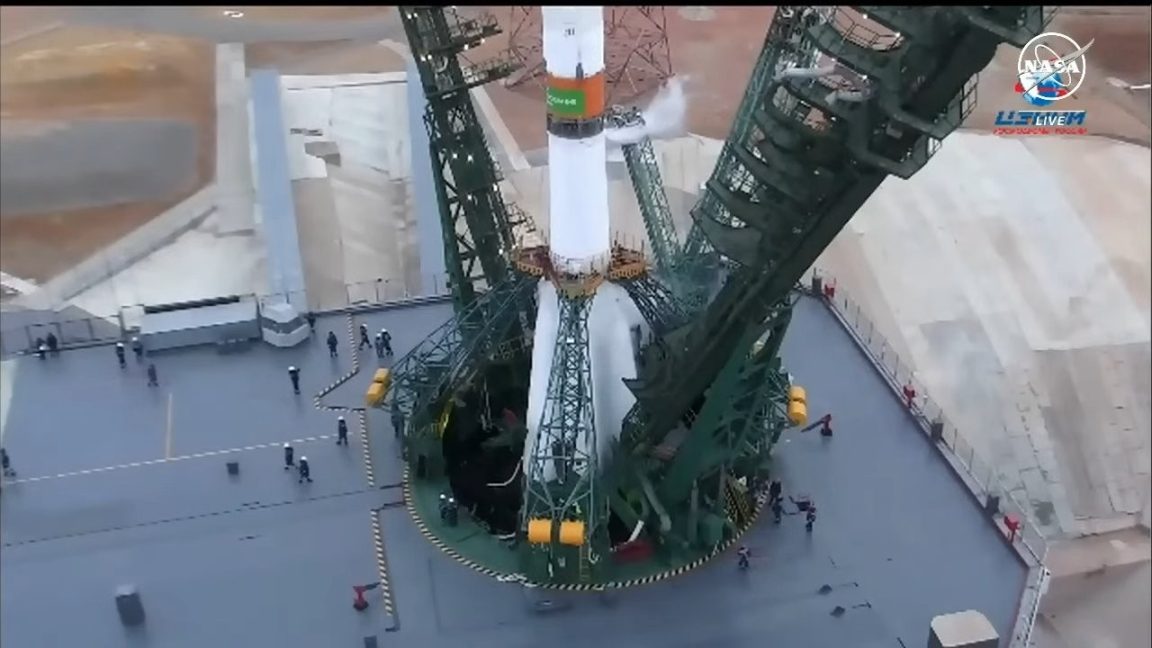 >
>
Now, Russia isn’t exactly short on launch facilities. But here’s the rub: Site 31 at Baikonur is currently the only pad equipped to handle Soyuz launches with the Progress cargo vehicle and the Soyuz crew capsule. These are crucial for resupplying and rotating crews on the ISS.
This challenge isn’t just about damaged equipment; it speaks to something deeper. How could such a significant oversight – failing to secure a 20-ton platform – occur in a program with decades of experience? Was this a simple mistake, a symptom of deeper systemic issues, or perhaps a budgetary shortfall causing corners to be cut?
It’s worth noting that the Russian space program has faced challenges in recent years. Funding constraints, aging infrastructure, and a brain drain of experienced engineers have all been factors. This mishap at Baikonur might be the culmination of these issues.>
The immediate impact is obvious. Soyuz launches from Site 31 are likely suspended until repairs are completed. The timeline for these repairs is anyone’s guess. What does this translate to? Potential delays in resupply missions and crew rotations for the ISS.
The ISS relies on a collaborative effort, with the US and Russia as key partners. If Russia’s ability to contribute is compromised, the entire program could face difficulties. Other partners, like NASA, ESA, and Japan, might need to pick up the slack, potentially straining their resources and timelines.
Yet, let’s not jump to worst-case scenarios immediately. Russia has a history of overcoming adversity in space. They may find a workaround, expedite repairs, or even adapt another launch site, though that would take time and resources. Plus, the other partners may be able to shift some of the duties to compensate.
This situation highlights the fragility of international cooperation in space. When one partner stumbles, the entire endeavor feels the impact. Space exploration demands precision, attention to detail, and a robust safety culture. This incident underscores the need for vigilance and investment in maintaining these standards.
Given these facts, it’s tempting to speculate about the long-term implications. Could this event accelerate the transition to commercial space providers like SpaceX for ISS resupply and crew transport? SpaceX has already demonstrated its capabilities, and NASA is increasingly relying on them. It’s definitely something to consider. The damage to Site 31 could force a shift in the power dynamic within the ISS partnership.
For now, the focus needs to be on understanding the root cause of the incident, implementing corrective actions, and ensuring the safety of future launches. The ISS program, after all, represents a unique example of international collaboration in a challenging and unforgiving environment.
Still, this incident is a wake-up call. It reminds us that space exploration is inherently risky and demands constant vigilance. It also underscores the importance of investing in a robust and resilient space program, regardless of the challenges. The future of the ISS, and perhaps even the future of international cooperation in space, may depend on it.

![[post_title]](https://samony.com.ng/wp-content/uploads/2025/12/1764998564_Ukraine-Russia-war-latest-Putin-risks-fresh-row-with-Trump-after-300x200.jpeg?lm=6933BDA8 "Ukraine War Reshapes Global Order: A Complex Web of Power, Diplomacy, and Risk")
![[post_title]](https://samony.com.ng/wp-content/uploads/2025/12/High-Risk-for-Frostbite-Heart-Strain-and-Chronic-Conditions-300x169.jpg?lm=6933A071 "Polar Vortex Here? What You MUST Know to Stay Safe")

![[post_title]](https://samony.com.ng/wp-content/uploads/2025/12/Full-List-Of-Lawmakers-Who-Refused-To-Dump-PDP-For.jpg?lm=6933A187 "Rivers State: Defection Dynamics and Political Fortunes")

![[post_title]](https://samony.com.ng/wp-content/uploads/2025/12/Dangote-Speaks-On-Reducing-Price-Of-Petrol-After-Meeting-Tinubu.webp.webp "Dangote Speaks On Reducing Price Of Petrol After Meeting Tinubu")

![[post_title]](https://samony.com.ng/wp-content/uploads/2025/12/1764998564_Ukraine-Russia-war-latest-Putin-risks-fresh-row-with-Trump-after-1024x683.jpeg?lm=6933BDAE "Ukraine War Reshapes Global Order: A Complex Web of Power, Diplomacy, and Risk")