![[post_title]](https://samony.com.ng/wp-content/uploads/2025/11/1764318877_I-was-doing-courtship-Lady-accepts-proposal-from-man-she-1024x535.jpg?lm=69295EA1)
He Went to Canada, She Said Yes: Analyzing Shifting Relationship Dynamics and the Pursuit of a Better Life
A viral chat log reveals a familiar, if somewhat cynical, story: a woman initially rejects a man’s proposal, only to change her tune after he relocates to Canada. This real-life drama, playing out on TikTok and other platforms, sparks heated debates. Is it love, opportunism, or a complex mix of both? Before diving deep, the original story has some holes but we can use the topic to extrapolate and discuss relationship dynamics.
The core narrative is simple. The digital trail paints a picture of a woman, Lucy, who turns down a marriage proposal. Fast forward, the man moves to Canada. Suddenly, Lucy reconsiders, citing flimsy excuses like being “on her period” and “doing courtship” as reasons for the initial rejection. The man, understandably, is wary, questioning her motives. Comments erupt, with many accusing the woman of being a gold digger. The other group of commentators suggest the man should move on.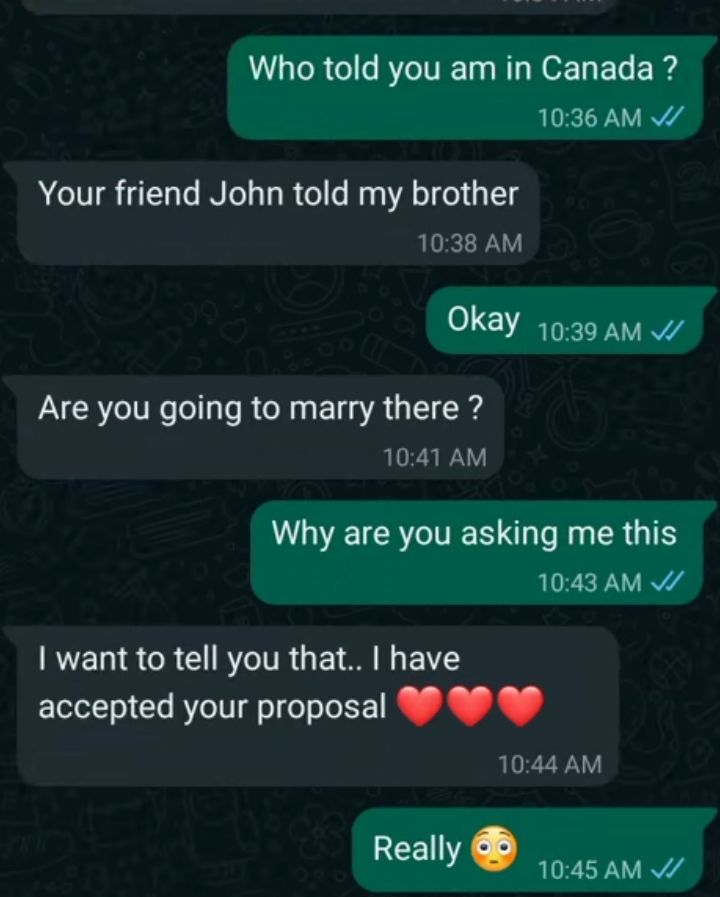 >
>
Stories like this resonate, and that points to some universal truths about relationships, immigration, and the perceived allure of life abroad. It brings several layers to the discussion.
The “Grass is Greener” Syndrome: This situation highlights how perceived opportunities influence decisions, even in matters of the heart. Canada, often seen as a land of promise, adds a layer of desirability. Does the woman truly love the man, or the idea of a life in Canada? That’s the million-dollar question, and it will take the man time to find out.
The Power Imbalance Shift: Immigration, particularly to a developed nation, can dramatically shift the power dynamics in a relationship. The person who makes the move often gains leverage, especially if the other partner aspires to join them. The change in location changes the dynamics, and this is important. >
>
Communication Breakdown: The chat logs hint at a lack of honest communication. The woman’s excuses sound disingenuous, and the man’s questioning reveals his suspicion. Open, honest dialogue from the outset may have prevented this messy situation. We can infer that they did not discuss the matter well.
Societal Pressures: Let’s not ignore the societal pressures that influence relationship decisions. In many cultures, marriage is viewed as a pathway to upward mobility. The chance to live in a country like Canada, with its perceived economic and social advantages, can be a strong incentive.
It’s worth noting that online reactions are often swift and judgmental. Labelling the woman a “gold digger” is easy, but it oversimplifies a complex situation. There could be genuine affection, combined with the undeniable allure of a better life. Humans are more complex than that.
Industry Trends: The Globalization of Love and the Rise of “Sponsor Me” Relationships
This anecdote mirrors a broader trend: the globalization of love. Online dating platforms and social media connect people across borders. However, this connectivity also creates new dynamics, including what some might call “sponsor me” relationships – where one partner is explicitly or implicitly seeking immigration benefits.
Several factors contribute to this trend:
Increased Migration: Global migration is at an all-time high, driven by economic disparities, political instability, and climate change. This movement of people naturally leads to cross-cultural relationships.
Online Dating Boom: Dating apps have normalized long-distance relationships. They also expose individuals to a wider pool of potential partners, including those from countries with more favorable immigration policies.
Social Media Influence: Platforms like TikTok and Instagram showcase the lives of expats, often portraying an idealized version of life abroad. This can fuel the desire to immigrate, sometimes through marriage.
This challenge creates ethical and legal dilemmas. Immigration authorities are increasingly vigilant about fraudulent marriages. However, proving malicious intent is difficult. Even when genuine affection exists, the unequal power dynamic can lead to exploitation.
Given these facts, how do we navigate this changing landscape? How do we balance the desire for love and connection with the practical realities of immigration and economic opportunity? A few thoughts:
Transparency is Key: Openly discuss immigration goals and expectations early in the relationship. Honest conversations can prevent misunderstandings and resentment down the road.
Pre-nuptial Agreements: While unromantic, pre-nuptial agreements can protect both partners in the event of a breakup. This is especially important when significant assets or immigration benefits are involved.
Due Diligence: Take your time getting to know someone, especially if you met online. Be wary of individuals who seem overly eager to rush into marriage.
Seek Professional Advice: Consult with an immigration lawyer before making any major decisions. They can advise you on the legal implications of marriage and sponsorship.
It’s crucial to remember that every relationship is unique. While the “He Went to Canada, She Said Yes” story might elicit cynicism, it also offers a valuable lesson. Love and opportunity can be intertwined, but transparency, communication, and a healthy dose of skepticism are essential ingredients for success. It sounds simple enough.
This situation is not new. I’ve personally seen similar stories play out with different countries as the “prize.” The pattern is familiar, which is why this particular case, while generating buzz, doesn’t surprise me. I believe the only thing that can change the outcome is if everyone is honest and open to communicating with one another.

![[post_title]](https://samony.com.ng/wp-content/uploads/2025/12/1764998564_Ukraine-Russia-war-latest-Putin-risks-fresh-row-with-Trump-after-300x200.jpeg?lm=6933BDA8 "Ukraine War Reshapes Global Order: A Complex Web of Power, Diplomacy, and Risk")
![[post_title]](https://samony.com.ng/wp-content/uploads/2025/12/High-Risk-for-Frostbite-Heart-Strain-and-Chronic-Conditions-300x169.jpg?lm=6933A071 "Polar Vortex Here? What You MUST Know to Stay Safe")


![[post_title]](https://samony.com.ng/wp-content/uploads/2025/12/Full-List-Of-Lawmakers-Who-Refused-To-Dump-PDP-For.jpg?lm=6933A187 "Rivers State: Defection Dynamics and Political Fortunes")

![[post_title]](https://samony.com.ng/wp-content/uploads/2025/12/Dangote-Speaks-On-Reducing-Price-Of-Petrol-After-Meeting-Tinubu.webp.webp "Dangote Speaks On Reducing Price Of Petrol After Meeting Tinubu")

![[post_title]](https://samony.com.ng/wp-content/uploads/2025/12/1764998564_Ukraine-Russia-war-latest-Putin-risks-fresh-row-with-Trump-after-1024x683.jpeg?lm=6933BDAE "Ukraine War Reshapes Global Order: A Complex Web of Power, Diplomacy, and Risk")