Analyzing Nasir El-Rufai’s Political Shift: A Sign of Things to Come?
The recent news of Nasir El-Rufai joining the African Democratic Congress (ADC) raises several interesting questions about the current state of Nigerian politics and where it might be headed. We’ve witnessed a prominent figure, a former governor, switch allegiances not once, but twice in relatively short order. One has to consider, what does this signify?
El-Rufai’s journey from the All Progressives Congress (APC) to the Social Democratic Party (SDP), and finally to the ADC, isn’t merely a career move. It reflects a deeper unease within the established political order. Remember, this is someone who was a founding member of the APC, a party that held so much promise just a few years ago. His departure, coupled with his explicit critiques of the APC’s drift from its founding principles, speaks volumes. He voiced concerns over the party’s responsiveness and its commitment to progressive values. These are weighty accusations from an insider.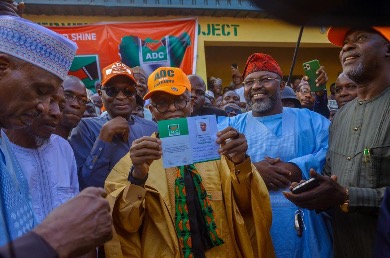 >
>
Of course, politicians change parties all the time. It’s part of the game. Yet, El-Rufai’s case feels different. His reasons for leaving, as articulated in his resignation letters, suggest a fundamental disagreement with the direction of the APC. He alleges a disregard for internal concerns and a shift away from core values. He even claimed to have consistently raised these issues. Were these concerns ignored or dismissed? If that’s the case, how many others feel the same way?
The move to the ADC, a party that perhaps offers a platform more aligned with his current vision, is a calculated one. It potentially strengthens the ADC’s presence, particularly in Kaduna State, where El-Rufai holds considerable influence. But it also represents a gamble. Can the ADC provide the kind of national platform that El-Rufai needs to remain a significant player on the political scene?
It’s worth noting that this reshuffling happens amid broader political realignments. Elections, even future ones, cast long shadows. Parties are constantly trying to position themselves, attract new members, and consolidate power. El-Rufai’s move to the ADC could catalyze further shifts, especially if others share his disillusionment with the APC or the SDP.>
Some might view this as simply political opportunism. Politicians often seek the best path to power and influence. Fair enough. Still, El-Rufai’s public statements suggest a genuine desire to contribute to a more progressive and responsive political environment. Maybe he sees the ADC as a vehicle to achieve that. Maybe it’s truly about principle. Or, more realistically, it’s probably a bit of both.
This situation prompts reflection on the health of Nigeria’s political parties. Are they truly ideologically driven, or are they simply vehicles for personal ambition? El-Rufai’s experience highlights the potential for internal fractures and the challenges of maintaining unity and purpose within large, diverse parties. If a founding member feels compelled to leave, it begs the question: what’s the glue that holds these parties together?
From my vantage point, having observed similar patterns over the years, I see a potential for a significant realignment in Nigerian politics. The established parties are facing internal pressures, and figures like El-Rufai are exploring alternative avenues. This could lead to the emergence of stronger opposition parties or the formation of new alliances. What’s more, voter sentiment appears to be increasingly volatile, making established loyalties less reliable.
However, skepticism is warranted. Political landscapes are complex, and outcomes are rarely predictable. The ADC, despite gaining a prominent figure, faces significant hurdles in becoming a major national force. Resources, reach, and national appeal are all critical factors. El-Rufai’s influence alone won’t guarantee success.
The long game is about more than just moving from one political party to another. It requires building trust, articulating a clear vision, and demonstrating a genuine commitment to the people. It remains to be seen whether El-Rufai’s move to the ADC will ultimately serve these goals. But it’s undeniable that it has injected a fresh dose of uncertainty and intrigue into the Nigerian political arena. Let’s see how the existing political parties respond to this development. What strategies will they use to either regain confidence or adapt?


![[post_title]](https://samony.com.ng/wp-content/uploads/2025/12/Full-List-Of-Lawmakers-Who-Refused-To-Dump-PDP-For.jpg?lm=6933A187 "Rivers State: Defection Dynamics and Political Fortunes")
![[post_title]](https://samony.com.ng/wp-content/uploads/2025/12/The-Verges-2025-holiday-gift-guide-110-of-the-best-300x156.jpg?lm=69339E75 "2025 Tech Gifts: A Skeptical Shopper’s Guide")
![[post_title]](https://samony.com.ng/wp-content/uploads/2025/12/Wike-sacks-FCT-IRS-acting-chairman-Michael-Ango-300x291.jpeg?lm=69338BEC "Wike Sacked FCT Revenue Boss After Record Numbers: What’s Really Going On?")
![[post_title]](https://samony.com.ng/wp-content/uploads/2025/12/Netflix-To-Acquire-Warner-Bros-Discoverys-Film-And-Streaming-Units-300x171.jpg?lm=693385DB "Streaming’s $72 Billion Gamble: Netflix and Warner Bros. Discovery")
![[post_title]](https://samony.com.ng/wp-content/uploads/2025/12/16-LAWMAKERS-DEFECT-FROM-PDP-TO-APC-IN-RIVERS-STATE-300x208.jpg?lm=69338673 "Rivers State Politics Just Got Wild: What’s Going On?")

![[post_title]](https://samony.com.ng/wp-content/uploads/2025/12/High-Risk-for-Frostbite-Heart-Strain-and-Chronic-Conditions-1024x576.jpg?lm=6933A071 "Polar Vortex Here? What You MUST Know to Stay Safe")