

Nottingham Forest’s Nostalgic Nod: More Than Just a Game? A Critical Look
Nottingham Forest’s recent Europa League fixture wasn’t just about the current squad. The club orchestrated a pre-match tribute, reuniting legends from their 1979 European Cup-winning team. Sean Dyche, ever the pragmatist, praised the effort, specifically mentioning owner Evangelos Marinakis’ role in pushing the initiative. It begs the question: Is this simple nostalgia, or is something else brewing?
These displays walk a tightrope. On one hand, acknowledging club history fosters a sense of community. It reminds fans, players, and even potential signings of the legacy they’re now a part of. Seeing those European heroes on the pitch, that image resonates. It connects generations.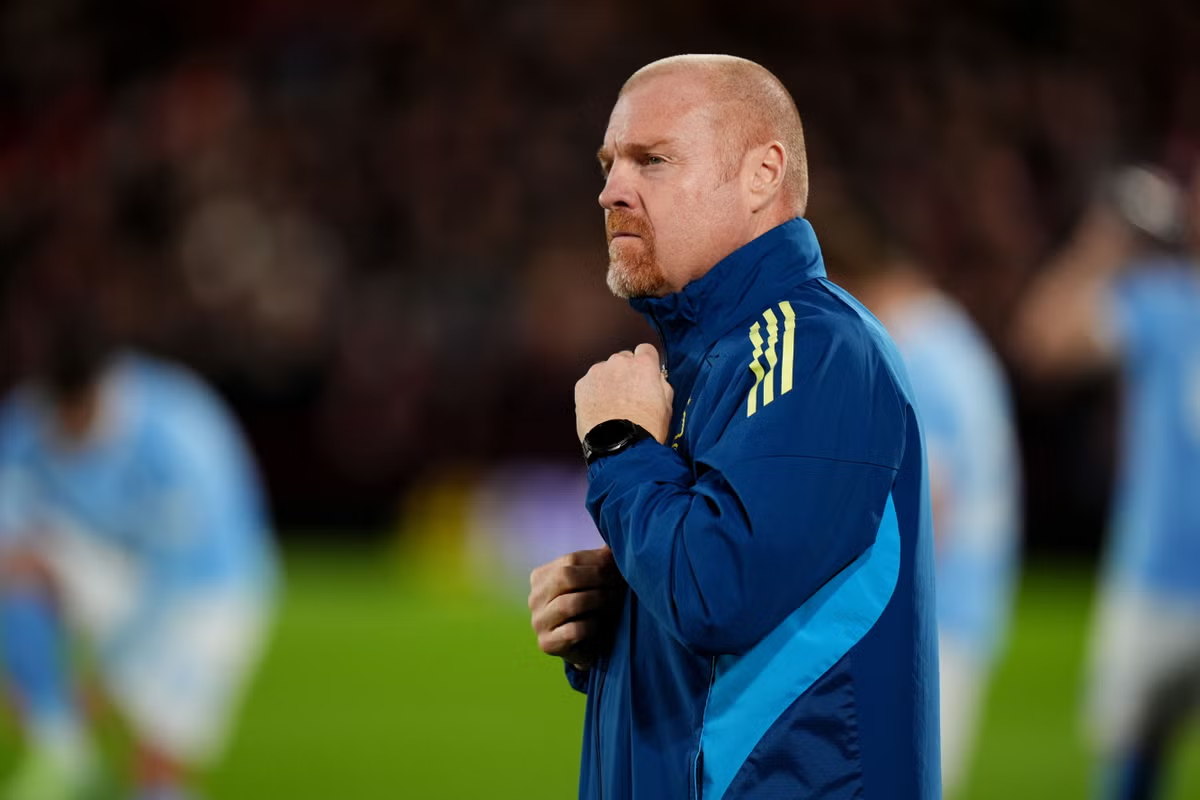 >
>
Yet, it’s also a tactic. Let’s be real. Highlighting past glory can deflect from present struggles. Football is a business, and image matters. Perhaps this tribute aimed to bolster morale amidst on-field challenges or even to paint a picture of stability for prospective investors. I’ve witnessed similar strategies at other clubs; it’s a way to cultivate an appealing narrative.
Consider the timing. Forest, after a period of upheaval, are trying to find their footing. Tapping into the emotional wellspring of past triumphs could generate positive PR. A team steeped in history becomes an attractive proposition.
The specific praise for Marinakis also raises an eyebrow. Owners are often keen to associate themselves with moments of celebration. It’s a chance to enhance their image and reinforce their commitment to the club. Now, this isn’t necessarily cynical; a good owner should champion their club’s heritage. Yet, it’s prudent to analyze the underlying motivations.>
Dyche’s comments about “looking after their ex-players” also resonate. In an era where player welfare is increasingly under scrutiny, demonstrating a commitment to former players strengthens the club’s reputation. Clubs must consider how they’re seen, and that includes how they treat former employees.
Ryan Yates, the homegrown midfielder who opened the scoring, added another layer to the story. The local boy scoring on a night dedicated to club legends? It’s almost too perfect. This provides a powerful feel-good narrative, emphasizing the importance of nurturing talent from within.
Still, one wonders how much of this was organic and how much was carefully orchestrated. Modern football is rarely spontaneous. Every element, from pre-match entertainment to post-match interviews, goes under intense scrutiny. I suspect that while the sentiment behind the tribute was genuine, its execution involved meticulous planning.
Malmo’s perspective offers an interesting counterpoint. While the occasion focused on Forest’s triumph, it also served as a reminder of Malmo’s defeat. Interim manager Anes Mravac’s impending departure adds another layer of complexity. A caretaker manager’s focus is often short-term, making it difficult to fully appreciate the historical significance of the event.
In any case, the nostalgia play worked, at least on the surface. Forest secured a victory, and the feel-good factor permeated the stadium. However, the long-term impact remains to be seen. Will this tribute translate into sustained success on the pitch? Or will it simply be a fleeting moment of glory amidst ongoing challenges?
This challenge of balancing respect for the past with the demands of the present defines many clubs. Fans rightly cherish their history, but they also demand success in the here and now. Managing those expectations requires a delicate touch.
It’s worth noting that Forest’s approach isn’t unique. Numerous clubs leverage their history to build brand loyalty and generate revenue. Think of Liverpool’s “You’ll Never Walk Alone” or Manchester United’s constant references to their Treble-winning season. Nostalgia sells.
Given these facts, it’s essential to look beyond the surface. Appreciate the sentiment, yes, but also recognize the strategic calculations at play. Football, at its core, is a business, and clubs will utilize every tool at their disposal to achieve their objectives.
Ultimately, Nottingham Forest’s tribute to their 1979 heroes was a multifaceted event. It was a celebration of past glory, a nod to club legends, and, perhaps, a carefully calibrated PR exercise. The truth, as always, likely lies somewhere in between. For Forest, the challenge is to translate that historical inspiration into tangible results on the pitch. Whether they can achieve that remains to be seen.


![[post_title]](https://samony.com.ng/wp-content/uploads/2025/12/2026-World-Cup-draw-300x140.png?lm=69334EB1 "2026 World Cup: Forget the Hype, What Does the Draw Really Mean?")



![[post_title]](https://samony.com.ng/wp-content/uploads/2025/12/1764969684_What-Netflixs-54bn-takeover-of-Warner-Bros-means-for-Hollywood-300x158.jpg?lm=69334CD7 "Streaming’s New Colossus: Integrating Legacy, Navigating Monopoly, and Preserving Creative DNA")

![[post_title]](https://samony.com.ng/wp-content/uploads/2025/12/An-diesem-beliebten-Mallorca-Strand-sind-neue-Benimmregeln-geplant-1024x538.jpg?lm=6933533D "Sóller’s Beach Ban: Paradise Lost or Sanity Restored? Mallorca’s Urgent Debate")
![[post_title]](https://samony.com.ng/wp-content/uploads/2025/12/Mother-drinks-annoiting-oil-rubs-it-on-her-forehead-as-1024x535.jpg?lm=693353AF "Viral TikTok: How Faith Endures in a Tech-Driven World")
![[post_title]](https://samony.com.ng/wp-content/uploads/2025/12/2026-World-Cup-draw-1024x477.png?lm=69334EB2 "2026 World Cup: Forget the Hype, What Does the Draw Really Mean?")
