

Decoding Infrastructure Investment: A Critical Look at AFC & NGX’s Capacity Building in Nigeria
The news that the Africa Finance Corporation (AFC) and the Nigerian Exchange Limited (NGX) teamed up for a capacity-building program around infrastructure project finance caught my eye. We hear a lot about infrastructure gaps in Africa, especially in a powerhouse like Nigeria. This initiative aimed at bolstering the technical skills needed to structure and finance these projects through the Nigerian capital markets. It’s a move in the right direction, but let’s dig deeper.
Nigeria’s infrastructure deficit is a well-worn concern. Estimates suggest it could balloon to a staggering $2.3 trillion by 2043, potentially even reaching $3 trillion. These numbers aren’t just abstract figures; they translate directly into hindered economic growth, reduced productivity, and a lower quality of life for everyday Nigerians. So, finding ways to bridge this gap is absolutely critical.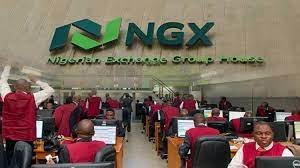 >
>
This workshop, which brought together regulators, institutional investors, project developers, and financial institutions, sought to tackle the challenge head-on. The core idea? To equip these stakeholders with the know-how to funnel domestic capital into viable infrastructure projects. On the surface, this is great. Training programs focused on project finance and structuring sounds promising. It is definitely needed.
Yet, a healthy dose of skepticism is warranted. Capacity building is often touted as a solution, but its effectiveness hinges on several factors. One of the most critical is the actual implementation of acquired knowledge. Do participants genuinely internalize the lessons and apply them in real-world scenarios? Or does the training merely become a line on a CV, with little tangible impact?
The workshop is supposed to encourage “innovative financing mechanisms.” That’s music to my ears. Nigeria can’t rely solely on traditional funding models. Innovation is essential, especially given the scale of the infrastructure deficit. We need to explore blended finance, public-private partnerships (PPPs), and other creative solutions to unlock the necessary capital. But this also assumes that those mechanisms aren’t just theoretically innovative but practically applicable within the Nigerian context, considering its unique regulatory and economic landscape.>
AFC’s commitment to “advancing not just project financing, but the full framework required to deliver bankable, sustainable infrastructure solutions” is a crucial point. Financing is only one piece of the puzzle. Project preparation, risk mitigation, regulatory clarity, and strong governance are equally important. Without these elements, even the most well-funded project can falter. This holistic approach is precisely what’s needed to foster sustainable infrastructure development.
It’s worth noting that NGX, as a “sustainable exchange,” is positioning itself as a champion of infrastructure development. This is interesting. Stock exchanges, especially in developing markets, have a potentially vital role to play in mobilizing capital for infrastructure. If NGX can create a conducive environment for infrastructure-related listings and trading, it could significantly boost the flow of investment into the sector. But this demands robust regulatory frameworks, transparency, and investor confidence, all areas where Nigeria has faced challenges in the past.
Still, the elephant in the room remains: political will and governance. Even with the best-trained professionals and innovative financing mechanisms, corruption, bureaucratic hurdles, and policy instability can derail even the most promising infrastructure projects. These issues need to be addressed systematically to create a truly enabling environment for investment.
From my experience, these kinds of initiatives are often more about signaling than substance. They look good on paper, and they generate positive headlines. But their true impact is often difficult to measure. A genuine transformation requires a long-term commitment, sustained effort, and a willingness to confront the underlying challenges that have plagued Nigeria’s infrastructure development for decades.
This challenge of building local expertise and robust market structures is not unique to Nigeria. Across Africa, countries grapple with similar infrastructure deficits and the need to attract investment. Success stories are out there, and Nigeria can certainly learn from them. But it also needs to forge its own path, taking into account its unique circumstances and priorities.
Given these facts, this AFC-NGX partnership presents an opportunity. The key is to move beyond rhetoric and focus on tangible outcomes. We need to see real projects being financed, real infrastructure being built, and real improvements in the lives of ordinary Nigerians. Only then can we truly judge the success of this capacity-building endeavor. It has potential to fuel economic empowerment, and improve the economic outlook.
To that end, continuous monitoring and evaluation are essential. We need to track the progress of participants, assess the impact of the training on their professional practices, and identify any barriers that prevent them from applying their newfound knowledge. This data should then be used to refine the training program and ensure that it remains relevant and effective.
It’s worth remembering that building a robust infrastructure ecosystem is a marathon, not a sprint. It requires patience, perseverance, and a unwavering commitment to good governance. While this workshop is a step in the right direction, it’s only one small step on a very long road. Whether it leads to meaningful progress remains to be seen.


![[post_title]](https://samony.com.ng/wp-content/uploads/2025/12/Nvidia-boss-Jensen-Huang-steers-Trump-Congress-against-AI-chip-300x169.jpg?lm=69324AE7 "Nvidia’s AI Power Play: Did Jensen Just Sway US Policy?")
![[post_title]](https://samony.com.ng/wp-content/uploads/2025/12/Warriors-vs-76ers-live-online-score-stats-updates-300x169.jpg?lm=6932376A "Warriors Face Sixers Test of Depth Amid Curry’s Absence")
![[post_title]](https://samony.com.ng/wp-content/uploads/2025/12/1764896764_Hegseth-orders-new-strike-that-kills-4-on-alleged-drug-300x200.jpg?lm=69322FFF "U.S. Military Strikes: Escalation, Ethics, and Accountability")
![[post_title]](https://samony.com.ng/wp-content/uploads/2025/12/Nigeria-Approves-Fiscal-Plan-Proposing-N545trn-2026-Budget-300x169.jpg?lm=69323047 "Nigeria’s N54.5 Trillion Budget: Ambition vs. Reality")
![[post_title]](https://samony.com.ng/wp-content/uploads/2025/12/Groups-to-Tinubu-Disregard-lawmakers-call-for-Ribadus-sack-300x169.png?lm=69323086 "Ribadu’s Job on the Line? What Nigeria’s NSA Debate Really Means")


![[post_title]](https://samony.com.ng/wp-content/uploads/2025/12/Nvidia-boss-Jensen-Huang-steers-Trump-Congress-against-AI-chip-1024x576.jpg?lm=69324AE7 "Nvidia’s AI Power Play: Did Jensen Just Sway US Policy?")
