

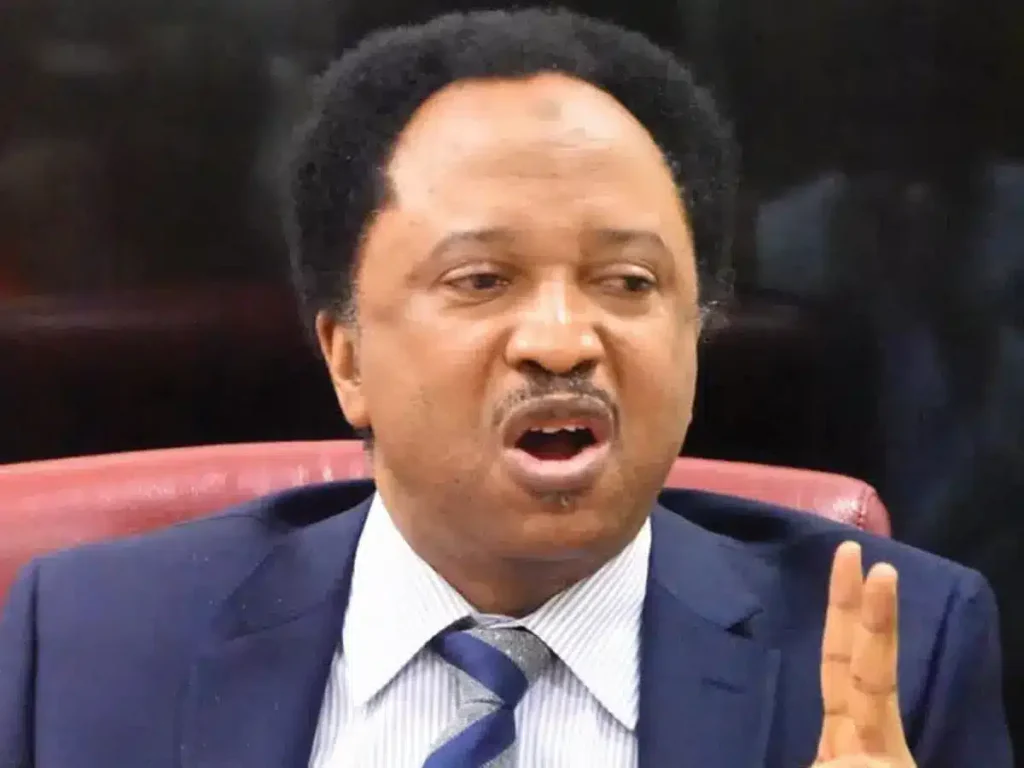
Decoding Nigeria’s Security Crisis: A Critical Look at Shehu Sani’s Claims
The statement attributed to Shehu Sani, that “Terrorists, bandits killing people are northerners and Muslims,” has sparked considerable debate in Nigeria. It demands a more profound examination than a simple acceptance or rejection. The implications are significant, touching on identity, security, and the very fabric of Nigerian society.
Nigeria’s security challenges are complex. Banditry, terrorism, and inter-communal clashes plague different regions. To frame these issues solely along ethnic or religious lines risks oversimplification and potentially exacerbates existing tensions. Is Sani’s statement an accurate assessment, or does it serve another purpose? Perhaps it’s a wake-up call, a desperate attempt to force accountability within specific communities. >
>
It’s tempting to dismiss his remarks as divisive, but doing so neglects the potential kernel of truth. The reality is many of these groups do operate within specific geographic areas, often dominated by particular ethnic or religious affiliations. However, this doesn’t automatically equate to universal culpability or shared ideological alignment within those groups. It also sidesteps the nuances of recruitment, radicalization, and the socio-economic factors that fuel these crises.
Consider the North-West. Banditry has morphed into a lucrative criminal enterprise, preying on vulnerable rural communities. While many bandits may indeed be of northern extraction and Muslim faith, their motivations are primarily economic. The government’s inability to provide security and economic opportunity creates a vacuum that these criminal gangs exploit.
Boko Haram and ISWAP, primarily operating in the North-East, present a different challenge. Their ideological roots in extremist interpretations of Islam are undeniable. Yet, even here, religious affiliation alone doesn’t fully explain the insurgency. Poverty, inequality, and a lack of education play crucial roles in driving vulnerable individuals into the arms of these groups. >
>
This begs the question: what is the real objective of declarations like Sani’s? Do they promote understanding, or do they incite discord? There is a real danger in demonizing entire groups based on the actions of a few. Blaming “northerners and Muslims” collectively overshadows the multitude of individuals and communities working tirelessly for peace and progress. This collective punishment narrative also fails to acknowledge the many victims of these atrocities who share the same ethnic and religious backgrounds as the perpetrators.
It’s crucial to explore the motives behind these assertions. It is easy to accuse the messenger, but could it be deflecting attention from the failures of governance and security structures? Could it even be a coded appeal to international audiences to take note of the gravity of the situation? We must not assume his claims are malicious.
It’s worth noting the perspective of someone who has followed Nigerian politics for years. The easy answer is usually the wrong one. The situation is fluid and demands careful consideration.
Nigeria’s government must address the underlying issues that contribute to insecurity. That means investing in education, creating economic opportunities, and strengthening law enforcement. It also requires fostering inter-faith dialogue and promoting a sense of shared national identity. Without these crucial steps, the country risks falling into a cycle of blame and recrimination that will only further destabilize the nation.
The security challenges Nigeria faces demand a nuanced approach, not simplistic generalizations. Sani’s statement, while potentially provocative, needs to be dissected with care. It should serve as a catalyst for deeper introspection, honest dialogue, and effective action, rather than fuel for further division.

![[post_title]](https://samony.com.ng/wp-content/uploads/2025/12/In-1995-a-Netscape-employee-wrote-a-hack-in-10-300x169.jpg?lm=6931D870 "JavaScript’s Reign: How a 10-Day Hack Took Over the Web (And What’s Next)")
![[post_title]](https://samony.com.ng/wp-content/uploads/2025/12/1764869561_Wizkid-Set-to-Host-GOAT-Concert-in-Lagos-This-December-300x289.jpeg?lm=6931C5BC "Wizkid’s Lagos Show: True Homecoming or Calculated Move?")




![[post_title]](https://samony.com.ng/wp-content/uploads/2025/12/How-to-Break-a-Bad-Habit-11-Tips-and-Strategies-1024x576.jpg?lm=6931DA31 "Work With Your Brain to Break Bad Habits")
![[post_title]](https://samony.com.ng/wp-content/uploads/2025/12/Pope-Leo-dissolves-one-of-Francis-final-acts-in-major-1024x683.jpeg?lm=6931DAB7 "Vatican Finances: Pope Leo Scraps Predecessor’s Plan – What’s Next?")
![[post_title]](https://samony.com.ng/wp-content/uploads/2025/12/In-1995-a-Netscape-employee-wrote-a-hack-in-10-1024x576.jpg?lm=6931D870 "JavaScript’s Reign: How a 10-Day Hack Took Over the Web (And What’s Next)")
![[post_title]](https://samony.com.ng/wp-content/uploads/2025/12/1764869561_Wizkid-Set-to-Host-GOAT-Concert-in-Lagos-This-December.jpeg?lm=6931C5BB "Wizkid’s Lagos Show: True Homecoming or Calculated Move?")
