

![[post_title]](https://samony.com.ng/wp-content/uploads/2025/11/1764230773_Foundation-seeks-more-women-inclusion-in-politics-other-sectors-1024x687.jpg?lm=69280679)
Analyzing the Push for Women’s Inclusion in Nigeria: Beyond the Usual Rhetoric
The Heinrich Böll Foundation (HBF) recently emphasized the critical need for greater inclusion of women in Nigeria’s political arena, media, and private sector. This isn’t a new conversation; we’ve heard similar pronouncements many times. It always sounds good, but let’s dissect what’s really happening and whether these efforts are truly making a difference.
The HBF’s argument, that Nigeria cannot achieve meaningful development without fully integrating women into leadership roles, is hard to dispute. Half the population is female, so excluding them from decision-making processes is, at best, illogical. Yet, that’s precisely the situation in Nigeria, where systemic barriers persistently hinder women’s ascent to leadership positions. It begs the question: Why is progress so slow?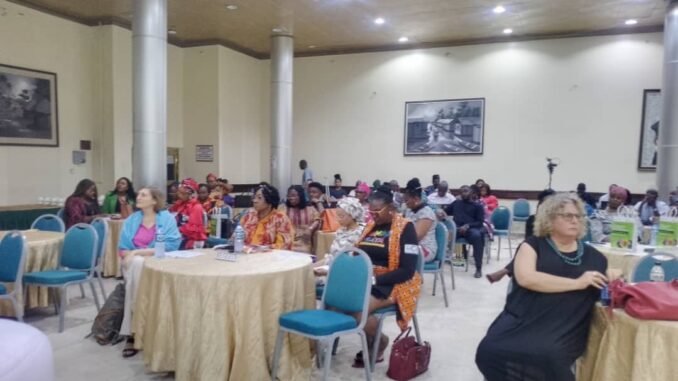 >
>
The HBF’s country director, Sophie von Knebel, rightly stated that women’s voices need representation. Their study on female leadership, which involved conversations with women about the obstacles they encounter, is a good starting point. This kind of ground-level research provides valuable insights. Still, research alone doesn’t dismantle deeply ingrained societal norms.
Von Knebel envisions fostering open dialogue and creating networks to connect women across generations, enabling them to support each other. Mentorship and networking undoubtedly play a crucial role. Building a supportive ecosystem helps women navigate the existing structures. But I’ve also noticed that sometimes, these networks can become echo chambers, reinforcing existing beliefs without challenging the fundamental power dynamics.
The director argued that women’s political participation is vital for democracy and should be prioritized at all levels. Increasing women’s leadership, she posits, would improve accountability, strengthen governance, and ensure more inclusive policymaking. That’s the ideal scenario, of course. The underlying assumption is that women inherently bring a different, and perhaps more ethical, perspective to governance. Perhaps, but power corrupts, regardless of gender. We’ve seen enough examples globally, and even within Nigeria, to know that simply having more women in power doesn’t automatically guarantee better outcomes.>
It’s worth noting that HBF acknowledges these challenges aren’t unique to Nigeria. Similar barriers to female leadership exist globally. That’s true, but the specific manifestation of these barriers varies from country to country, influenced by cultural and historical contexts. What works in one setting might not be effective in another. Nigeria’s unique socio-political landscape demands tailored solutions.
The HBF’s commitment to supporting Nigerian women through research, advocacy, and collaborative platforms aimed at driving long-term change is commendable. However, long-term change requires more than just funding and advocacy. It requires a shift in attitudes, both among men and women.
She urged Nigerian women to demand accountability from leaders ahead of upcoming elections, especially on resource allocation and budgets dedicated to addressing gender issues. This is a crucial point. Simply getting women into positions isn’t enough. These women must then be held accountable for delivering on promises related to gender equality and women’s empowerment. The proof is always in the pudding.
The director further highlighted rising insecurity affecting women and girls, stressing the need for government and institutions to engage directly with them to understand their concerns and design better protection strategies. The intersection of gender and security is a critical area that often gets overlooked. Women face specific threats and vulnerabilities, and ignoring these can undermine any progress made in other areas.
So, what can be done differently? I believe the focus needs to shift towards addressing the root causes of gender inequality. This includes challenging harmful cultural norms, promoting education for girls, and creating economic opportunities for women. It also requires engaging men in the conversation and enlisting them as allies in the fight for gender equality.
Initiatives like HBF’s stakeholder engagement are important. They bring people together, spark conversations, and raise awareness. Yet, turning these conversations into concrete actions is a challenge. We need to see tangible results – more women in leadership positions, more policies that address the needs of women and girls, and a society that values and respects women. That’s a tall order, no doubt.
Ultimately, the success of these efforts hinges on a genuine commitment from all stakeholders, including the government, civil society, and the private sector. It’s about more than just ticking boxes; it’s about creating a level playing field where women have the opportunity to reach their full potential. And that benefits everyone, not just women.


![[post_title]](https://samony.com.ng/wp-content/uploads/2025/12/YouTube-brings-expressive-captions-to-all-devices-300x169.jpg?lm=69314B06 "YouTube’s New “Expressive Captions”: Cool Tech or Just for Show?")
![[post_title]](https://samony.com.ng/wp-content/uploads/2025/12/Alleged-manslaughter-victim-told-classmate-she-was-treated-like-a-300x169.jpeg?lm=69314C01 "Jenni Wilmott Trial: Did Systemic Failures Lead to a Preventable Tragedy?")
![[post_title]](https://samony.com.ng/wp-content/uploads/2025/12/1764833148_See-A24-trailer-cast-and-release-date-300x169.webp "A24’s “Mother Mary”: Hathaway & Coel’s Sinister Secret We Can’t Wait to Uncover")

![[post_title]](https://samony.com.ng/wp-content/uploads/2025/12/Introducing-the-New-YouTube-Recap-Your-Year-on-YouTube-1024x576.png?lm=693153DC "YouTube’s “Recap”: Data Mine or Digital Reflection?")
![[post_title]](https://samony.com.ng/wp-content/uploads/2025/12/Ned-Nwoko-paid-us-N5-million-each-to-kill-Regina-1024x555.jpg?lm=69315410 "Ned Nwoko & Regina Daniels: Murder Plot Claim Shakes the Internet – What Happens Now?")
