![[post_title]](https://samony.com.ng/wp-content/uploads/2025/11/1764018397_Florida-man-discussed-livestreaming-terror-attack-before-being-busted-by-1024x683.jpeg?lm=6924C8E0)
Analyzing the Arrest of a Florida Man with Alleged Atomwaffen Ties: A Critical Perspective
The recent arrest of Lucas Alexander Temple, a 20-year-old Florida man, for possession of an unregistered firearm and alleged ties to the neo-Nazi group Atomwaffen Division, raises some troubling questions. Law enforcement discovered disturbing evidence in Temple’s home, including Nazi paraphernalia, bomb-making instructions, and what seems to be a manifesto for a planned terror attack. This case is not unique; it reflects an ongoing, and perhaps evolving, threat from extremist groups operating online.
It’s worth noting the FBI’s approach here. Their surveillance of online group chats appears to have been instrumental in uncovering Temple’s activities. This highlights the critical role that digital intelligence gathering plays in counterterrorism efforts today. But this also triggers important debates around privacy and the extent to which law enforcement should monitor online communications. Where do we draw the line between security and civil liberties? That’s a challenge we need to tackle.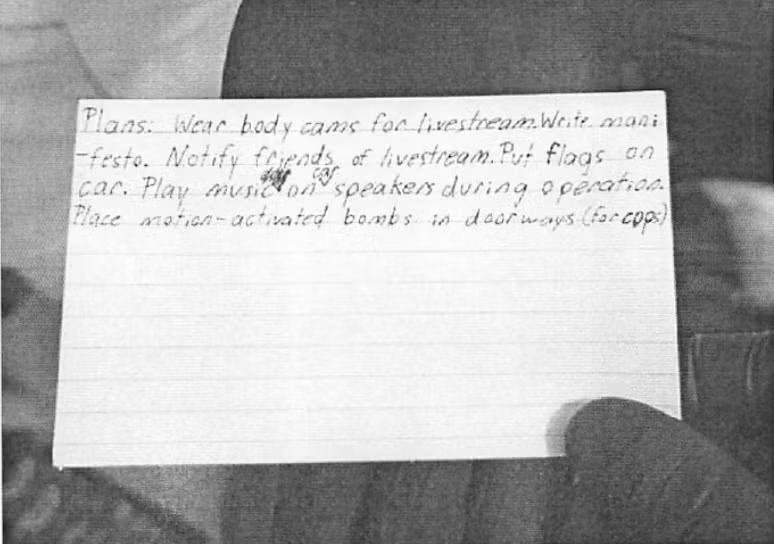 >
>
The ease with which Temple allegedly accessed and shared bomb-making information online is alarming. YouTube videos and online forums provide a breeding ground for radicalization. This prompts us to examine the responsibility of tech companies in regulating extremist content and preventing the spread of dangerous ideologies. Can they do more, or are these platforms destined to be exploited, always a step behind?
Atomwaffen Division’s ideology, centered on accelerating societal collapse to establish a “racially pure” society, is particularly dangerous. This accelerationist mindset, fueled by online echo chambers, pushes individuals toward violence and extremism. We must ask: How do we counteract this narrative? What effective strategies can we deploy to disengage people from these dangerous ideologies and offer them alternative paths?
Temple’s alleged plan to livestream a terror attack adds another layer of complexity. This speaks to the desire for notoriety and the potential for online platforms to amplify the impact of such acts. The media also faces a dilemma: How do we report on these events responsibly, without further glorifying the perpetrators or spreading their hateful message? >
>
Personal experience suggests that these extremist ideologies often prey on vulnerable individuals seeking belonging and purpose. Temple’s age and circumstances – living with his parents, working at a grocery store – might point to a sense of alienation or lack of direction. Mental health support and community engagement could be crucial in preventing individuals from falling prey to extremist narratives.
Given these facts, focusing solely on law enforcement responses might miss the bigger picture. We need a multi-pronged approach that encompasses education, mental health services, and community-based initiatives to address the root causes of radicalization. We need to inoculate vulnerable individuals against hateful ideologies.
The case also underscores the difficulties in assessing the true threat posed by individuals like Temple. Was he genuinely capable of carrying out a terror attack, or was he merely engaging in online fantasies? Discerning between idle chatter and credible threats is a complex task that requires careful analysis of an individual’s behavior, online communications, and access to resources.
It’s vital to remember that the internet offers anonymity, which can embolden individuals to express extreme views they might otherwise keep hidden. This anonymity can create a distorted perception of reality, leading individuals to believe that their views are more widely shared than they actually are.
Yet, while online extremism is a serious concern, we should avoid exaggerating the threat. Overhyping these incidents can inadvertently give extremist groups the attention they crave and potentially inspire copycat attacks. A balanced and nuanced approach is essential.
This incident prompts a broader discussion about the state of extremism in America. Are we seeing an increase in radicalization, or are law enforcement efforts simply becoming more effective at detecting and preventing attacks? It’s hard to say definitively, but what’s clear is that the threat is real, and it requires our constant attention.
This situation highlights the need for ongoing vigilance, improved online content moderation, and a more comprehensive approach to addressing the root causes of extremism. It is not simply a law enforcement problem. The answer requires community, education, and open dialogue. Ultimately, combating extremism requires a society that actively promotes inclusivity, empathy, and respect for diversity. This won’t be easy, but it’s essential for safeguarding our communities and upholding our values.

![[post_title]](https://samony.com.ng/wp-content/uploads/2025/12/Parents-cancer-patients-say-lack-of-proton-therapy-in-Australia-300x169.jpeg?lm=6930A265 "Australia’s Proton Therapy Delay: A Cancer Treatment Gap Hurts Families")


![[post_title]](https://samony.com.ng/wp-content/uploads/2025/12/1764794476_After-nearly-30-years-Crucial-will-stop-selling-RAM-to-300x180.jpg?lm=6930A071 "DIY Nightmare? Crucial’s Shock Exit Signals RAM Price Hikes Ahead")
![[post_title]](https://samony.com.ng/wp-content/uploads/2025/12/1764789509_Triunfo-descomunal-del-Barca-en-un-Spotify-Camp-Nou-colosal-300x169.jpeg?lm=69308D08 "Football’s Fluidity: Barcelona vs Atletico")
![[post_title]](https://samony.com.ng/wp-content/uploads/2025/12/1764789516_You-came-out-of-nowhere-Lady-shares-encounter-with-2baba-300x157.jpg?lm=69308D0F "Navigating Fame, Love, and Loyalty: Hard Truths from a Life Inside Celebrity Relationships")

![[post_title]](https://samony.com.ng/wp-content/uploads/2025/12/Odegaard-on-his-return-Madueke-and-Brentford-Interview-1024x576.jpg?lm=6930A974 "Odegaard Just Dropped Arsenal’s Game Plan for Brentford (and It’s Fascinating)")
![[post_title]](https://samony.com.ng/wp-content/uploads/2025/12/1764794875_Ukraine-war-Drone-footage-shows-heavily-bombed-city-of-Myrnohrad-as-1024x683.jpg?lm=6930A200 "Myrnohrad’s Fall: Deciphering Attrition Warfare’s Human Cost Through Drone Intel")
![[post_title]](https://samony.com.ng/wp-content/uploads/2025/12/Parents-cancer-patients-say-lack-of-proton-therapy-in-Australia.jpeg?lm=6930A264 "Australia’s Proton Therapy Delay: A Cancer Treatment Gap Hurts Families")