

![[post_title]](https://samony.com.ng/wp-content/uploads/2025/12/1764582533_How-Much-Should-You-Have-In-A-529-Plan-By-1024x536.jpg?lm=692D6486)
Decoding the 529 Plan: How Much Should You Really Save for College?
Figuring out how much to stash away in a 529 plan can feel like staring into a financial abyss. The sheer amount that college savings calculators spit out can paralyze even the most dedicated parents. But let’s take a breath and unpack this.
The core idea behind a 529 college savings plan is solid: tax-advantaged growth specifically for education expenses. You invest, it (hopefully) grows, and you sidestep some tax headaches when the time comes to pay for college. The issue isn’t the vehicle itself; it’s the perception of what it’s supposed to cover.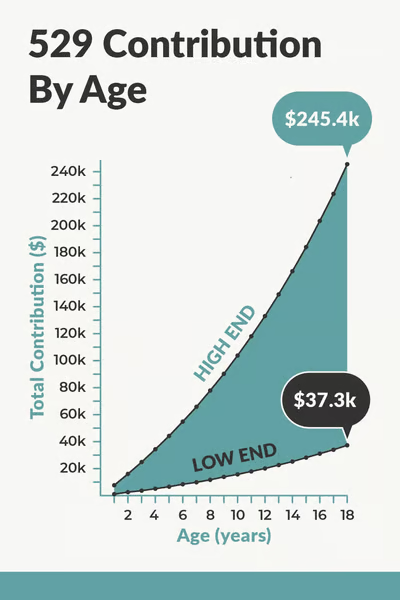 >
>
You see those scary numbers generated by college savings tools? They often assume you’re footing the entire bill. I’ve seen countless families freak out when they realize the projected savings needed. The reality is often different.
The typical “save X amount per month” advice feels detached from reality. For many, it requires choices between college savings, retirement, or simply affording daily life. Is that the correct way to approach it? I’m not sure.
Prioritize Your Own Financial Health >
>
I like to stress the “Y.E.S.” principle: You, Education Savings, Savings.
Start with You. Make sure your own financial foundation is solid. Retirement savings, emergency funds – these come first. You can’t borrow for retirement, and burdening your future self for your child’s education creates a different kind of problem.
Education Savings Accounts are the next logical step. After you’ve secured your own future, explore options like 529 plans.
Finally, allocate additional funds to Savings in a regular account. These can provide flexibility for expenses not covered by the 529 or simply be given to your child for their own needs.
Redefining “Enough” in a 529 Plan
Here’s where things get interesting. The assumption that parents must cover 100% of college costs? It’s outdated. Today’s students should bear some financial responsibility. It is their education, after all.
Countless avenues exist to help students finance their studies. Scholarships abound, and student loans, while not ideal, are a viable option for many.
Instead of aiming for total coverage, consider these factors. Public versus private institution? What percentage of costs are you willing to cover? Do you have a specific savings target? These decisions significantly impact your monthly contribution goals.
Let’s create a scenario to illustrate:
Target: In-state public college ($12,000/year currently) Contribution: Cover 50% of projected costs Timeframe: Contribute until the child turns 18 Assumptions: 4% annual increase in college costs, 6% annual return on 529 investments.
Under these more realistic terms, monthly contributions drop significantly. It becomes a far more achievable goal for most families.
The reality is, there is no one size fits all approach. If you aim to fully fund a four-year private education, your savings rate would naturally be much higher.
Finding Your Savings Sweet Spot
So, what should you realistically aim for in your 529 plan? A broad estimate suggests targeting savings between $35,000 and $250,000. This spectrum reflects the wide variation in individual circumstances and college aspirations.
The lower end of the range allows you to contribute to a four-year public college education. The higher target enables you to cover a private university. Remember, many private schools offer financial aid or scholarships, softening the tuition blow.
Therefore, consider the low-end 529 plan to contribute roughly $10,000 annually for college. With rising tuition costs, that should be approximately 50% of a public school’s costs.
Choosing the Right 529 Plan
Now, selecting the right 529 plan is crucial. You don’t necessarily have to stick with your state’s plan. Shop around. Some states offer tax deductions for contributions, but others, like California, do not.
Prioritize performance and ease of use. Look for plans with low fees and a solid track record. Platforms that integrate with savings programs or allow gifting can simplify the process.
Practical Tips for Boosting Your 529 Savings
Even modest contributions can feel daunting. Fortunately, some tricks can ease the burden:
Redirect Gift Money: Deposit all birthday and holiday cash gifts directly into the 529 plan. This can significantly reduce your personal contributions. Leverage Reward Programs: Programs such as Upromise offer cash-back rewards for shopping at participating retailers. Link your credit and debit cards and watch your savings grow passively. Increase Your Income: Instead of obsessing over budget cuts, explore ways to generate extra income. Even an additional $100 per month can make a big difference in your 529 plan balance.
The Takeaway
Don’t let the daunting numbers paralyze you. Saving for college is a marathon, not a sprint. Prioritize your own financial well-being, set realistic goals, and utilize available resources. A 529 plan is a tool, but it’s not the only path to higher education. And for many students, relying on scholarships or loans can still be a worthy endeavor.

![[post_title]](https://samony.com.ng/wp-content/uploads/2025/12/Women-shouldnt-be-giving-birth-pregnancy-and-delivery-are-risky-300x162.jpg?lm=692D6088 "Is Surrogacy the Answer? A Fiery Debate Divides Feminists")
![[post_title]](https://samony.com.ng/wp-content/uploads/2025/12/1764581606_Up-to-45-off-AirPods-every-AirPods-Pro-3-AirPods-300x169.jpg?lm=692D60E9 "Cyber Monday AirPods: Price Check and Buying Guide")
![[post_title]](https://samony.com.ng/wp-content/uploads/2025/12/Immigration-launches-response-after-attack-on-Kebbi-border-post-300x171.jpg?lm=692D5B33 "Nigeria Immigration Attack Exposes Border Security Flaws")

![[post_title]](https://samony.com.ng/wp-content/uploads/2025/12/If-You-Are-A-Christian-In-Nigeria-And-You-Say-300x222.jpeg?lm=692D5BC1 "Nigeria Christian Persecution Claims Examined: Kukah Urges Caution")
![[post_title]](https://samony.com.ng/wp-content/uploads/2025/12/1764580305_Important-BBC-star-dies-as-well-loved-presenter-honoured-for-300x158.jpg?lm=692D5BD3 "BBC Radio Merseyside Host’s Death Sparks Media Landscape Reflection")

![[post_title]](https://samony.com.ng/wp-content/uploads/2025/12/1764582423_This-Week-in-History-1-7-December-1024x683.jpeg?lm=692D641A "History’s Echo: Are We Really Learning, or Just Repeating It All?")
![[post_title]](https://samony.com.ng/wp-content/uploads/2025/12/Women-shouldnt-be-giving-birth-pregnancy-and-delivery-are-risky-1024x555.jpg?lm=692D6088 "Is Surrogacy the Answer? A Fiery Debate Divides Feminists")
![[post_title]](https://samony.com.ng/wp-content/uploads/2025/12/1764581606_Up-to-45-off-AirPods-every-AirPods-Pro-3-AirPods-1024x576.jpg?lm=692D60E9 "Cyber Monday AirPods: Price Check and Buying Guide")
