

The Sugar Tax Brew: Are We Ready to Face the Bitter Truth About Our Sweet Drinks?
That morning coffee run is starting to feel less like a pick-me-up and more like a guilty pleasure. I can relate to the author’s opening: ordering a custom coffee in some shops feels like decoding an advanced algorithm. A simple “Americano” is a distant memory for many. Now, with whispers of a “sugar tax” expanding to milkshakes and lattes, things are about to get even more complicated – and potentially healthier.
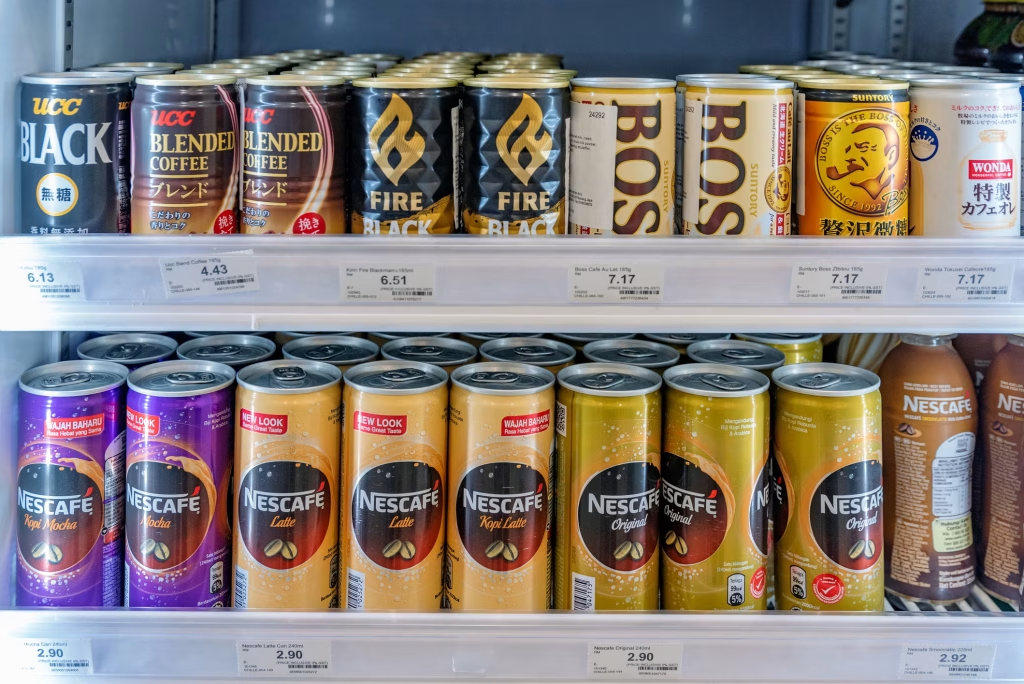
The motivation? Curbing child obesity. Fair enough. It’s hard to deny that some of these concoctions have become liquid desserts. When your “coffee” is practically a banana bread milkshake, maybe a little nudge is in order. It’s easy to get caught up in the taste and forget how many calories are involved. It’s worth noting that Starbucks’s prepackaged caramel frappuccino, containing 9.4g of sugar per 100ml, may be directly affected.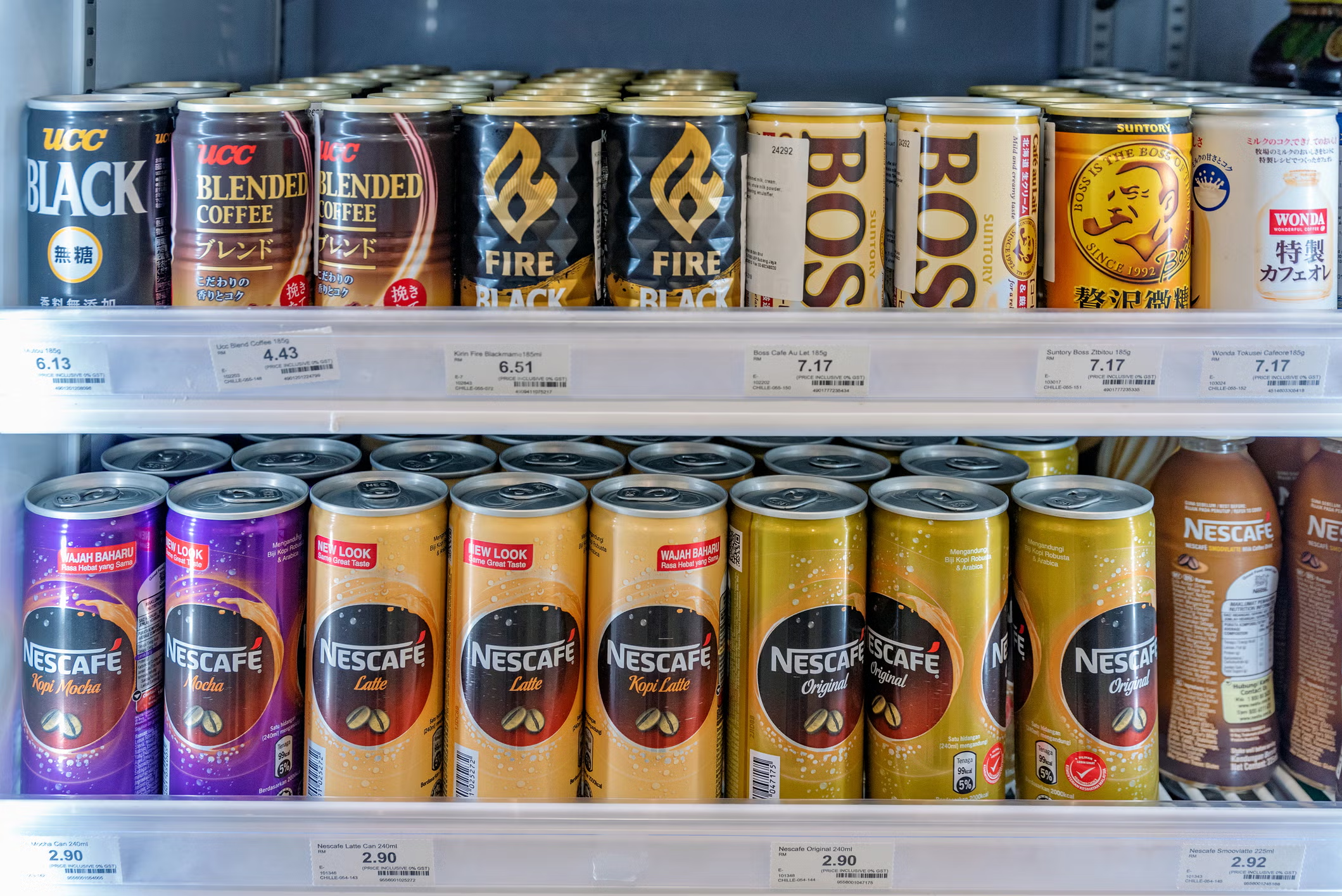 >
>
But here’s where it gets interesting. While the tax initially targets pre-packaged drinks, the implications stretch further. Are specialty coffees in cafes, the ones bordering on adult milkshakes, next? Are we prepared to confront the calorie counts lurking in our morning routines? Some exceed 500 calories!
Rob Hobson, a nutritionist, shines a light on the less obvious problems. These drinks aren’t just sugar bombs; they’re often ultra-processed food masquerading as a beverage. Carrageenan and other additives hardly scream “health food.” These liquid calories often bypass our body’s fullness signals. This makes us more prone to ordering that tempting pastry on display. It’s a slippery slope.
Previously, these sugar levies primarily took aim at fizzy drinks. Now, the government is casting a wider net. They will implement smaller tax hikes on other consumer items to increase overall revenue. Nigel Farage isn’t thrilled. He calls these initiatives nanny-state measures, which he claims will increase taxes on simple pleasures. Yet, simple pleasures with detrimental health consequences might be worth questioning.>
Here’s the government’s argument: many pre-packaged milk-based drinks are laden with sugar, and young people aren’t even getting their calcium fix from them. The potential harms might outweigh the benefits. This tax could incentivize manufacturers to trim the sugar in their recipes.
Consider the broader context: A recent review indicated that ultra-processed foods (UPFs) are linked to harm in every major organ system. In England, a significant portion of adults are overweight or living with obesity. This challenge needs to be tackled. It appears to be a long-term problem.
Hobson suggests simplifying our choices. Nothing wrong with a treat now and then, he concedes. Still, a simpler coffee – just coffee and milk – might be the wiser choice most days. Transparency is key. We deserve to understand what we’re consuming.
The precedent is there. The 2016 sugar tax caused a considerable reduction in sugar content in soft drinks. Now, the target is even lower, which could dramatically alter the sweetness of many store-bought drinks. Or, the prices could increase, acting as a deterrent.
Maybe, just maybe, this sugar tax will force a shift in perspective. Perhaps the author is right: a low-calorie espresso sounds a lot better than sweetened milk. Time to wake up and truly smell the coffee.

![[post_title]](https://samony.com.ng/wp-content/uploads/2025/12/4-Reasons-Tomatoes-Can-Upset-Your-Stomach-300x169.jpg?lm=6930DA5E "Decoding Tomato Troubles: A Gut-Level Guide to Digestive Harmony")
![[post_title]](https://samony.com.ng/wp-content/uploads/2025/12/NGX-Deepens-Market-Offerings-With-Commercial-Paper-Listings-300x212.png?lm=6930DAA8 "Nigeria’s Risky Bet: Will NGX’s New Debt Play Actually Pay Off?")
![[post_title]](https://samony.com.ng/wp-content/uploads/2025/12/1764809392_Nato-hits-back-at-Putins-threat-of-war-in-Europe-300x200.jpeg?lm=6930DAB4 "Geopolitics on Edge: Is Wider European Conflict a Rising Threat?")
![[post_title]](https://samony.com.ng/wp-content/uploads/2025/12/Senate-summons-finance-education-ministers-over-collapse-of-30m-Safe-300x200.jpeg?lm=6930DB39 "$44 Million for Safe Schools: Where Did It Go?")
![[post_title]](https://samony.com.ng/wp-content/uploads/2025/12/How-much-you-fit-withdraw-in-a-day-from-ATM-300x169.jpg?lm=6930C5C9 "Nigeria’s Cash Withdrawal Limits: Pragmatism, Mixed Signals, and the Unfolding Reality")

![[post_title]](https://samony.com.ng/wp-content/uploads/2025/12/Burna-Boy-Offers-to-Pay-Burial-Costs-for-Children-Killed.jpg?lm=6930DBD8 "Burna Boy Offers Funeral Support After Stockton Shooting")

![[post_title]](https://samony.com.ng/wp-content/uploads/2025/12/4-Reasons-Tomatoes-Can-Upset-Your-Stomach-1024x575.jpg?lm=6930DA5E "Decoding Tomato Troubles: A Gut-Level Guide to Digestive Harmony")
